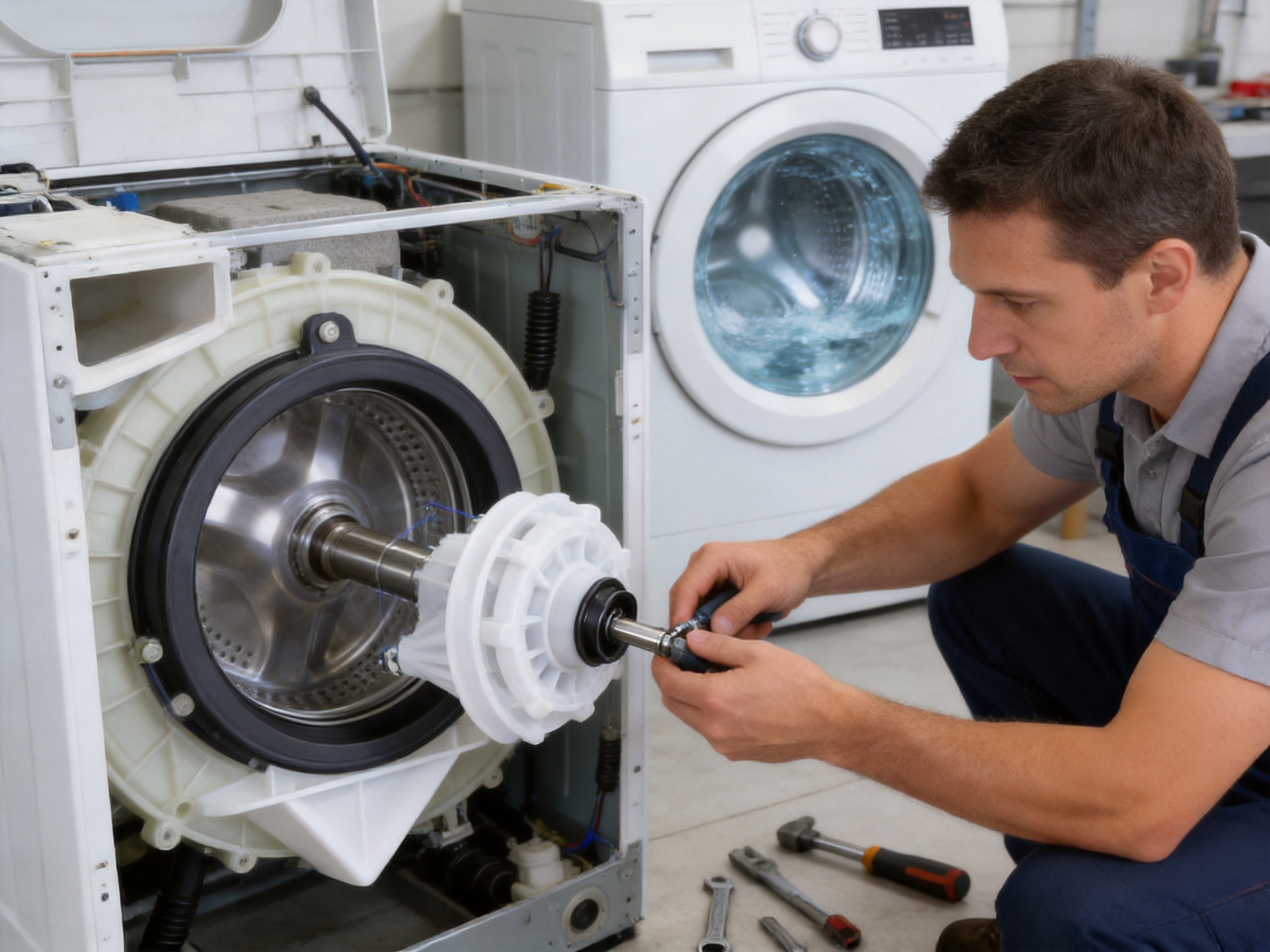
A washing machine transmission is one of the most important mechanical assemblies in a semi-automatic agitator washing machine. Although it is hidden inside the appliance, its performance directly influences washing effectiveness, operating noise, energy transfer, service life, and user satisfaction. The transmission receives high-speed rotation from the motor and converts it into the lower-speed, higher-torque movement required by the agitator. In this way, it serves as the mechanical link between the motor and the washing action.
The washing machine transmission discussed in this article is designed for semi-automatic agitator washing machines and is intended to provide a reliable, economical, and durable power solution. It combines a practical mechanical structure with manufacturing controls suitable for original equipment manufacturers, appliance assemblers, replacement-parts distributors, and aftermarket service providers. Its design is especially relevant to price-sensitive markets where stable performance, efficient production, and long-term component availability are essential.
Unlike a simple shaft or coupling, a transmission must manage speed reduction, torque multiplication, alignment, lubrication, sealing, vibration, and load variation at the same time. It must also continue operating in an appliance environment where humidity, detergent residue, water splashing, temperature changes, and repeated start-stop cycles may occur. A well-designed transmission therefore contributes to the overall reliability of the washing machine rather than functioning as an isolated part.
1. The Role of a Washing Machine Transmission
The motor used in a washing machine normally rotates at a speed that is not directly suitable for an agitator. Directly connecting the motor to the agitator could produce excessive speed, insufficient usable torque, unstable movement, and unnecessary mechanical stress. The transmission solves this mismatch by modifying the motor’s rotational output before it reaches the agitator mechanism.
In practical terms, the transmission performs several functions. First, it reduces the motor’s rotational speed to a level suitable for washing. Second, it increases the available torque at the output shaft. Third, it transfers power through a controlled mechanical path while maintaining proper shaft alignment. Fourth, it supports the output components and helps manage radial and axial loads generated during operation. Finally, its housing and sealing arrangement help protect internal gears and bearings from moisture and contamination.
The output movement must remain consistent even when the washing load changes. A lightly loaded tub and a heavily loaded tub create different resistance levels. Clothes, water, detergent, and fabric movement all affect the torque required from the agitator. A reliable transmission must therefore tolerate normal fluctuations without excessive noise, overheating, gear damage, or loss of motion.
For semi-automatic agitator machines, the transmission is particularly important because the washing cycle depends on repeated mechanical agitation. The agitator may rotate in one direction, reverse, pause, and restart many times during a cycle. Every change in motion places stress on gears, shafts, bearings, and connection points. The transmission must be capable of supporting these repeated cycles while preserving stable output performance.
2. How the Transmission Converts Motor Power
The fundamental operating principle is speed reduction and torque conversion. The motor produces relatively high-speed rotation. Through a set of gears and related mechanical elements, the transmission reduces that speed and delivers a more suitable output. As speed decreases, usable torque increases according to the mechanical ratio and efficiency of the system.
Gear geometry determines how the input and output shafts interact. The tooth profile, pitch, material, heat treatment, surface finish, and alignment of the gears all influence operating behavior. When these elements are properly matched, the transmission can transfer power smoothly and reduce unnecessary friction, vibration, and impact loading.
The internal components must also work together as an integrated system. A gear with excellent tooth strength may still perform poorly if the shaft is inaccurately machined. A precisely made shaft may not provide dependable service if the bearing seat is out of tolerance. Similarly, a strong housing cannot compensate for insufficient lubrication or poor sealing. For this reason, transmission quality depends on process control across the entire manufacturing chain.
During operation, the input shaft receives rotation from the motor through an appropriate coupling, belt arrangement, or related drive connection, depending on the washing machine design. The gear train then changes the rotation characteristics. The output shaft transfers the resulting torque to the agitator or associated washing mechanism. Bearings support the rotating parts, while seals help prevent lubricant leakage and the entry of external moisture.
Although the transmission is mechanically compact, it must handle dynamic loads. Starting torque, reversing loads, unbalanced clothes, water resistance, and accidental overloads may all affect the internal stress pattern. A well-engineered design uses suitable materials, adequate support, and carefully controlled clearances to maintain performance under these practical conditions.
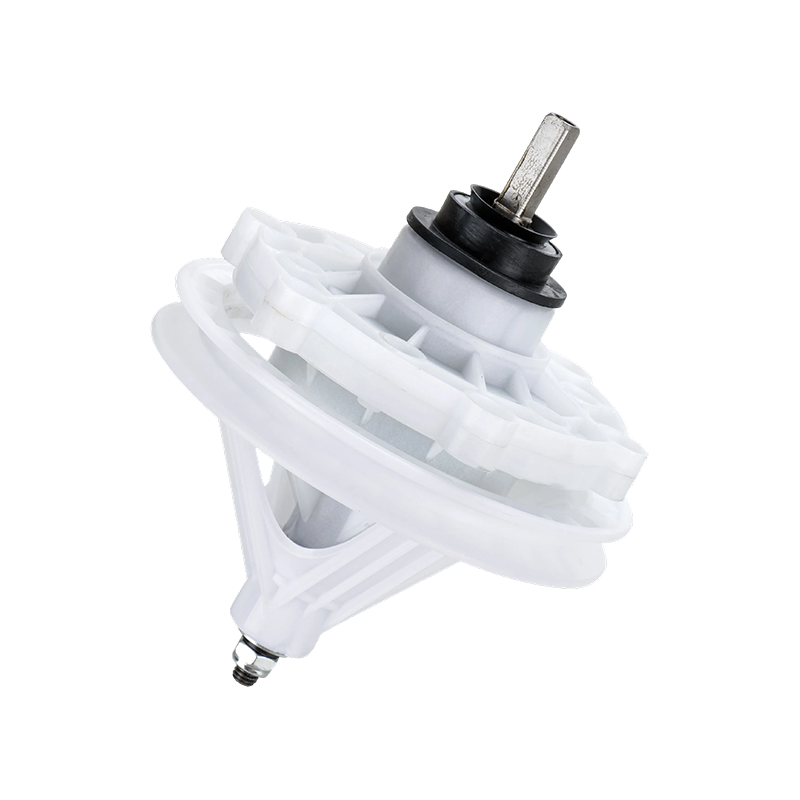
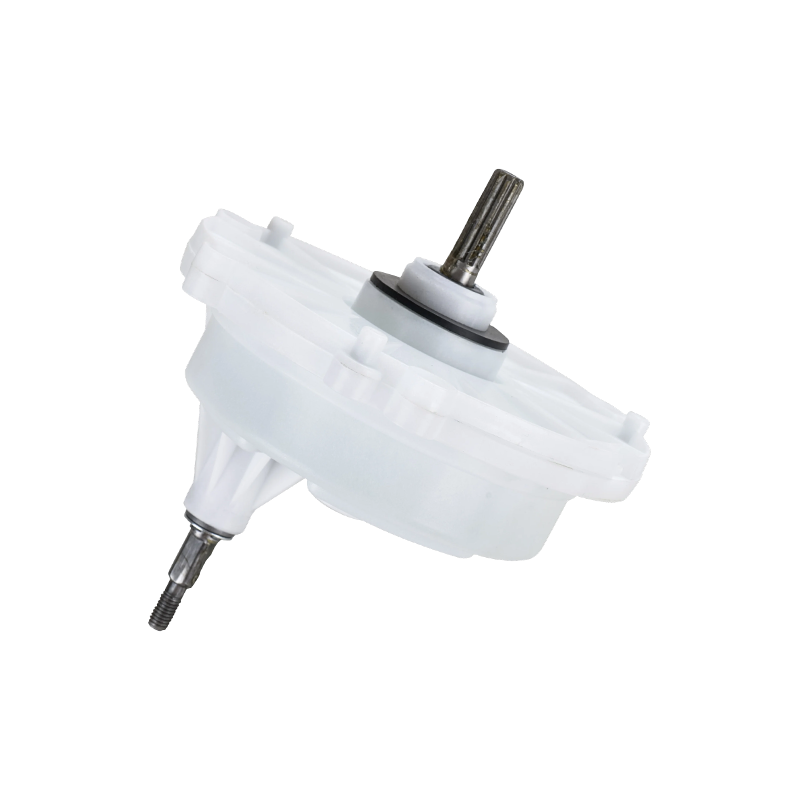
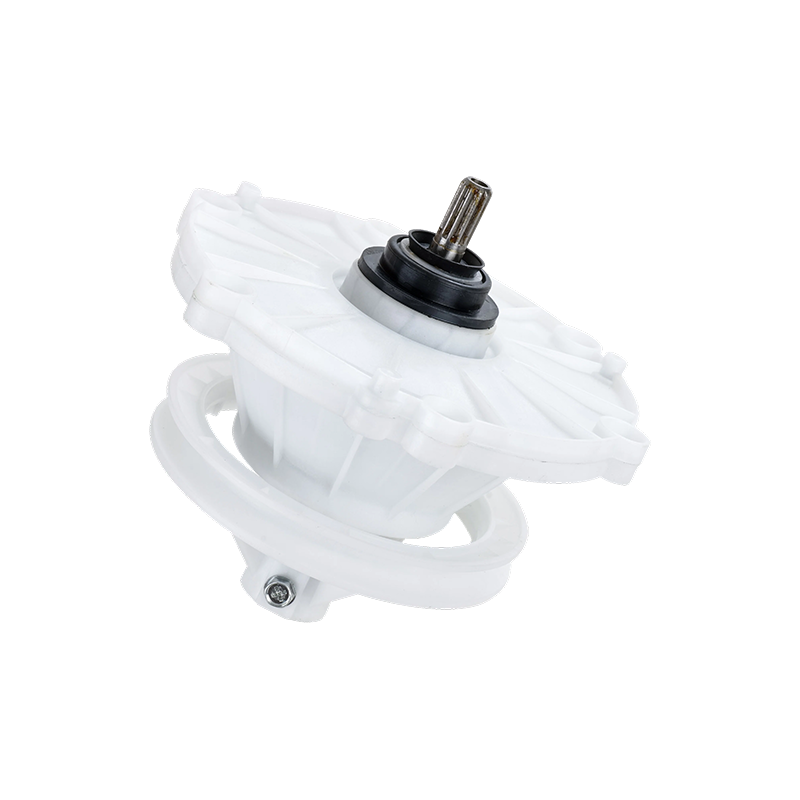
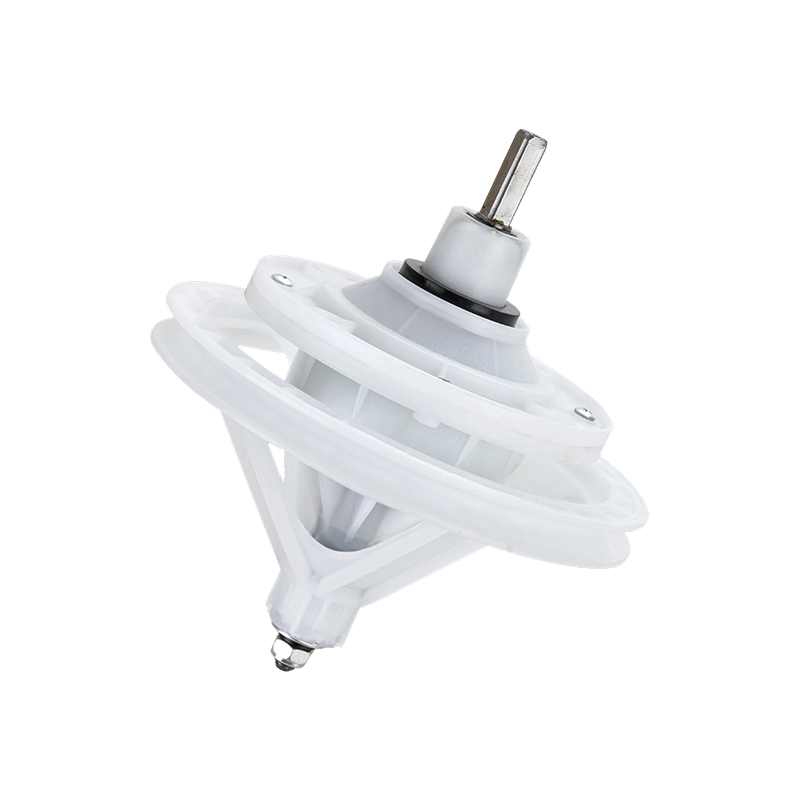
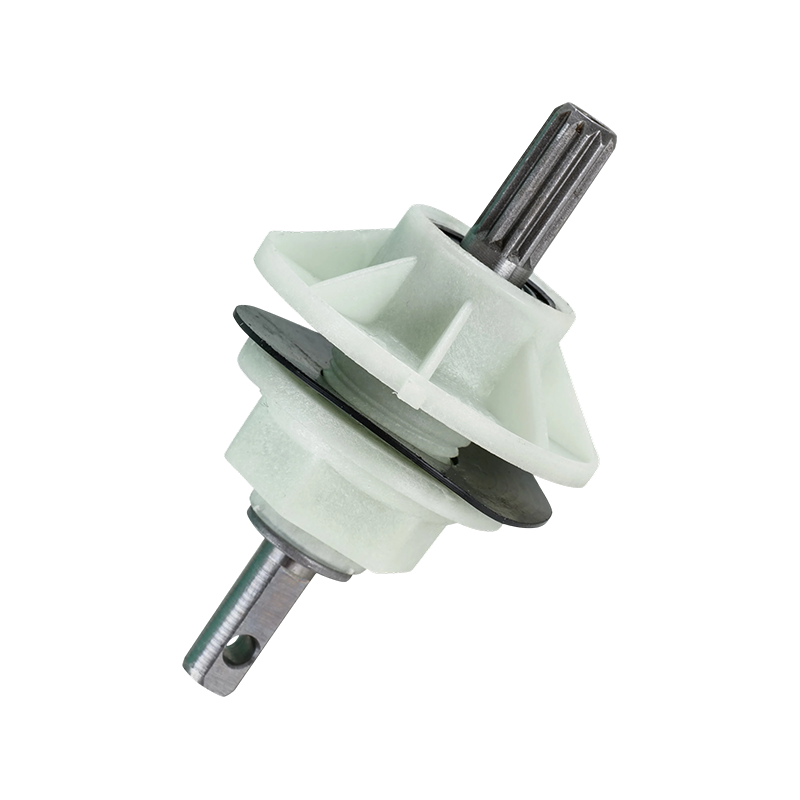
Washing Machine Transmission
3. Product Advantages in Semi-Automatic Washing Machines
3.1 Reliable Speed Reduction
The transmission converts motor speed into an output speed appropriate for an agitator. This allows the washing machine to generate effective water and fabric movement without forcing the agitator to rotate at the motor’s original speed. Controlled speed reduction helps balance washing action, mechanical load, noise, and component life.
For appliance manufacturers, consistent speed reduction is important because it supports repeatable washing performance across different production batches. If the transmission ratio or internal friction varies excessively, the same motor may produce different agitator behavior from one machine to another. Stable manufacturing helps reduce this variation.
3.2 Higher Usable Output Torque
Washing loads can create substantial resistance, especially when wet clothing becomes concentrated around the agitator. A transmission increases the mechanical advantage available at the output shaft, allowing the motor’s energy to be used more effectively. This helps the agitator maintain movement when the laundry load becomes heavier or more difficult to move.
Higher output torque also reduces the likelihood that the motor will struggle during normal operation. When the transmission is correctly matched to the motor and washing mechanism, the drive system can operate with a more appropriate balance between power, efficiency, and durability.
3.3 Suitability for Humid Operating Environments
Washing machines operate in environments where water, humidity, detergent vapor, and splashing may be present. The transmission housing, seals, surface treatments, and internal protection must therefore be selected with moisture exposure in mind. A suitable structure helps isolate the gears and bearings from the external environment.
Resistance to humidity is particularly valuable in regions with high ambient moisture or limited climate control. It also benefits replacement-parts distributors because a transmission with dependable environmental protection is less likely to experience premature failure caused by corrosion or lubricant contamination.
3.4 Economical Mechanical Solution
Many semi-automatic washing machines are designed for value-conscious markets. In these applications, the transmission must provide dependable performance without adding unnecessary complexity or cost. A practical gearbox architecture can deliver the required torque and speed conversion while maintaining a competitive total cost.
Cost efficiency does not simply mean using less material or reducing the number of manufacturing operations. A better approach is to optimize material utilization, production flow, component standardization, inspection methods, and assembly efficiency. These improvements can reduce waste and manufacturing variation while preserving functional quality.
3.5 Compatibility with OEM and Aftermarket Requirements
A washing machine transmission may be required for a new appliance platform, a replacement program, or a service-parts channel. These applications may involve different dimensional requirements, shaft interfaces, mounting arrangements, or performance targets. A manufacturer with experience in core washing machine components can adapt the product more effectively to these requirements.
OEM customers generally require stable dimensions, repeatable quality, packaging consistency, documentation, and dependable delivery. Aftermarket customers may place greater emphasis on interchangeability, service life, ease of installation, and broad model coverage. A flexible transmission supplier should understand these differences and provide suitable technical and commercial support.
4. Comparison with Alternative Drive Solutions
When evaluating a washing machine transmission, it is useful to compare it with alternative drive arrangements rather than considering the part in isolation. Different drive systems may be appropriate for different appliance categories, but each has trade-offs involving cost, space, serviceability, torque delivery, and manufacturing complexity.
| Drive solution | Primary benefit | Typical limitation | Suitability for semi-automatic agitator machines |
|---|
| Dedicated washing machine transmission | Controlled speed reduction and increased output torque | Requires precision gears, bearings, sealing, and assembly | Highly suitable for repeated agitator operation |
| Direct motor-to-agitator connection | Simple power path and fewer transmission parts | May provide excessive speed and insufficient torque control | Limited unless the motor is specially designed |
| Basic belt reduction system | Simple layout and potentially easy replacement | Belt wear, slip, tension variation, and alignment requirements | Suitable for selected designs but may require frequent adjustment |
| Complex electronically controlled drive | Precise speed control and multiple operating modes | Higher system cost and greater electronic complexity | Useful for advanced appliances, but not always economical |
| Generic industrial gearbox | Broad availability in some markets | May not match washing machine mounting, sealing, noise, or shaft requirements | Often requires extensive adaptation |
A dedicated washing machine transmission has an important advantage over a generic industrial gearbox: it is developed around the actual requirements of the appliance. These requirements include compact installation, repeated reversing, humid conditions, low operating noise, consumer safety, and cost-sensitive production. A general-purpose gearbox may be mechanically strong but still unsuitable if its dimensions, sealing system, output interface, or operating characteristics do not match the washing machine.
Compared with a direct-drive arrangement, the transmission provides greater freedom in selecting the motor. The motor does not need to produce the exact low-speed, high-torque output demanded by the agitator. Instead, the motor and transmission can be matched as a system, which may improve design flexibility and production economics.
Compared with a simple belt reduction system, an enclosed transmission can provide more stable speed conversion and better protection of the power-transfer components. Belts remain useful in many appliance designs, but they may be affected by stretching, slipping, tension changes, and pulley alignment. An enclosed gear transmission can reduce these variables when it is correctly manufactured and lubricated.
5. Materials and Component Engineering
The selection of materials has a direct effect on transmission strength, wear resistance, corrosion behavior, dimensional stability, and manufacturing cost. Different components may require different material properties. Gears need a balance of tooth strength, fatigue resistance, and surface durability. Shafts require adequate hardness, toughness, and dimensional accuracy. Housings need rigidity and protection against environmental exposure.
Core materials produced under controlled conditions can improve supply stability and quality consistency. In-house production of a large proportion of core materials allows a manufacturer to coordinate purchasing, machining, processing, inspection, and production planning more effectively. It can also reduce dependence on uncertain external supply sources.
Gear materials must withstand repeated contact stress. If the tooth surfaces are too soft, wear may develop quickly. If the material is too brittle or improperly treated, tooth breakage or impact damage may occur. The appropriate combination depends on the transmission design, load profile, production method, and target cost.
Shafts must maintain accurate concentricity and reliable connection with gears, bearings, and external components. Small errors in shaft geometry can increase vibration, accelerate bearing wear, and produce uneven gear contact. Precision machining and dimensional inspection are therefore essential for stable operation.
Bearings support rotating shafts and reduce friction. Their selection must consider radial load, axial load, speed, temperature, lubricant compatibility, and available installation space. The bearing seats and housing bores must also be manufactured accurately. Even a high-quality bearing may perform poorly when installed in an incorrectly machined or contaminated seat.
Sealing components help retain lubricant and limit the entry of water, detergent residue, dust, and other contaminants. Seals must be compatible with the shaft surface, lubricant, temperature range, and expected movement. The seal installation process is equally important because incorrect positioning or damage during assembly can reduce protection.
The housing provides structural support and defines the relationship between internal parts. It must be sufficiently rigid to preserve alignment during operation. It must also support mounting to the washing machine frame and provide a practical interface for maintenance or replacement where required by the product design.
6. Advanced Manufacturing Processes
The performance of a washing machine transmission is closely connected to the quality of its manufacturing process. A dependable product is not created by final inspection alone. It results from a controlled sequence that begins with design review and material preparation and continues through machining, treatment, cleaning, assembly, testing, packaging, and delivery.
6.1 Engineering and Design Review
Before production begins, the transmission design should be reviewed for function, manufacturability, assembly efficiency, service requirements, and compatibility with the target washing machine. Important review items include gear ratio, shaft dimensions, mounting points, bearing selection, seal arrangement, lubrication capacity, housing strength, and connection interfaces.
Design review also helps identify potential problems before tooling or mass production. For example, a component may meet a drawing dimension but still be difficult to assemble consistently. A seal groove may be too narrow for reliable installation. A mounting feature may not provide sufficient clearance in the appliance. Early engineering analysis can prevent such issues from becoming production defects.
6.2 Precision Machining
Machining processes determine the accuracy of shafts, gear blanks, bearing seats, housing bores, and other critical surfaces. Computer-controlled equipment can improve repeatability by maintaining consistent tool paths and process parameters. Production stability is further improved through tool-life management, fixture control, and regular in-process inspection.
Critical dimensions should be selected according to function. Not every surface requires the same tolerance, but gear centers, bearing seats, shaft interfaces, seal surfaces, and mounting points generally require particular attention. Controlling the right dimensions helps achieve performance without adding unnecessary production cost.
6.3 Gear Manufacturing and Surface Control
Gear manufacturing requires accurate tooth geometry and consistent spacing. Errors in tooth profile, pitch, runout, or alignment can produce noise, vibration, uneven wear, and reduced efficiency. Gear cutting, shaping, finishing, and inspection must therefore be coordinated carefully.
Surface condition is also important. Rough or damaged tooth surfaces increase friction and accelerate wear. Appropriate finishing operations can improve contact between mating gears and help reduce operating noise. The final result depends on the combination of gear design, material, heat treatment, machining accuracy, lubrication, and assembly alignment.
6.4 Heat Treatment and Hardness Management
Where required by the design, heat treatment can improve the strength and wear resistance of gears and shafts. The process must be controlled to achieve the intended hardness and depth without causing excessive distortion. Distortion is a significant concern because even a strong component may become unusable if its final geometry falls outside acceptable limits.
Hardness testing and dimensional verification after treatment help confirm that components meet the required characteristics. The exact treatment method depends on the material, component geometry, gear load, production volume, and target service conditions.
6.5 Surface Protection and Corrosion Control
Washing machine components may encounter humid air and occasional water exposure. Surface protection methods can help reduce corrosion risk on suitable external and internal parts. The selected process should be compatible with assembly, lubrication, environmental requirements, and applicable restrictions on hazardous substances.
Corrosion control begins with material selection and continues through cleaning, drying, storage, packaging, and transportation. Even a properly treated component may be affected if it is stored in a damp environment or packaged before residual moisture has been removed.
6.6 Cleaning and Contamination Control
Cleanliness is essential in a transmission because metal chips, abrasive particles, dust, and processing residue can damage gears, bearings, seals, and lubricant. Parts should be cleaned after machining and before assembly. Assembly areas should be managed to prevent recontamination.
Contamination control is especially important for sealed gearboxes because internal debris may remain trapped after the housing is closed. A small quantity of abrasive material can create long-term wear when repeatedly circulated through the lubricant. Effective cleaning therefore supports both immediate performance and service life.
6.7 Controlled Assembly
Assembly operators must install gears, shafts, bearings, seals, spacers, fasteners, and lubricant in the correct sequence. Press-fit operations should use suitable tools to avoid damaging bearing races or seal lips. Fasteners should be tightened consistently, and components should be checked for smooth movement before final closure.
Process instructions, fixtures, torque controls, and operator training help reduce assembly variation. Where appropriate, mistake-proofing methods can prevent incorrect orientation or the omission of small but important parts. A structured assembly process is particularly valuable in high-volume production.
6.8 Functional Testing
Finished transmissions should undergo testing appropriate to their application. Testing may include rotational smoothness, abnormal noise, leakage, output resistance, dimensional verification, and visual inspection. Sampling plans or full inspection can be selected according to customer requirements, product risk, and production volume.
Functional testing does not replace process control, but it provides an important final confirmation that the assembled unit behaves as intended. Test data can also support traceability and continuous improvement by helping identify trends in noise, torque, leakage, or assembly variation.
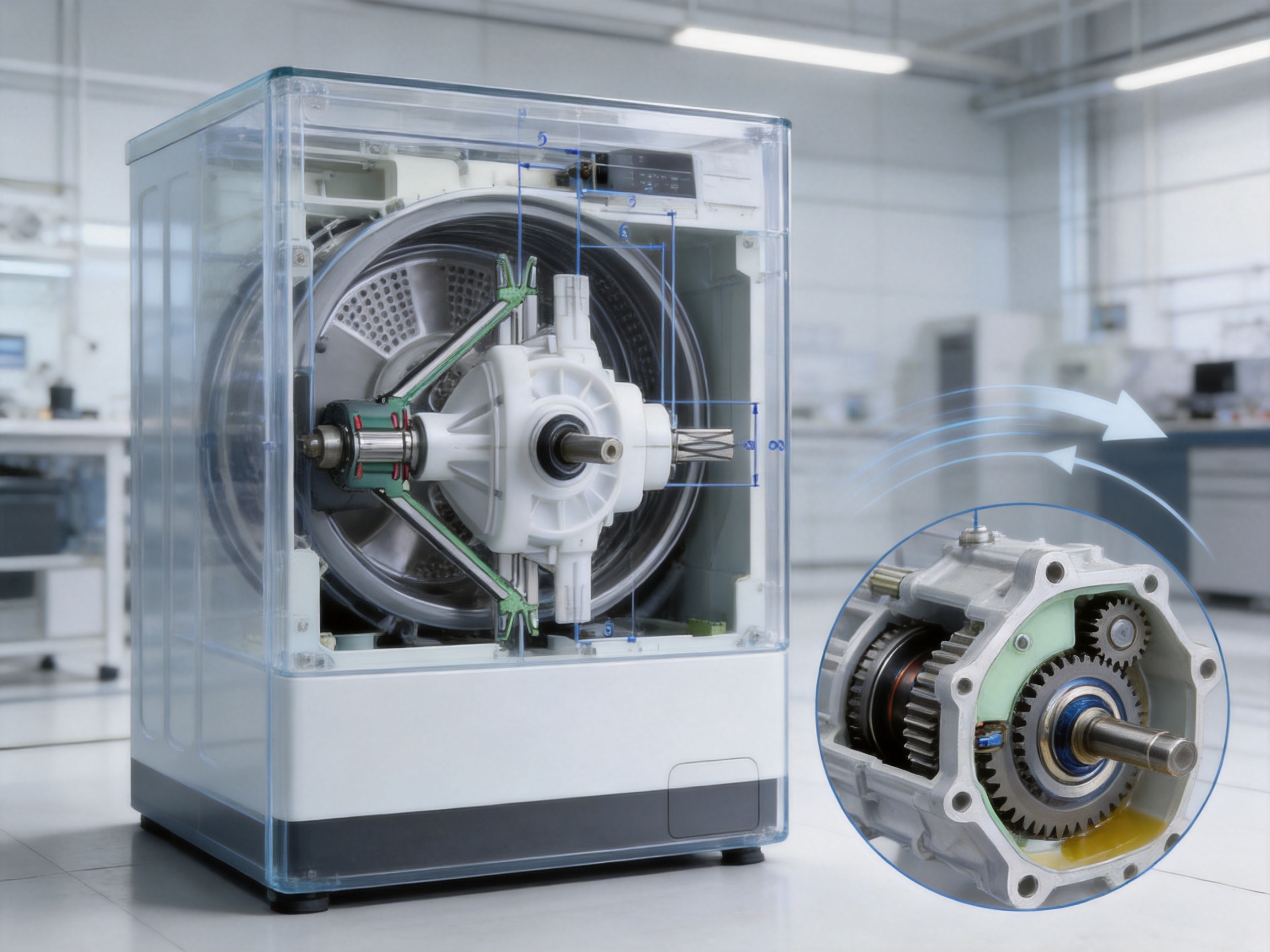
7. Quality Management and Production Reliability
A transmission manufacturer serving international appliance customers needs more than suitable machinery. It requires a quality management system that links customer requirements to engineering, purchasing, production, inspection, logistics, and after-sales service. A documented system helps establish responsibilities, control revisions, manage nonconformities, and preserve records.
The manufacturer described in the supplied company information has established operations in Ningbo, Zhejiang, China, and has specialized in core washing machine components since 2002. Its production base covers approximately 10,000 square meters, and around 90 percent of core materials are produced in-house. This manufacturing model supports closer control of key materials and provides a stable foundation for production planning.
In-house control of core materials can provide several advantages. It may shorten response time for engineering changes, reduce variability between suppliers, simplify quality investigation, and improve continuity during fluctuations in the external supply chain. It also allows material and process knowledge to accumulate within the manufacturing organization.
The company has obtained ISO 9001 Quality Management System certification and ISO 14001 Environmental Management System certification. These certifications indicate a structured approach to quality and environmental management, although product performance still depends on the effective implementation of daily processes, inspection, engineering controls, and customer-specific requirements.
Compliance with RoHS requirements is also relevant to international appliance supply. Restrictions on hazardous substances influence material selection, surface treatment, component sourcing, and documentation. For OEM customers, compliance support can simplify product approval and help maintain alignment with environmental expectations in different markets.
8. Manufacturing Strengths for OEM and ODM Customers
8.1 Experience in Core Washing Machine Components
A supplier focused on washing machine parts can develop more relevant knowledge than a general mechanical factory. Experience with gearboxes, transmissions, P-shafts, synchronizers, and related parts helps the engineering team understand how individual components interact within the appliance.
This application-specific knowledge is useful when customers request modifications. The supplier can evaluate not only whether a part can be manufactured, but also how a change may affect torque, noise, sealing, assembly, or compatibility with other components.
8.2 Support for Customization
Custom OEM and ODM projects may involve changes to mounting dimensions, shaft lengths, output interfaces, gear ratios, housing geometry, materials, labels, packaging, or inspection standards. A flexible supplier should be able to review drawings, samples, technical specifications, and application conditions before recommending a production solution.
Customization should be managed systematically. Engineering changes need revision control, prototype evaluation, sample approval, and confirmation of mass-production capability. This process protects both the customer and the supplier by ensuring that the approved product is clearly defined before volume production begins.
8.3 Stable Supply and Production Planning
Washing machine manufacturers often operate according to fixed assembly schedules. A delayed transmission can interrupt the entire appliance production line. Stable material supply, controlled capacity, production scheduling, and organized logistics are therefore major competitive advantages.
A manufacturing base with established equipment and in-house material capability can support more predictable delivery than a trading model that depends entirely on multiple external sources. Supply stability is particularly valuable for replacement-part programs, where customers may need consistent products over many years.
8.4 Cost Control without Unnecessary Simplification
Competitive pricing should be achieved through engineering and process efficiency rather than by removing essential quality controls. Material utilization, production layout, tooling life, cycle time, component commonality, and inspection planning can all influence total cost.
A supplier that understands the target market can help customers select a practical specification. For example, a component may not require an excessive material grade or an unnecessarily complex finish if the application does not justify it. Conversely, reducing a critical tolerance or omitting a required sealing feature may create greater long-term costs through premature failures and warranty claims.
9. Installation and Application Considerations
Even a well-manufactured transmission must be correctly installed to achieve its intended performance. The washing machine structure should provide adequate support and alignment. The motor connection must be correctly positioned, and the agitator or output mechanism must fit the specified interface without excessive force or looseness.
During installation, the mounting surface should be clean and free from distortion. Fasteners should be tightened according to the appliance manufacturer’s requirements. Excessive tightening may deform the housing or create unwanted stress, while insufficient tightening may permit movement and vibration.
The drive connection should be checked for alignment. Misalignment can place additional load on bearings and seals and may produce abnormal noise. If a belt or coupling is used between the motor and transmission, its tension or fit should match the machine design.
Lubricant should not be added, removed, or replaced without considering the transmission specification. Incorrect lubricant volume or type can increase friction, cause leakage, or affect gear performance. Seals and protective covers should also be inspected during installation to ensure they have not been damaged during handling.
After installation, the machine should be tested without an excessive load before normal use. Attention should be paid to unusual noise, vibration, leakage, slow movement, irregular reversing, or failure to transmit torque. Early identification of installation problems can prevent damage to the transmission and other washing machine components.
10. Maintenance and Service Life
A transmission is generally designed as a long-life enclosed component, but its service life is influenced by the complete washing machine system. Overloading, repeated operation with unbalanced loads, water ingress, improper installation, electrical problems, and damaged external couplings can all increase stress on the gearbox.
Users should follow the washing machine manufacturer’s recommendations regarding load capacity. Overloading increases resistance and may cause excessive torque demand. Repeatedly operating beyond the intended capacity can accelerate wear on gears, shafts, bearings, and motor connections.
Water leakage from nearby hoses, seals, tubs, or fittings should be corrected promptly. Continuous moisture exposure can affect external surfaces and may eventually reach internal components if protective barriers are compromised. Keeping the machine base and surrounding area dry supports longer component life.
Service technicians should inspect the transmission together with the motor, belt or coupling, agitator, mounting points, and tub structure. Replacing only the transmission may not solve a problem caused by misalignment, a damaged agitator, loose mounting hardware, or motor malfunction.
Common symptoms that may justify inspection include grinding sounds, repeated clicking, excessive vibration, loss of agitation, oil or lubricant leakage, irregular movement, and operation that becomes increasingly slow under normal loads. Diagnosis should be conducted by qualified personnel because similar symptoms can originate from different parts of the washing machine.
11. Environmental and Sustainability Considerations
Manufacturing sustainability involves material use, energy consumption, waste reduction, emissions control, packaging, product life, and end-of-life management. A durable transmission can contribute to sustainability by reducing premature replacement of complete appliances or repeated service interventions.
ISO 14001 environmental management certification provides a structured framework for identifying and controlling environmental impacts. In practice, this may involve managing process waste, improving resource efficiency, controlling chemical use, monitoring emissions, and establishing environmental objectives.
RoHS compliance supports responsible material selection by limiting certain hazardous substances in electrical and electronic products and their components. For washing machine manufacturers selling in international markets, maintaining appropriate compliance information can support regulatory review and customer documentation.
Long service life is another important environmental advantage. When a transmission operates reliably for an extended period, fewer replacement parts, packaging materials, transportation activities, and manufacturing resources may be required. Durability must therefore be considered together with cost and initial material consumption.
Packaging should protect the transmission from impact, humidity, dust, and corrosion during storage and transportation. At the same time, packaging should avoid unnecessary material use. A practical balance can be achieved through product-specific cushioning, moisture protection, stacking design, and recyclable packaging materials where suitable.
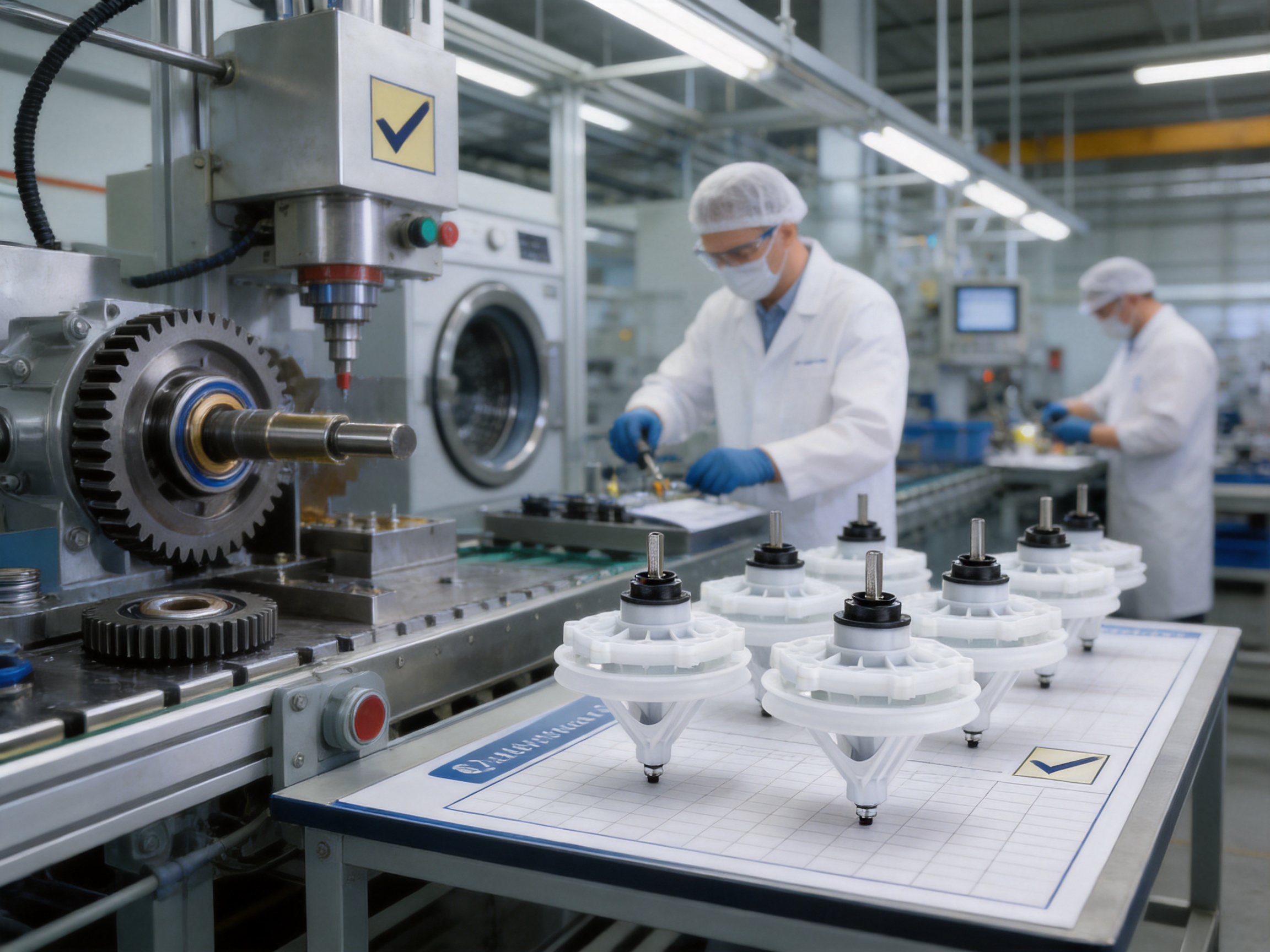
12. Selecting a Transmission Supplier
Customers should evaluate more than the quoted unit price when selecting a washing machine transmission supplier. A complete assessment should include product compatibility, manufacturing capability, quality systems, material control, testing, delivery performance, customization support, communication, and after-sales response.
12.1 Technical Compatibility
The supplier should be able to confirm whether the transmission matches the motor, agitator, mounting structure, shaft interface, operating cycle, and load requirements of the target appliance. Drawings, samples, application data, and test results may be needed to establish compatibility.
12.2 Production Capability
Customers should review whether the supplier has appropriate machining, gear production, heat treatment, assembly, inspection, and testing resources. Production equipment alone is not sufficient; process organization and skilled personnel are also important.
12.3 Quality Documentation
Useful documentation may include product drawings, inspection standards, material information, test records, process approvals, packaging specifications, and certificates relevant to the target market. Clear documentation reduces misunderstanding and supports quality audits.
12.4 Customization and Communication
A responsive supplier should provide a clear process for technical inquiry, quotation, prototype development, sample approval, production, and delivery. Communication is especially important when the customer needs an OEM or ODM solution rather than a standard catalog item.
12.5 Long-Term Supply Potential
For appliance programs, the supplier should be evaluated for long-term manufacturing continuity. Factors include core material availability, production capacity, tooling management, engineering-change control, spare-parts support, and willingness to maintain approved specifications over time.
13. Why a Specialized Transmission Is a Competitive Choice
The main competitive advantage of a specialized washing machine transmission is the balance it provides between mechanical performance and market practicality. It delivers the speed and torque conversion required by the agitator while remaining suitable for cost-sensitive appliance designs.
Its enclosed structure can provide better protection than exposed or loosely controlled drive arrangements. Its application-focused design can simplify integration compared with a generic gearbox. Its compatibility with OEM and aftermarket requirements can also support a wider range of commercial uses.
Manufacturing depth adds another layer of competitiveness. When the supplier controls much of the material and production process, it can work more directly on quality, delivery, engineering changes, and cost management. This is particularly valuable for customers who require stable supply rather than one-time purchasing.
The product is also supported by a company whose history is centered on washing machine components. Founded in 2002 and located in Ningbo, Zhejiang, the company has developed long-term partnerships with major appliance groups and has supplied products for OEM and aftermarket applications. Its product range includes washing machine parts, washing machine gearboxes, transmissions, and P-shafts.
These strengths do not eliminate the need for customer-specific validation. Every washing machine design has its own loading conditions, mounting arrangement, motor characteristics, and performance targets. However, an experienced component manufacturer can make the evaluation process more efficient and provide a stronger foundation for successful integration.
14. Frequently Asked Questions
Q1: What is the main function of a washing machine transmission?
The main function is to convert the motor’s high-speed rotation into lower-speed, higher-torque output suitable for the washing machine agitator. It also supports the rotating components, maintains alignment, transfers mechanical power, and helps protect internal gears and bearings from external contamination.
Q2: Which washing machines use this type of transmission?
This type of product is intended primarily for semi-automatic agitator washing machines. Exact compatibility depends on the machine’s mounting dimensions, motor connection, agitator interface, gear ratio, and operating requirements. Customers should confirm these details before ordering.
Q3: Why is torque multiplication important?
Wet clothing and water resistance can create substantial load on the agitator. Torque multiplication allows the output shaft to provide stronger rotational force than the motor could deliver directly at a suitable washing speed. This helps maintain agitation under normal load conditions.
Q4: Can the transmission operate in humid environments?
The product is designed to provide stable operation in the humid conditions commonly associated with washing machines. Housing design, sealing, materials, surface protection, lubrication, and correct installation all contribute to environmental resistance. It should still be protected from direct water leakage and improper use.
Q5: Is the transmission suitable for OEM projects?
Yes. The product can be considered for OEM and ODM projects, subject to technical review. Customization may involve dimensions, shaft interfaces, mounting features, materials, gear ratios, packaging, labels, and inspection requirements.
Q6: What manufacturing strengths support product quality?
The manufacturing operation includes core washing machine component experience, a production base of approximately 10,000 square meters, and in-house production of around 90 percent of core materials. Precision machining, controlled assembly, inspection, and quality management systems support production consistency.
Q7: What certifications and compliance information are available?
The company has obtained ISO 9001 Quality Management System and ISO 14001 Environmental Management System certifications. Its products comply with RoHS requirements. Additional documents should be confirmed according to the customer’s product, market, and regulatory requirements.
Q8: How can buyers confirm compatibility?
Buyers should provide the washing machine model or application information, motor specifications, transmission drawings, mounting dimensions, shaft details, agitator interface, load requirements, and operating cycle. A sample, drawing review, or engineering evaluation may then be used to confirm suitability.
Q9: What can cause premature transmission failure?
Potential causes include overloading, water ingress, poor alignment, incorrect installation, damaged couplings, insufficient or unsuitable lubrication, excessive vibration, manufacturing defects, and operation outside the intended duty cycle. Diagnosis should consider the complete drive system rather than the transmission alone.
Q10: Why choose a specialized supplier instead of a general gearbox supplier?
A specialized supplier understands the requirements of washing machine applications, including repeated reversing, compact installation, humidity, consumer noise expectations, agitator torque, and cost-sensitive production. This application knowledge can reduce integration risk and improve technical communication.
Q11: Can the product support replacement-parts programs?
It can be considered for aftermarket and replacement-parts programs when the dimensions and performance requirements match the target washing machine. Stable specifications, organized packaging, and long-term supply planning are important for aftermarket use.
Q12: What information should be included in an inquiry?
An inquiry should include the intended washing machine type, annual or monthly demand, required delivery location, product drawings or samples, motor details, shaft and mounting dimensions, packaging requirements, quality standards, compliance expectations, and whether private labeling or custom design is required.
15. Conclusion
The washing machine transmission is a critical mechanical component that determines how effectively motor power is delivered to the agitator. By reducing speed, increasing usable torque, supporting rotating parts, and protecting internal mechanisms, it enables semi-automatic washing machines to operate with consistent and practical washing performance.
Its advantages include reliable power conversion, suitability for humid appliance environments, economical construction, OEM and ODM flexibility, and compatibility with aftermarket requirements. Compared with direct connections, basic belt arrangements, or generic industrial gearboxes, a specialized transmission can provide a more appropriate balance of torque, speed, protection, compactness, and manufacturing cost.
Product quality depends on the entire manufacturing system. Material control, precision machining, gear production, heat treatment, surface protection, cleanliness, controlled assembly, functional testing, and documented quality management must work together. A supplier with specialized washing machine experience and in-house control of most core materials is better positioned to provide stable quality and dependable supply.
With operations established in Ningbo, Zhejiang, since 2002, the manufacturer described in this article combines washing machine component expertise with a modern production base, ISO 9001 and ISO 14001 certifications, RoHS compliance, and experience serving OEM and aftermarket customers. Its transmission product is therefore suitable for buyers seeking a reliable and cost-effective power solution for semi-automatic agitator washing machines.
For the best result, customers should evaluate the transmission as part of the complete washing machine drive system. Confirming compatibility, load conditions, installation dimensions, operating cycles, quality expectations, and delivery requirements at the beginning of a project can reduce technical risk and support a successful long-term partnership.
References
1. General principles of mechanical power transmission and gear reduction design.
2. Quality management system practices for manufacturing organizations, including ISO 9001 principles.
3. Environmental management system practices for industrial manufacturing, including ISO 14001 principles.
4. RoHS-related principles for restricted substances in electrical and electronic product supply chains.
5. General engineering practices for gear manufacturing, shaft machining, bearing installation, sealing, lubrication, and gearbox assembly.
6. Technical information supplied for the washing machine transmission product and its intended semi-automatic agitator washing machine application.
7. Company information supplied for the manufacturer’s production capabilities, certifications, product range, and OEM and ODM services.

 English
 عربى



 +86-574-63256717 /63267914
info@gaite.cn
 gaite@gaite.cn
 No. 208 Miaoshan Road, Shiyan Village, Henghe Town, Cixi City, Ningbo City, Zhejiang Province, China
