Semi-automatic washing machines remain an important part of the global home-appliance market. They are widely used in homes, rental properties, dormitories, small businesses, and regions where affordability, simple operation, and easy maintenance are major purchasing considerations. Although these appliances have a relatively straightforward structure compared with fully automatic machines, their performance depends heavily on the reliability of the transmission system. The gearbox is one of the most important components because it transfers the motor’s power to the agitator and converts high-speed motor rotation into controlled, low-speed, high-torque movement.
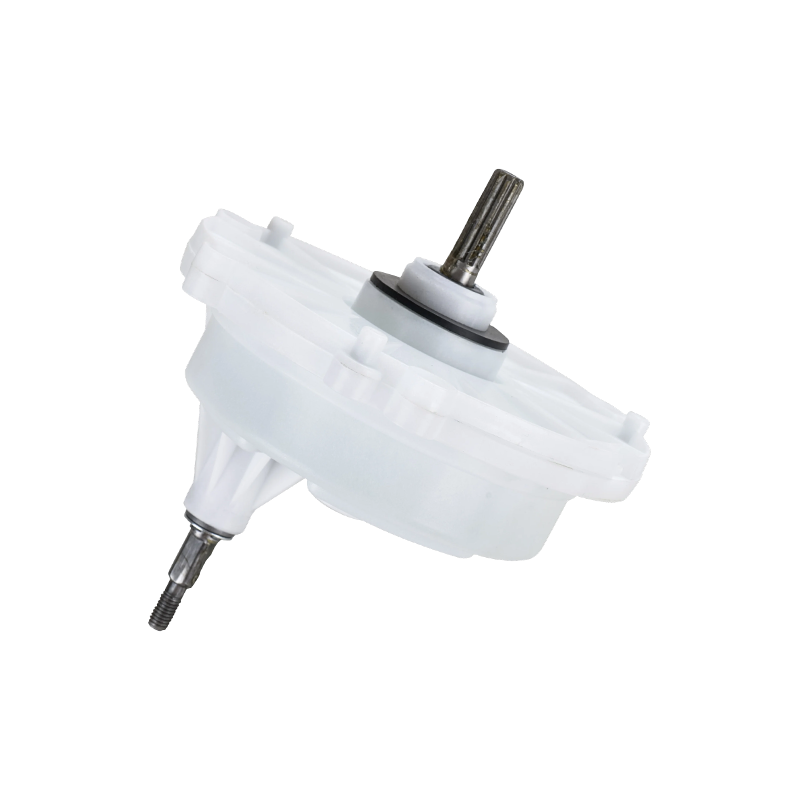
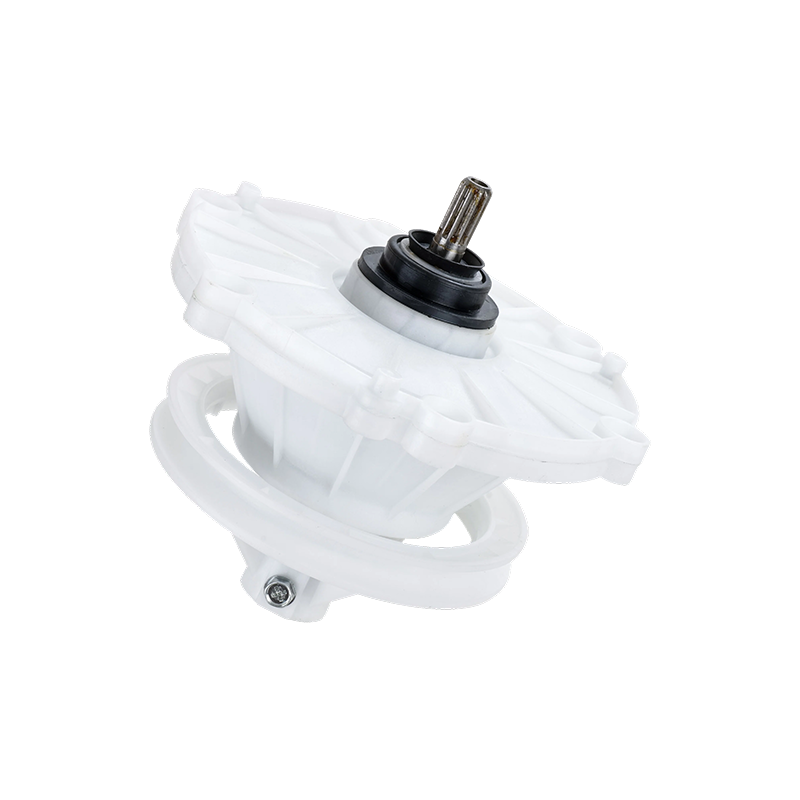
The Semi-auto Washing Machine Gear Box is developed for semi-automatic agitator washing machines that require stable washing action, dependable torque transmission, and long-term operation in demanding environments. Its primary function is to provide the mechanical conversion necessary for the agitator to move clothes and water effectively. By controlling output speed and increasing usable torque, the gearbox supports the washing process while helping protect the motor and other drive components from unsuitable operating conditions.
Designed with durability, manufacturing efficiency, and cost control in mind, this type of gearbox is suitable for price-sensitive appliance markets without sacrificing the essential characteristics required for dependable washing-machine operation. It can serve as an original equipment component for appliance manufacturers or as a replacement part for distributors, repair networks, and aftermarket service providers.
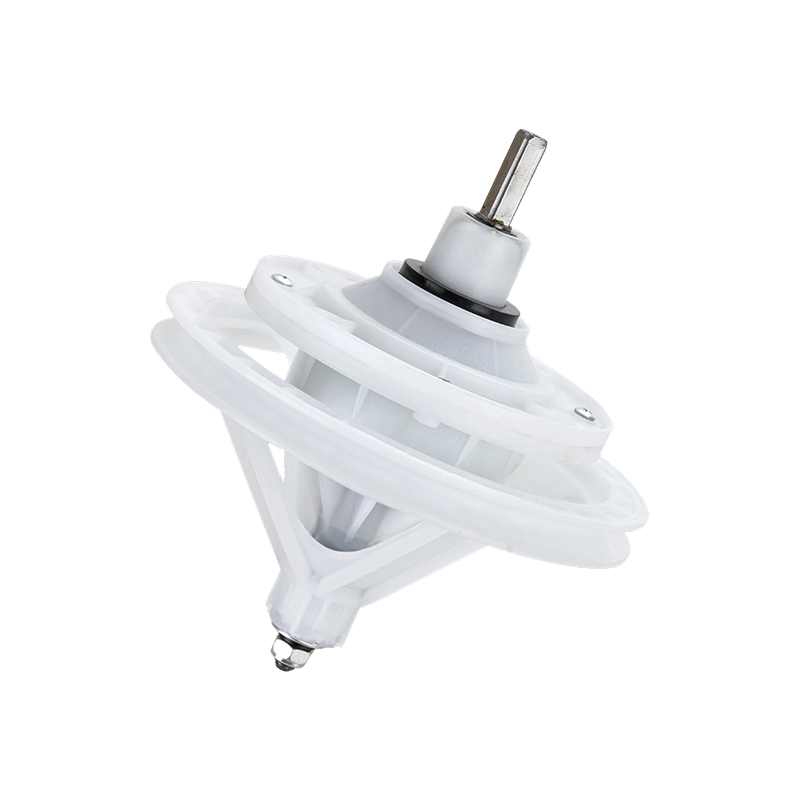
Semi-auto Washing Machine Gear Box
1. The Role of a Gearbox in a Semi-Automatic Washing Machine
A semi-automatic washing machine typically uses a motor to generate rotational energy and an agitator or pulsator to create movement in the wash tub. The motor generally operates at a speed and torque range that is not directly suitable for efficient agitation. If the agitator were connected directly to the motor, it could rotate too quickly, produce insufficient usable torque under load, and create excessive mechanical stress on the clothes, tub, shaft, and drive system.
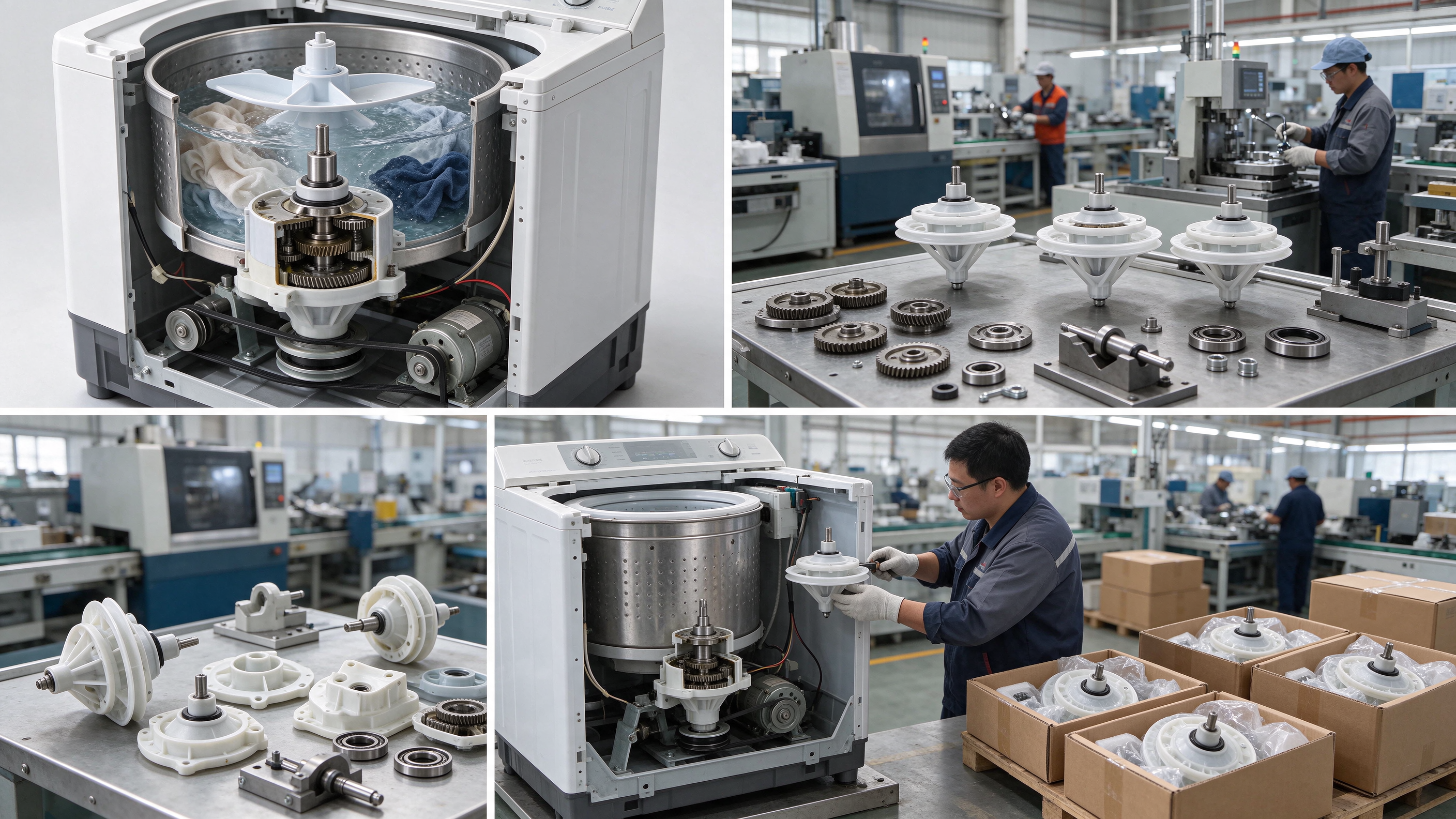
The gearbox solves this problem by changing the characteristics of the motor’s output. Through a combination of gears, shafts, bearings, seals, and housing components, it reduces rotational speed and increases output torque. This controlled output allows the agitator to produce the alternating or circulating water movement necessary to loosen dirt, distribute detergent, and move garments through the wash solution.
In practical terms, the gearbox performs several connected functions:
1. It receives rotational power from the washing-machine motor.
2. It reduces motor speed to a level suitable for agitator operation.
3. It increases torque so that the agitator can continue operating when the tub contains water and a substantial load of clothing.
4. It transfers rotation through the output shaft to the agitator or related washing mechanism.
5. It helps maintain a stable mechanical connection during repeated start-stop and reversing cycles.
6. It isolates or manages the effects of motor vibration and fluctuating load conditions.
7. It provides a compact drive solution that can be integrated into the lower section of a washing-machine assembly.
Because the gearbox is continuously exposed to mechanical loads, humidity, vibration, and repeated operating cycles, its design and manufacturing quality have a direct effect on the user’s perception of the appliance. A gearbox that operates smoothly and consistently can contribute to effective washing, lower mechanical noise, fewer service interruptions, and a longer useful life for the machine.
2. Product Overview and Intended Application
The Semi-auto Washing Machine Gear Box is intended for semi-automatic agitator washing machines. These machines commonly use a separate wash compartment, and the gearbox supports the agitator mechanism in the washing section. The component is particularly appropriate for appliance designs that prioritize straightforward construction, economical production, and serviceable mechanical architecture.
The product is not simply a speed-reduction device. It is a coordinated transmission assembly designed to operate as part of a washing-machine drive system. Its performance depends on the interaction of the gear train, input connection, output shaft, housing, sealing structure, and installation interface. For this reason, a suitable gearbox must be selected according to the washing-machine model, motor configuration, agitator design, shaft dimensions, mounting arrangement, and expected load.
Typical application areas include:
• New semi-automatic washing-machine production.
• Replacement of worn or damaged washing-machine gearboxes.
• Aftermarket repair and maintenance programs.
• Appliance assembly projects requiring customized transmission components.
• Export washing-machine models designed for value-focused markets.
• Regional appliance brands seeking a stable OEM or ODM component supply.
In addition to complete gearbox assemblies, buyers may require support with interface dimensions, output-shaft arrangements, mounting points, rotation direction, pulley or coupling compatibility, and packaging. A manufacturer with experience in washing-machine drive components can help coordinate these details before production, reducing the risk of mismatch during assembly.
3. Core Performance Advantages
3.1 High-Torque Output for Practical Washing Loads
The most important functional advantage of a washing-machine gearbox is its ability to convert the motor’s high-speed rotation into usable torque. During operation, the agitator must move water and clothing together. Wet garments can become heavy, and the load may not be evenly distributed. The transmission therefore needs to deliver sufficient torque during starting, reversing, and continuous agitation.
A high-torque output helps the washing machine maintain effective movement when the load changes. It also reduces the likelihood that the motor will struggle during operation. By matching the motor’s characteristics to the agitator’s mechanical requirements, the gearbox supports a more balanced drive system.
The gearbox is especially valuable during starting and direction changes. These moments can create higher temporary loads than steady-state operation. A properly designed reduction mechanism allows the output shaft to respond with the mechanical advantage needed to move the agitator without requiring an unnecessarily large motor.
3.2 Controlled Low-Speed Operation
Effective washing is not achieved by simply rotating the agitator as fast as possible. Excessive speed may increase splashing, stress textile fibers, raise noise, and place additional loads on the tub and mounting structure. Controlled low-speed output helps the agitator create a useful water-flow pattern while maintaining a practical operating rhythm.
The reduction function also makes it possible to use a motor with a relatively high rotational speed while delivering a slower output suitable for washing. This arrangement can support compact appliance designs and provide flexibility in selecting the motor and transmission combination.
3.3 Stable Mechanical Transmission
A washing machine may complete thousands of operating cycles during its service life. Each cycle can involve starting, stopping, reversing, acceleration, deceleration, and changing load conditions. The gearbox must therefore maintain a dependable connection between the motor and the agitator throughout repeated operation.
A stable transmission helps reduce irregular movement and limits unnecessary shock across the drive system. Consistent gear engagement and appropriate support for rotating elements can contribute to smoother operation. This is important not only for washing performance but also for minimizing wear on connected components.
3.4 Suitability for Humid Operating Environments
Washing machines naturally operate in environments where water vapor, splashing, condensation, and detergent residue may be present. The gearbox is positioned near the washing mechanism and must be designed with awareness of these conditions. Proper housing construction, sealing, material selection, and assembly control are essential for protecting internal transmission parts.
The product is intended to support long-term operation in high-humidity environments. Its environmental suitability is based on the combination of mechanical design and manufacturing discipline rather than on any single part. A robust housing, reliable sealing interfaces, suitable lubricating arrangements, and controlled assembly procedures all contribute to service durability.
3.5 Cost-Conscious Construction
Many semi-automatic washing machines are purchased in price-sensitive markets. Manufacturers must control component cost while maintaining basic performance and reliability. A gearbox designed specifically for this product category can provide an effective balance between functional requirements and production economy.
Cost control does not necessarily mean reducing quality. It can involve simplifying the structure where appropriate, standardizing selected components, improving production yield, reducing material waste, and manufacturing core parts efficiently. A mature transmission supplier can also help customers select the most appropriate configuration rather than over-engineering the component for an application that does not require additional features.
3.6 Compatibility with OEM and ODM Programs
Washing-machine manufacturers often require components that match their own cabinet design, motor arrangement, tub structure, and agitator connection. A standardized replacement product may not fit every application. For this reason, OEM and ODM support is a significant advantage when sourcing gearboxes.
Custom support may include dimensional adjustment, interface development, output-shaft modification, mounting optimization, material selection, packaging design, and production documentation. The objective is to provide a transmission solution that can be integrated into the customer’s complete appliance rather than forcing the customer to redesign the machine around an unsuitable component.
4. Design Features That Support Reliability
4.1 Integrated Transmission Architecture
A gearbox assembly must coordinate multiple components in a confined space. The housing supports the internal mechanism, the gear train transfers power, shafts provide input and output connections, bearings or bushings support rotation, and seals help manage the movement of lubricant and the entry of contaminants. The assembly must maintain alignment under load.
An integrated architecture helps the manufacturer control the relationship between these parts. When the housing, transmission components, and interfaces are designed as a coordinated system, it becomes easier to manage installation dimensions and operating behavior. This approach also supports repeatable production and simplifies inspection.
4.2 Appropriate Gear Reduction
The reduction ratio is one of the most important design factors in a washing-machine gearbox. It determines the relationship between motor speed and agitator speed and influences the available output torque. The appropriate ratio depends on the motor, washing load, agitator geometry, desired washing action, and appliance control program.
A reduction system that is too small may provide insufficient torque or excessive agitator speed. A reduction system that is too large may reduce output speed more than necessary and increase mechanical complexity or efficiency losses. A carefully selected ratio provides a practical balance for the intended washing application.
4.3 Durable Housing and Mounting Interfaces
The housing must protect internal components while maintaining the alignment of the transmission. It also needs to connect securely with the washing-machine structure. During operation, the housing experiences vibration, torque reaction, and changing mechanical loads. Weak or poorly controlled mounting interfaces can lead to noise, misalignment, or premature wear.
For this reason, dimensional accuracy around mounting points, shaft openings, cover interfaces, and sealing surfaces is important. Consistency in these areas helps simplify appliance assembly and improves interchangeability between production batches.
4.4 Sealing and Lubrication Considerations
Gearboxes require suitable lubrication to reduce friction, control heat, and protect gear surfaces. The lubricant must remain within the intended internal area during normal operation. Seals and sealing interfaces therefore play an important role in gearbox reliability.
At the same time, the gearbox must be protected from water, humidity, detergent contamination, and other external influences. Seal selection and assembly quality affect both internal protection and the prevention of lubricant leakage. A well-controlled process is essential because even a high-quality seal can perform poorly if it is damaged, incorrectly positioned, or installed against an inaccurate surface.
4.5 Resistance to Repeated Reversing
Many agitator washing systems use changing directions or alternating movement to improve washing action. Reversing operation places special demands on gears, shafts, couplings, and connections. The transmission must tolerate changes in torque direction without excessive backlash, impact, or instability.
Designing for repeated reversing involves considering gear engagement, shaft support, material strength, lubrication, and assembly tolerances. These factors help the gearbox maintain consistent operation over repeated washing cycles.
5. Manufacturing Strengths and Production Capabilities
The performance of a washing-machine gearbox begins with its design but is confirmed through manufacturing. Accurate machining, stable material quality, controlled assembly, and reliable inspection are necessary to produce a component that performs consistently in actual appliances.
Cixi Gaite Electric Co., Ltd. was established in 2002 in Ningbo, Zhejiang, China, and specializes in the research, development, and manufacture of core washing-machine components. Its product range includes washing-machine gear reducers, synchronizers, gearboxes, P-shafts, and other related drive components. This product focus allows the company to build experience around the specific requirements of washing-machine transmissions rather than treating the gearbox as a general-purpose industrial product.
The company operates a modern production base of approximately 10,000 square meters. This scale provides room for production equipment, assembly operations, quality inspection, material management, and development activities. A coordinated production base can improve communication between engineering, manufacturing, and quality teams, helping shorten the path from product design to repeatable mass production.
5.1 In-House Production of Core Materials
Approximately 90 percent of the company’s core materials are produced in-house. This level of internal control can provide several supply-chain advantages. It may help stabilize material availability, reduce dependence on external suppliers, improve consistency between batches, and give engineers greater control over component properties.
In-house production also supports better traceability. When key materials and parts are produced within the same manufacturing system, it becomes easier to monitor process conditions, identify the source of deviations, and implement corrective action. For appliance customers, this can contribute to more reliable delivery and consistent product performance.
Internal capability is particularly valuable for components such as shafts, gear-related parts, housings, and other core transmission elements. These parts must meet dimensional and mechanical requirements that directly influence the operation of the complete gearbox. Stable control of such components can reduce variation during final assembly.
5.2 Advanced Machinery and Mature Processes
The company is equipped with advanced machinery and mature manufacturing processes. For a gearbox producer, this may include equipment and procedures for machining, forming, drilling, finishing, heat treatment coordination, cleaning, assembly, lubrication, sealing, and final testing. Each stage contributes to the final reliability of the transmission.
Machining accuracy is important because gearboxes depend on the relationship between shafts, gears, bearings, and housing surfaces. Small dimensional differences can affect gear engagement, friction, noise, and service life. Controlled machining helps maintain the intended geometry and supports stable assembly.
Process maturity is equally important. A mature process is not only a collection of machines; it includes documented work instructions, controlled parameters, trained operators, inspection standards, maintenance procedures, and feedback mechanisms. Together, these elements help ensure that production quality is repeatable rather than dependent on individual judgment alone.
5.3 Engineering and Product Development
OEM and ODM customers often need more than an existing catalog product. They may have a new washing-machine platform, a revised tub structure, a different motor, or a special output connection. Engineering support enables the supplier to evaluate these requirements and develop a suitable solution.
Product development may begin with a review of application conditions and interface drawings. Engineers can then assess the required reduction characteristics, shaft arrangement, mounting structure, housing dimensions, sealing requirements, and expected load. Prototype development and sample evaluation can help confirm fit and function before mass production.
A supplier with experience in washing-machine gearboxes can also help identify potential design risks at an early stage. For example, an apparently minor change in shaft length may influence sealing, bearing support, agitator alignment, or installation clearance. Early technical communication can prevent expensive redesign during assembly-line preparation.
5.4 Quality Management Systems
The company has obtained ISO 9001 Quality Management System certification and ISO 14001 Environmental Management System certification. ISO 9001 reflects the importance of organized quality processes, customer requirements, process control, documentation, and continuous improvement. ISO 14001 demonstrates attention to environmental management and the systematic control of environmental responsibilities.
Certifications do not replace product testing or engineering judgment, but they provide a framework for consistent management. For international customers, a documented quality system can make supplier evaluation more efficient and provide greater confidence in production controls.
The products comply with RoHS requirements and are designed to meet international expectations for safety, environmental responsibility, and reliability. Compliance considerations are increasingly important for appliance manufacturers selling into different markets, where material restrictions and environmental requirements may apply.
6. Quality Control from Material to Finished Assembly
Quality control for a washing-machine gearbox should cover the entire product life within the factory. Inspection limited to the finished assembly may not detect all process risks. A comprehensive approach begins with incoming materials and continues through machining, component inspection, assembly, functional testing, and packaging.
6.1 Material and Component Verification
Material verification helps confirm that the selected metals, polymers, seals, lubricants, and other components meet the intended requirements. Key characteristics may include dimensional stability, strength, wear resistance, corrosion behavior, and compatibility with the operating environment.
Components such as shafts, gears, housings, and sealing elements should be checked against approved drawings or specifications. Verification may include dimensional measurement, visual inspection, surface checks, and batch traceability. Early detection of nonconforming parts prevents them from entering later production stages.
6.2 Dimensional Inspection
Gearbox dimensions influence both mechanical performance and installation compatibility. Important inspection areas may include shaft diameter, shaft length, mounting-hole position, housing dimensions, sealing surfaces, gear location, and overall assembly height.
Consistent dimensional inspection is especially important for OEM customers because their assembly lines are usually designed around defined interfaces. A small deviation in a mounting pattern or output shaft can cause delays, rework, or installation problems. Reliable inspection protects both the gearbox producer and the appliance manufacturer from these avoidable issues.
6.3 Assembly Control
Assembly quality affects the relationship between all internal parts. Correct installation of gears, shafts, bearings, seals, fasteners, and lubricant is necessary to achieve stable operation. Assembly procedures should define the sequence, tools, torque requirements, cleanliness standards, and inspection points.
Clean assembly is particularly important for gearboxes. Foreign particles can increase wear, interfere with sealing, or generate abnormal noise. Controlled handling and cleaning procedures help protect the internal transmission mechanism.
6.4 Functional Testing
Functional testing can help identify issues that are not visible during dimensional inspection. Depending on the product design and customer requirements, testing may evaluate rotation, noise, vibration, torque behavior, leakage, direction, or operating smoothness.
Testing also provides feedback for process improvement. If a recurring abnormal sound or resistance pattern is detected, engineering and manufacturing teams can investigate the relevant gear mesh, bearing support, lubrication amount, or assembly condition. This closed-loop approach supports continuous improvement.
6.5 Packaging and Delivery Protection
A gearbox can be damaged after it leaves the production line if packaging does not protect shafts, mounting points, sealing areas, and housing surfaces. Appropriate packaging should prevent impact, movement, moisture exposure, and contamination during storage and transportation.
For export orders, packaging design is particularly important because products may travel through multiple handling environments. Clear identification, batch information, and protective materials can help customers receive components in an organized and usable condition.
7. Advantages over Less Specialized Alternatives
Customers may compare a washing-machine gearbox with a low-cost general transmission or an unverified replacement component. The lowest initial price, however, does not always represent the lowest total cost. A gearbox that does not match the washing-machine application can create installation difficulties, unstable performance, early wear, leakage, or repeated service requirements.
A specialized semi-automatic washing-machine gearbox offers several advantages over a generic alternative.
First, it is designed around the operating requirements of agitator washing machines. The reduction function, output connection, and mechanical structure are considered in relation to washing loads rather than unrelated industrial applications.
Second, a specialized supplier understands the importance of humidity, reversing cycles, vibration, compact installation space, and price-sensitive appliance production. These factors are central to washing-machine design and may not be addressed by a general-purpose gearbox.
Third, a specialized manufacturer can offer more practical technical support. When customers need changes to the shaft, housing, mounting arrangement, or transmission configuration, a supplier familiar with washing-machine components can communicate using relevant application knowledge.
Fourth, integrated manufacturing of core parts can improve consistency. A supplier that controls a substantial portion of its core materials and processes may be better positioned to maintain stable quality and respond to production changes.
Fifth, an established quality and environmental management framework supports the needs of international OEM and aftermarket customers. Certifications, RoHS compliance, controlled production, and traceability can simplify supplier qualification and help customers manage their own compliance responsibilities.
8. OEM and ODM Customization Process
Customization should begin with a clear understanding of the washing-machine application. Customers can provide drawings, photographs, existing gearbox samples, motor information, agitator specifications, and expected operating conditions. The more complete the technical information, the more efficiently the supplier can evaluate the requirement.
8.1 Application Review
The first stage is to review the existing appliance structure. Important questions include how the gearbox is mounted, how the motor is connected, how the output shaft interfaces with the agitator, and whether the machine requires a specific direction of rotation or reversing function.
Load conditions should also be considered. The supplier may need information about washing capacity, motor power, operating cycles, maximum load, tub dimensions, and expected service conditions. These details help determine whether an existing product is suitable or whether a customized configuration is required.
8.2 Technical Evaluation
During technical evaluation, engineers assess dimensions, materials, transmission requirements, sealing, lubrication, and production feasibility. The goal is not merely to copy a component but to ensure that the proposed gearbox will function as part of the complete washing machine.
Potential interference points and assembly risks should be identified before tooling or mass production begins. This may include insufficient clearance, incorrect shaft engagement, incompatible mounting points, or inadequate protection from water and detergent exposure.
8.3 Prototype and Sample Validation
Prototype or sample units allow customers to verify installation and performance. The gearbox can be evaluated in the actual washing-machine structure or in a representative test fixture. Testing may include empty operation, nominal load, maximum intended load, repeated reversing, noise evaluation, leakage checks, and extended running.
Feedback from sample validation can be used to optimize dimensions, materials, gear characteristics, seals, or assembly details. This stage is valuable because it identifies application-specific issues before the product enters regular production.
8.4 Mass Production and Continuous Improvement
Once the design is approved, production planning can define tooling, inspection standards, capacity, packaging, and delivery schedules. Ongoing quality information should continue to be reviewed after mass production begins. Customer feedback, field-service data, and internal inspection results can support further improvements.
This approach helps create a long-term supply relationship rather than a one-time transaction. For appliance manufacturers, a stable gearbox supplier can contribute to platform continuity, replacement-part availability, and controlled product evolution.
9. Installation and Maintenance Considerations
Correct installation is essential for obtaining the expected performance from a washing-machine gearbox. Before installation, the replacement part should be checked against the washing-machine model, mounting dimensions, shaft configuration, motor connection, and agitator interface. A component that appears similar externally may not be mechanically interchangeable.
The surrounding assembly should also be inspected. Worn motor couplings, damaged mounting brackets, bent shafts, loose fasteners, or misaligned agitator components can create problems that are incorrectly attributed to the gearbox. Replacing a gearbox without correcting these related issues may lead to repeated failure.
During installation, the gearbox should be aligned carefully and fastened according to the appliance manufacturer’s requirements. Excessive force should not be used to fit a shaft or mounting point. Forced installation can damage seals, distort housings, or introduce misalignment.
Electrical safety should be observed when working on any washing machine. The appliance must be disconnected from the power supply before service work begins. Water should be removed or controlled to prevent accidental exposure to electrical components and the work area should be kept clean.
Maintenance practices depend on the washing-machine design. Users should avoid overloading the machine, because excessive loads can increase torque and shock on the transmission. Uneven loading, foreign objects, and operation with damaged agitator components may also increase stress. Service technicians should investigate abnormal noise, leakage, irregular movement, or failure to reverse promptly.
A gearbox that is correctly selected, installed, and used within its intended application can provide dependable service for a long period. Proper appliance-level maintenance protects not only the gearbox but also the motor, tub, shaft, couplings, and control system.
10. Purchasing Guidance for Distributors and Manufacturers
When purchasing semi-automatic washing-machine gearboxes, buyers should evaluate more than unit price. The most important criteria include application compatibility, transmission performance, manufacturing consistency, customization support, quality documentation, delivery capability, and after-sales communication.
Buyers should confirm whether the supplier has experience with washing-machine components and whether the product is intended for semi-automatic agitator machines. They should request relevant drawings or technical data for shaft dimensions, mounting interfaces, overall size, and applicable motor connections.
For replacement-part distributors, interchangeability and identification are particularly important. Product labeling, packaging, model references, and batch information can help reduce warehouse errors and improve service efficiency. Distributors may also benefit from stable packaging dimensions and predictable production lead times.
For OEM customers, technical communication should begin before purchase orders are finalized. The customer and supplier should agree on drawings, approved samples, inspection standards, change-control procedures, packaging, and delivery expectations. Clear documentation helps ensure that both parties understand the same product requirements.
Buyers should also consider the supplier’s ability to support future changes. Washing-machine platforms may be updated over time, and a gearbox supplier that can modify interfaces or develop related parts can reduce the need to search for a new source for every product revision.
| Evaluation Area | What Buyers Should Confirm | Value to the Washing-Machine Program |
|---|
| Application fit | Compatibility with semi-automatic agitator systems, motor arrangement, and washing load | Reduces installation and operating risks |
| Mechanical interface | Output shaft, mounting dimensions, housing size, and connection details | Supports efficient assembly and replacement |
| Transmission performance | Speed reduction, torque capability, reversing suitability, and operating smoothness | Helps maintain effective washing action |
| Environmental protection | Sealing, lubrication, humidity resistance, and material suitability | Supports long-term service in washing-machine environments |
| Manufacturing capability | Production equipment, in-house core materials, process maturity, and capacity | Improves consistency and supply stability |
| Quality management | Inspection procedures, traceability, ISO certification, and compliance documentation | Supports supplier qualification and risk control |
| Customization | OEM and ODM engineering support, sample development, and design changes | Enables integration into different appliance platforms |
| After-sales support | Technical communication, replacement assistance, and response capability | Helps resolve field and assembly issues efficiently |
11. Sustainability and Responsible Manufacturing
Environmental responsibility is becoming increasingly important in the appliance supply chain. A gearbox manufacturer contributes to sustainability through material management, process efficiency, waste reduction, equipment maintenance, responsible lubrication practices, and compliance with applicable material restrictions.
ISO 14001 certification provides a structured framework for environmental management. It encourages organizations to identify environmental aspects, establish controls, monitor performance, and pursue improvement. For a component manufacturer, this may include attention to energy use, production waste, chemical handling, packaging materials, and supplier management.
RoHS compliance is also relevant to international appliance production. Restrictions on certain hazardous substances help customers meet market requirements and support more responsible product development. Buyers should confirm the compliance documentation needed for their own destination markets and product categories.
Durability itself is an important sustainability characteristic. A gearbox that operates reliably for a longer period may reduce the frequency of replacement, service transportation, discarded appliance components, and production of unnecessary spare parts. Designing for practical service life therefore benefits both customers and the environment.
12. Why Choose an Experienced Washing-Machine Component Supplier
A supplier’s value is determined by more than the ability to manufacture a single part. Long-term cooperation depends on technical understanding, stable production, communication, quality management, and the ability to respond to changing requirements.
With experience dating back to 2002, Cixi Gaite Electric Co., Ltd. has developed a specialized position in washing-machine components. Its cooperation history includes long-term partnerships with Sharp Corporation, Panasonic Corporation, and Midea Group. Such relationships indicate experience in serving established appliance organizations and supporting demanding production environments.
The company’s focus on gear reducers, synchronizers, washing-machine gearboxes, P-shafts, and other core components provides a broader understanding of the washing-machine drive system. This can be useful when a customer is evaluating not only a gearbox but also the relationship between the gearbox, shaft, synchronizer, motor, agitator, and related transmission parts.
The combination of an approximately 10,000-square-meter production base, substantial in-house production of core materials, advanced equipment, mature processes, ISO certifications, and OEM/ODM capability gives customers a foundation for stable sourcing. These strengths are especially relevant for buyers that require consistent quality across repeated orders rather than an isolated sample purchase.
13. Frequently Asked Questions
Q1: What is the main function of a semi-automatic washing-machine gearbox?
The gearbox converts the motor’s high-speed rotation into a lower-speed, higher-torque output suitable for driving the washing-machine agitator. This allows the agitator to move clothing and water effectively during the wash cycle.
Q2: Why can the motor not drive the agitator directly?
A motor often operates at a speed and torque range that is not suitable for direct agitator operation. Direct connection could result in excessive speed, insufficient load-handling capability, higher stress, and inefficient washing movement. The gearbox provides the required mechanical conversion.
Q3: Is this gearbox suitable for all washing machines?
The product is intended for semi-automatic agitator washing machines. Compatibility depends on the specific appliance design, including the motor, mounting structure, shaft dimensions, agitator connection, rotation requirements, and load conditions. Technical confirmation should be completed before ordering.
Q4: Can the gearbox be customized?
OEM and ODM customization can be supported according to the customer’s application requirements. Possible areas include mounting dimensions, output-shaft configuration, housing design, transmission characteristics, sealing arrangements, and packaging. Drawings, samples, and appliance information are useful for technical evaluation.
Q5: Is the gearbox designed for humid environments?
Yes. The product is designed for long-term operation in the high-humidity environment associated with washing machines. Housing structure, sealing, lubrication, material selection, and assembly quality all contribute to environmental durability.
Q6: What advantages does in-house production of core materials provide?
In-house production can improve control over material consistency, supply stability, traceability, and process coordination. It may also help the manufacturer respond more efficiently to engineering changes and maintain consistent quality between production batches.
Q7: What certifications and compliance qualifications are available?
The manufacturer has obtained ISO 9001 Quality Management System certification and ISO 14001 Environmental Management System certification. Its products comply with RoHS requirements and are developed to meet international expectations for safety, environmental responsibility, and reliability.
Q8: Can the gearbox be supplied for aftermarket replacement?
Yes. The product can be used for aftermarket repair and replacement programs when its dimensions and operating characteristics match the target washing-machine model. Buyers should provide model information or component details to confirm compatibility.
Q9: What information should be provided when requesting a quotation?
Useful information includes the washing-machine model, motor specifications, gearbox drawings or photographs, shaft dimensions, mounting details, agitator connection, target quantity, intended market, packaging requirements, and any required certification or inspection documentation.
Q10: How can users help extend gearbox service life?
Users should avoid overloading the washing machine, prevent foreign objects from entering the mechanism, correct abnormal vibration promptly, and ensure that service work is performed safely. Proper installation and timely inspection of related components such as couplings, shafts, and mounting brackets are also important.
Q11: Does gearbox quality affect washing performance?
Yes. The gearbox influences agitator speed, torque, movement stability, reversing behavior, noise, and the mechanical protection of the drive system. A stable transmission helps the agitator create effective water movement under changing load conditions.
Q12: Why should an appliance manufacturer work directly with a specialized supplier?
A specialized supplier can provide application-specific engineering knowledge, more relevant customization support, controlled production of core components, and technical assistance throughout development and mass production. This can reduce integration risk and support more consistent appliance quality.
14. Conclusion
The Semi-auto Washing Machine Gear Box is a fundamental transmission component for semi-automatic agitator washing machines. By converting high-speed motor rotation into low-speed, high-torque output, it enables the agitator to move clothing and water in a controlled and effective manner. Its importance extends beyond basic power transfer: the gearbox also influences washing consistency, noise, vibration, mechanical durability, service life, and overall appliance reliability.
The product is well suited to price-sensitive markets because it combines practical performance with a design focus on durability and cost control. Its suitability for humid environments, repeated operation, reversing cycles, and variable washing loads makes it a valuable component for both new appliance production and aftermarket replacement.
The manufacturing capabilities behind the product are equally important. Cixi Gaite Electric Co., Ltd. provides specialized experience in washing-machine drive components, an approximately 10,000-square-meter production base, substantial in-house production of core materials, advanced machinery, mature manufacturing processes, OEM and ODM support, and quality and environmental management certifications. These strengths help create a stable foundation for customers seeking consistent, efficient, and customizable transmission solutions.
For appliance manufacturers, distributors, and service organizations, the best gearbox choice is one that fits the complete application, performs reliably under real operating conditions, and can be supported throughout its production and service life. A specialized semi-automatic washing-machine gearbox offers that combination of mechanical function, manufacturing control, application knowledge, and long-term supply potential.
References
1. ISO 9001, Quality Management Systems — Requirements.
2. ISO 14001, Environmental Management Systems — Requirements with Guidance for Use.
3. Restriction of Hazardous Substances, RoHS compliance principles for electrical and electronic equipment.
4. General engineering principles for mechanical power transmission, gear reduction, torque conversion, and shaft alignment.
5. General washing-machine design principles relating to agitator movement, motor transmission, humidity protection, and appliance maintenance.
6. Product and company information supplied for the Semi-auto Washing Machine Gear Box and related washing-machine drive components.

 English
 عربى



 +86-574-63256717 /63267914
info@gaite.cn
 gaite@gaite.cn
 No. 208 Miaoshan Road, Shiyan Village, Henghe Town, Cixi City, Ningbo City, Zhejiang Province, China
