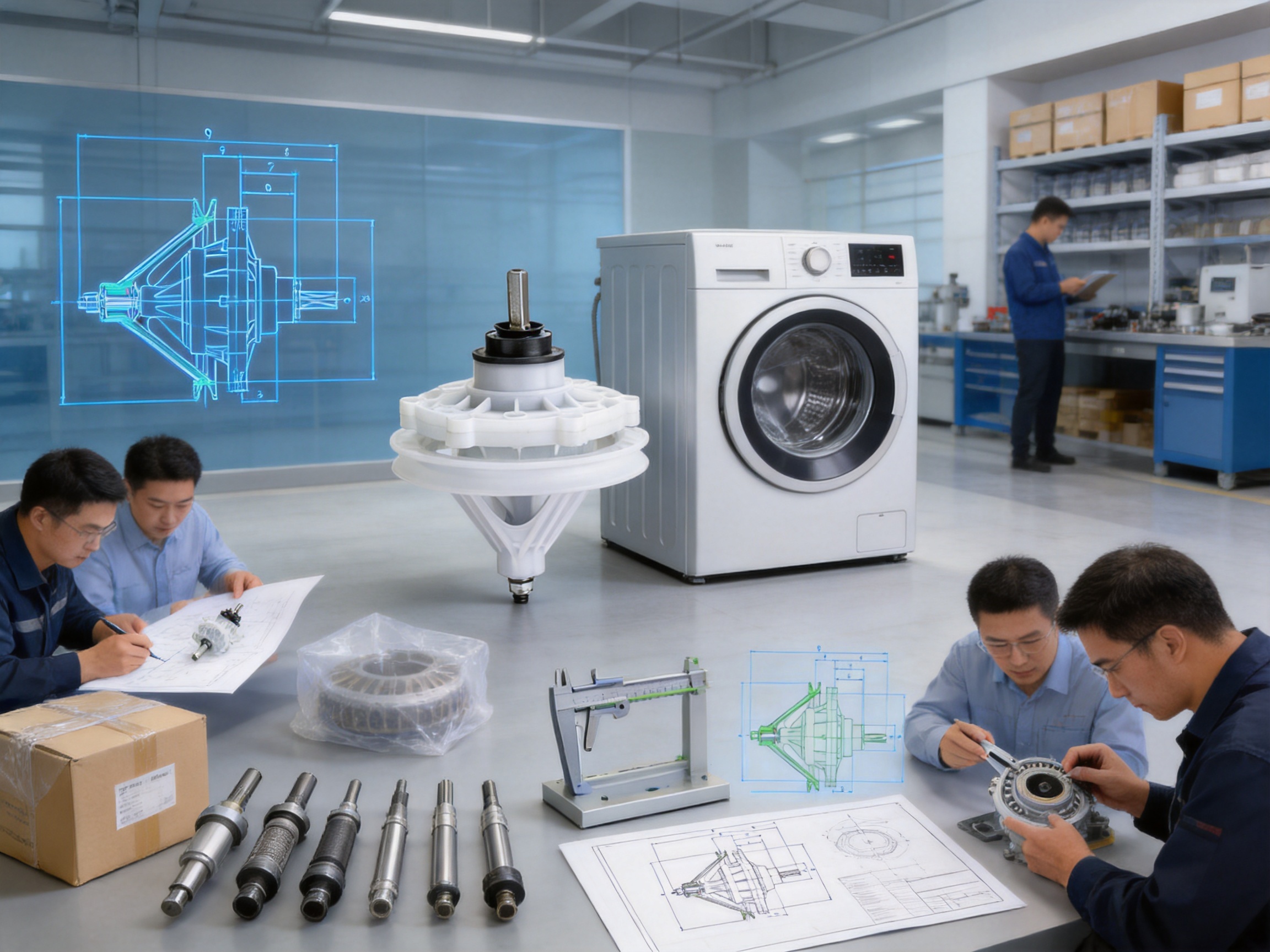
A washing machine transmission is one of the most important mechanical assemblies in a semi-automatic agitator washing machine. It transfers motor power to the agitator while changing the motor’s high-speed rotation into the lower-speed, higher-torque movement required for effective washing. Although the transmission is compact compared with the complete appliance, its design, material quality, manufacturing precision, and operating stability have a direct effect on washing performance, service life, noise, maintenance requirements, and production cost.
For appliance manufacturers, replacement-parts distributors, and aftermarket service providers, selecting the correct washing machine transmission is more than a matter of matching external dimensions. The component must be compatible with the washing machine structure, motor output, shaft arrangement, tub assembly, agitator, belt or pulley system, and installation method. It must also operate reliably in a humid environment where water, detergent, vibration, and frequent load changes are present.
This article examines the construction, operating principle, performance advantages, manufacturing process, quality controls, and customization potential of a washing machine transmission designed for semi-automatic agitator washing machines. It also explains why an experienced washing machine component manufacturer can provide advantages over general-purpose gearbox suppliers, low-cost copy products, and unverified aftermarket parts.
1. The Role of a Washing Machine Transmission
The electric motor used in a washing machine generally rotates much faster than the agitator should move. A motor may be capable of producing efficient power at a relatively high rotational speed, but an agitator needs controlled movement with sufficient torque to move water, detergent, and clothing through the wash load. Directly connecting the motor to the agitator would normally produce excessive speed, insufficient torque at the working point, or unsuitable movement for the washing process.
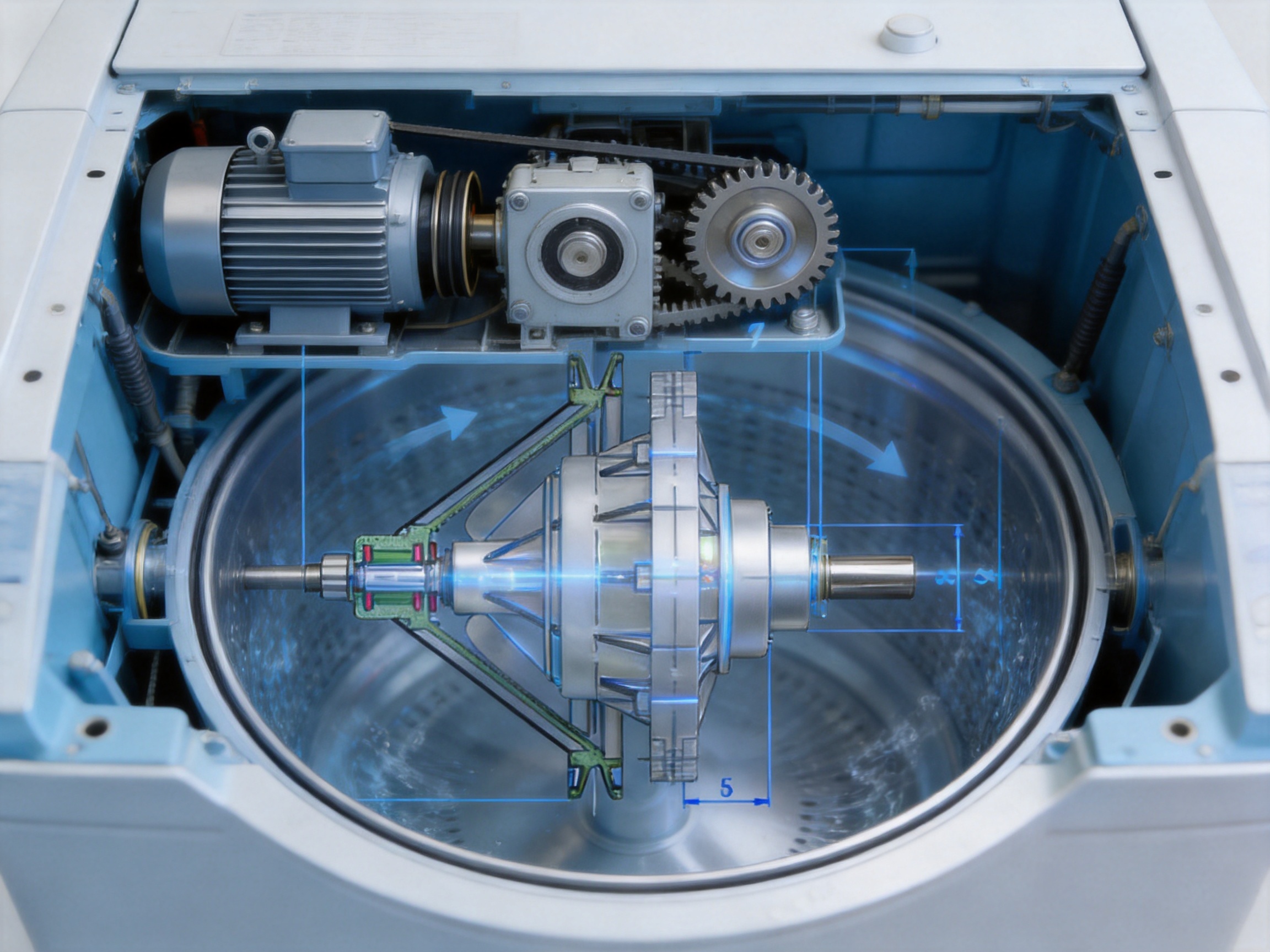
The transmission solves this problem by using a mechanical reduction system. It receives rotational input from the motor and delivers controlled output through an agitator shaft or related drive structure. The reduction process lowers speed and increases usable torque. This allows the agitator to work under changing loads, including light loads, heavily soaked garments, towels, and other fabrics that create resistance during operation.
In a semi-automatic agitator washing machine, the transmission may operate in a relatively straightforward washing cycle, but it still experiences repeated starting, stopping, reversing, and load changes. Every cycle can place stress on gears, shafts, bearings, seals, housings, and connection points. A well-designed transmission must therefore combine efficient power transfer with resistance to wear, vibration, moisture, and repeated mechanical shock.
1.1 Converting Speed into Torque
The main function of the gear reduction mechanism is to convert high-speed motor rotation into lower-speed output with greater torque. In practical terms, the agitator does not need to rotate as quickly as the motor. Instead, it needs enough mechanical force to move the wash load and create the water circulation required for cleaning.
Gear reduction also enables the washing machine to use a compact and economical motor while still achieving useful agitation performance. By selecting suitable gear ratios, gear tooth profiles, shaft dimensions, and bearing arrangements, the transmission can match the motor’s power characteristics to the demands of the washing chamber.
1.2 Supporting Stable Agitation
Stable agitation depends on more than output torque. The output shaft must maintain appropriate alignment, the gear mesh must remain consistent, and the housing must limit unwanted movement. Excessive clearance or poor alignment can cause noise, vibration, uneven load distribution, and accelerated wear.
A reliable transmission helps maintain predictable agitator movement throughout the washing cycle. This can contribute to more consistent cleaning performance and can reduce stress on the motor, mounting structure, and connected washing machine components.
1.3 Operating in a Humid Appliance Environment
Washing machines operate in an environment where humidity, splashing water, detergent residue, and temperature variation may be present. The transmission is not simply a dry industrial gearbox installed in a protected factory. It must be designed and assembled with awareness of the appliance environment.
Housing design, sealing arrangements, lubrication selection, corrosion resistance, and assembly cleanliness all influence moisture protection. When these elements are properly managed, the transmission can provide stable operation over repeated washing cycles and help reduce the likelihood of premature failure caused by contamination or corrosion.
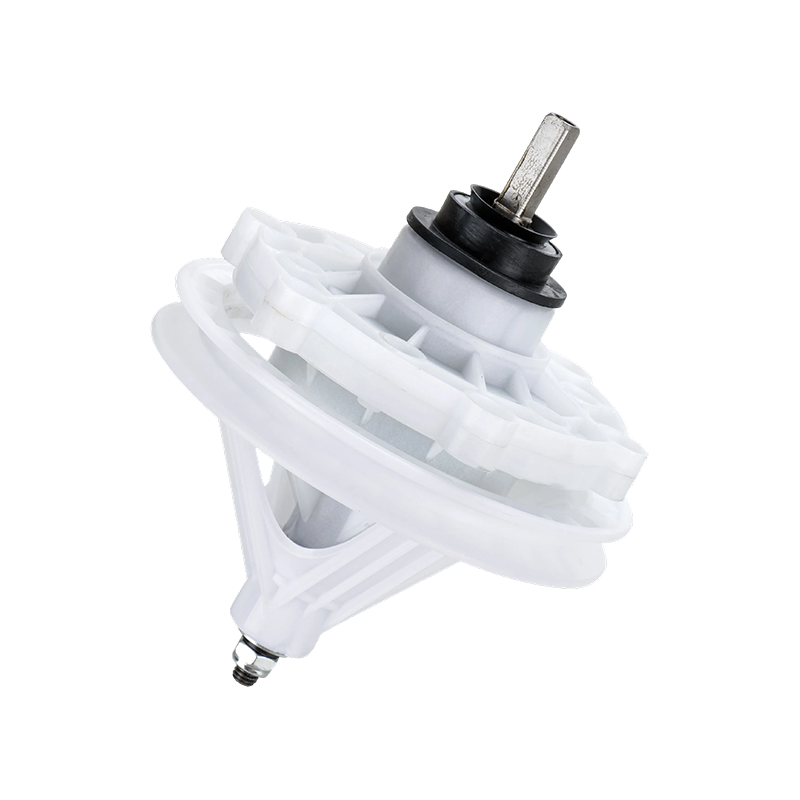
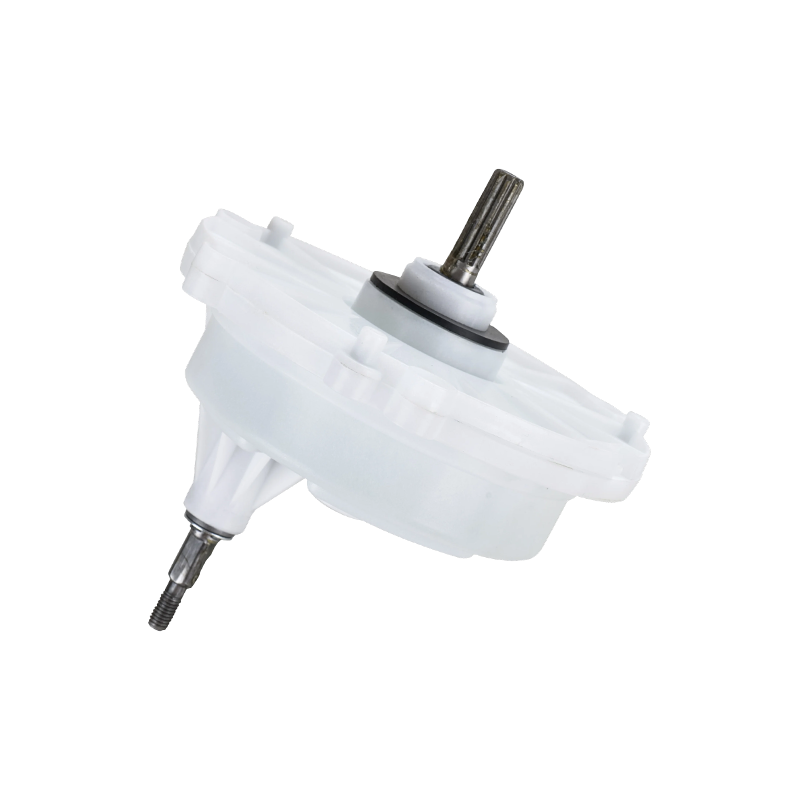
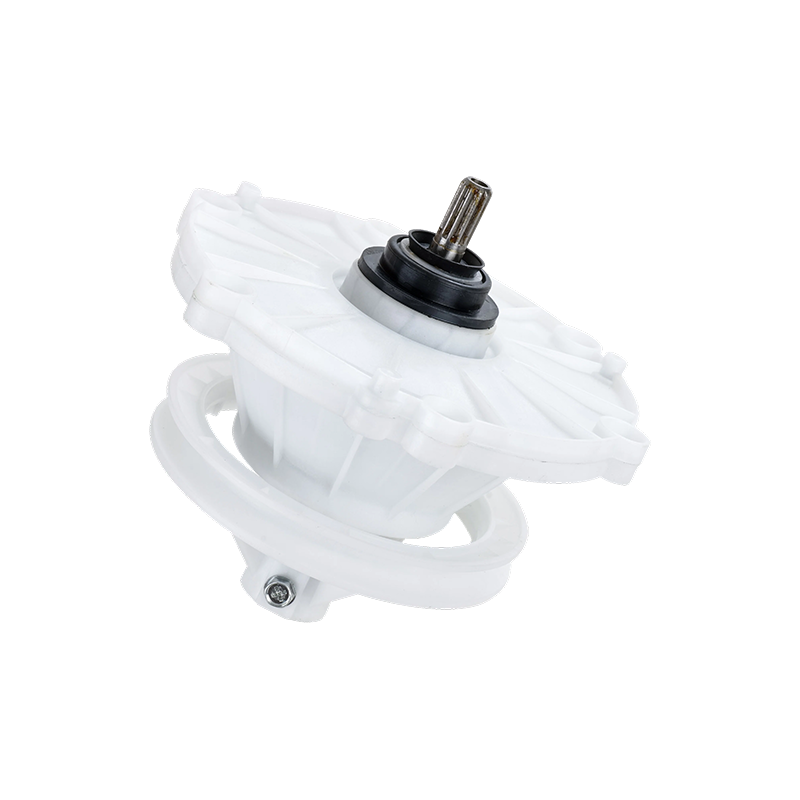
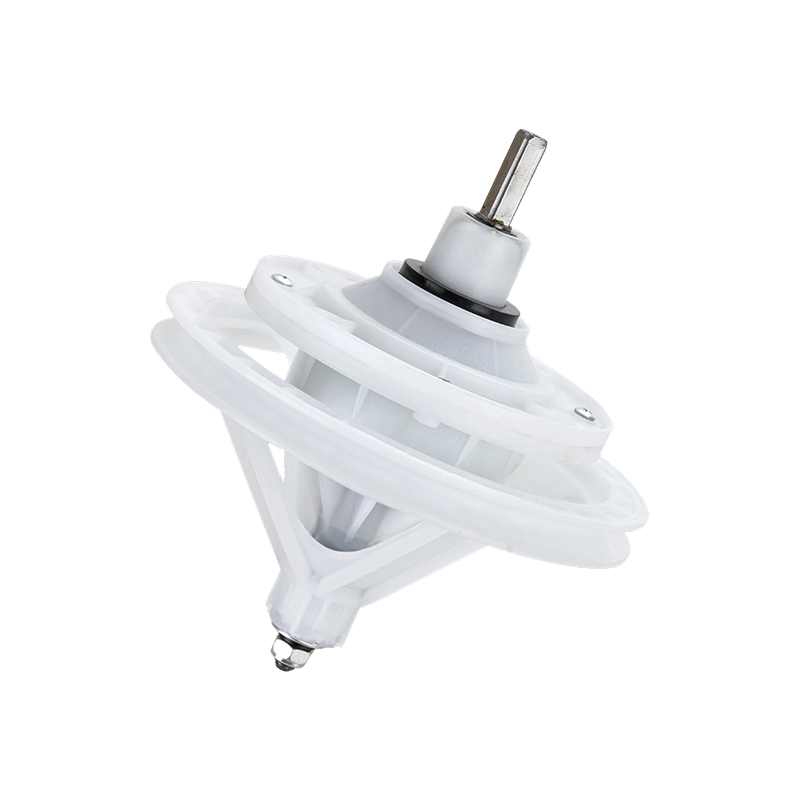
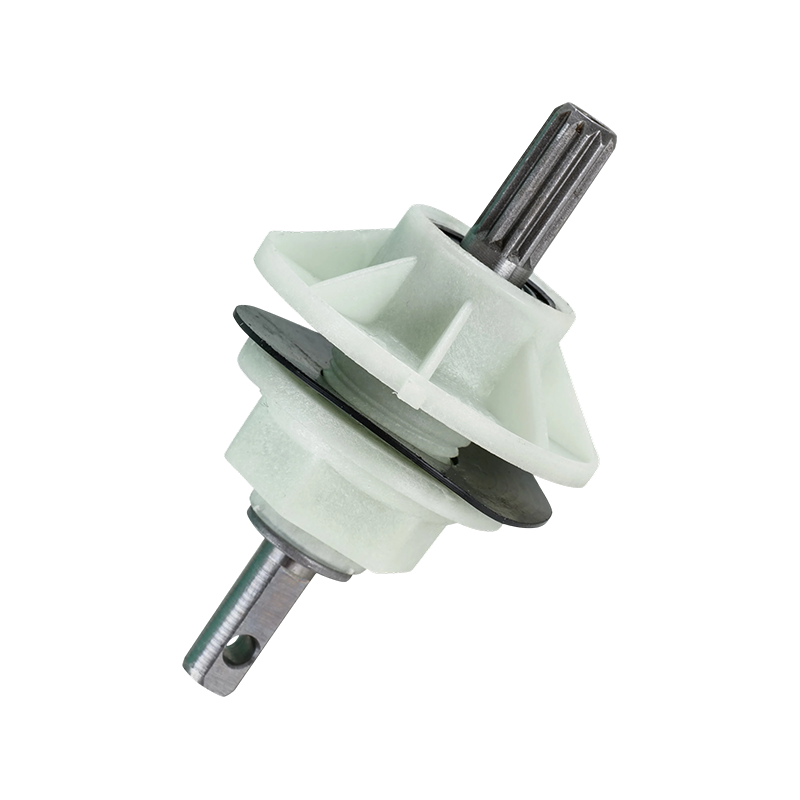
Washing Machine Transmission
2. Product Construction and Operating Principle
A washing machine transmission generally contains a housing, input connection, gear reduction elements, output shaft, bearings or support structures, seals, fasteners, and lubrication. The exact design may vary according to the washing machine model, motor arrangement, installation dimensions, and required agitation characteristics.
2.1 Housing
The housing supports the internal components and maintains the relative position of the gears and shafts. It must provide sufficient mechanical strength while remaining suitable for the available installation space. The housing also contributes to noise control, mounting stability, and protection against external contamination.
A correctly manufactured housing should have consistent dimensions, stable mounting points, and accurately formed bearing or shaft support locations. Even a small dimensional error can influence shaft alignment or create installation difficulty. For this reason, housing production requires suitable tooling, process control, and inspection equipment.
2.2 Input Assembly
The input assembly connects the transmission to the washing machine motor or motor-driven mechanism. Depending on the machine design, the input may use a pulley, belt-driven shaft, coupling, or another connection method. The input configuration must be matched to the appliance’s available space, rotational direction, mounting structure, and drive arrangement.
Input components are exposed to repeated starting torque and vibration. Their dimensions, surface finish, keyways, splines, threaded portions, or other connection features must be controlled carefully. A properly matched input assembly transfers power efficiently and minimizes unnecessary load on the motor and transmission housing.
2.3 Gear Reduction Mechanism
The gears are the core power-transfer elements inside the transmission. Their function is to change rotational speed and torque while maintaining the intended direction and movement of the output shaft. Gear quality influences noise, efficiency, wear resistance, load capacity, and overall service life.
Important gear characteristics include tooth profile, module, concentricity, hardness, surface finish, pitch accuracy, and resistance to fatigue. If gear teeth are inaccurately formed or improperly finished, the transmission may produce excessive noise, rough movement, or accelerated tooth wear. Consistent gear manufacturing is therefore essential for reliable appliance operation.
2.4 Output Shaft
The output shaft delivers mechanical energy to the agitator. It must withstand torque, repeated reversal, radial forces, and possible axial loads generated by the agitator and wash load. Shaft dimensions, runout, surface condition, and connection features must be compatible with the washing machine’s agitator assembly.
Because the output shaft passes through or near sealing components, its surface quality is particularly important. Excessive roughness, incorrect diameter, or runout can damage seals or permit moisture to enter the internal assembly. Precision shaft processing therefore supports both mechanical performance and environmental protection.
2.5 Bearings and Support Components
Bearings or bearing-like support structures maintain shaft alignment and allow rotational movement with controlled friction. They also help distribute loads generated by the gear mesh and agitator. Suitable support components can reduce vibration and maintain smooth operation under changing loads.
The correct selection and installation of bearings depend on shaft loads, operating speed, available space, lubrication, temperature, and expected service life. Assembly accuracy is equally important. A high-quality bearing cannot compensate for an incorrectly machined seat, contamination during assembly, or improper axial positioning.
2.6 Seals and Lubrication
Seals help limit the entry of moisture and retain lubricant inside the transmission. Lubrication reduces friction, protects gear surfaces, supports heat dissipation, and helps prevent premature wear. The lubricant must be appropriate for the operating speed, load, temperature range, and material combination used inside the gearbox.
Seal performance depends on material selection, shaft surface condition, installation accuracy, and housing geometry. Lubricant filling must also be controlled. Too little lubricant may increase friction and wear, while too much may create leakage, churning losses, or pressure-related problems. Controlled assembly procedures help maintain consistency from one unit to the next.
3. Key Advantages of a Purpose-Built Washing Machine Transmission
A transmission developed specifically for washing machine applications can offer important advantages over generic gearboxes or unverified replacement products. These advantages result from application-focused design, suitable materials, controlled manufacturing, and experience with the operating conditions of household appliances.
3.1 Application-Matched Torque and Speed
The transmission is designed around the requirements of semi-automatic agitator washing machines. Its reduction characteristics are intended to provide practical agitator speed and torque rather than simply offering a general industrial reduction ratio.
This application focus helps the manufacturer balance washing performance, motor loading, energy use, mechanical stress, and production cost. A generic gearbox may have adequate nominal power but still be unsuitable because its output speed, mounting dimensions, shaft arrangement, or duty cycle does not match the appliance.
3.2 Stable Performance Under Repeated Cycles
Washing machines are used repeatedly, often with frequent cycle starts and stops. The transmission must tolerate repeated load changes rather than operating only at a constant industrial speed. Proper gear design, shaft support, lubrication, and housing strength help the unit manage this intermittent duty.
Stable operation can reduce the risk of abnormal noise, excessive vibration, gear tooth damage, and premature bearing wear. It can also help protect related parts, including the motor, belt, pulley, agitator, mounting brackets, and tub structure.
3.3 Durability in Humid Conditions
Humidity resistance is an important advantage in washing machine component design. Moisture protection is supported by the combined performance of the housing, seals, shaft surfaces, corrosion-resistant materials, lubricant, and assembly process.
Compared with low-quality products that may use inconsistent seals or insufficient surface treatment, a properly manufactured transmission is better positioned to maintain internal cleanliness and lubrication. This supports longer operational stability and reduces the possibility of internal corrosion or lubricant contamination.
3.4 Cost-Efficient Mechanical Design
Cost efficiency does not simply mean using the least expensive raw materials. A cost-effective transmission uses an appropriate design, controlled material consumption, efficient manufacturing, and a stable production process. The objective is to provide reliable performance at a competitive cost without compromising essential mechanical functions.
This balance is especially valuable in price-sensitive appliance markets. Manufacturers can obtain a component that supports affordable washing machine production while maintaining the performance level expected by users and distributors.
3.5 Compatibility with OEM and ODM Programs
Washing machine manufacturers frequently require components that match existing product platforms or new appliance designs. A transmission supplier with engineering and production capabilities can support OEM requirements, private-label programs, and ODM development.
Customization may involve mounting dimensions, input and output shaft arrangements, gear ratios, housing details, connection interfaces, material selections, packaging, labeling, or production quantities. Each change should be evaluated through technical drawings, samples, testing, and controlled approval procedures.
3.6 Support for Replacement and Aftermarket Applications
Aftermarket distributors and repair organizations may require replacement transmissions for established washing machine models. In these cases, dimensional compatibility, installation convenience, reliable performance, and supply continuity are critical.
A dedicated washing machine component manufacturer can support replacement-part programs by maintaining product consistency, documenting key dimensions, controlling batch variation, and offering practical communication during model matching. This is more dependable than sourcing visually similar components from suppliers without established application knowledge.
| Performance Consideration | Importance in Washing Machine Use | Manufacturing Focus |
|---|
| Torque capacity | Allows the agitator to move clothing and water under changing loads | Gear design, material selection, heat treatment, and verification |
| Output alignment | Supports smooth operation and reduces vibration | Precision machining, bearing-seat control, and assembly inspection |
| Moisture resistance | Protects internal gears and lubricant in a humid environment | Seal selection, shaft finish, housing control, and leakage testing |
| Noise control | Improves user comfort and indicates stable gear engagement | Tooth accuracy, runout control, lubrication, and process consistency |
| Service life | Reduces replacement frequency and warranty exposure | Durable materials, controlled heat treatment, testing, and traceability |
| Installation compatibility | Allows efficient assembly or replacement | Dimensional control, interface matching, and drawing management |
| Cost efficiency | Supports competitive appliance pricing | In-house production, process optimization, and stable supply planning |
4. Advanced Manufacturing Process
The performance of a washing machine transmission depends on the complete manufacturing chain rather than on one isolated operation. From material preparation to final inspection, each stage must support the dimensional, mechanical, and environmental requirements of the product.
4.1 Engineering Review and Product Definition
Production begins with a review of the application requirements. The engineering team evaluates the washing machine structure, motor input, target output, shaft interfaces, installation envelope, expected loads, operating cycle, and environmental conditions.
For a standard product, this review confirms whether the existing design matches the customer’s requirements. For a customized product, it establishes the technical basis for new drawings, prototypes, tooling, process instructions, inspection standards, and validation testing.
Important product-definition information may include overall dimensions, mounting-hole locations, shaft diameters, key or spline features, rotation direction, gear ratio, lubricant requirements, sealing method, packaging requirements, and acceptable dimensional tolerances.
4.2 Material Management
Material quality influences gear strength, shaft durability, housing stability, and corrosion resistance. Materials must be selected according to the function of each component rather than solely according to price.
Core materials may include steel or other suitable metals for shafts and gears, engineered materials for selected components, elastomers for seals, and appropriate housing materials. Incoming materials should be identified, inspected, and managed to prevent the unintended use of unsuitable or mixed batches.
Producing a high proportion of core materials in-house can provide stronger control over quality and supply. It may also reduce dependence on external vendors for critical parts, improve production scheduling, and support more consistent product characteristics.
4.3 Gear Manufacturing
Gear production can involve blank preparation, turning, hobbing or shaping, heat treatment where required, deburring, finishing, cleaning, and inspection. The chosen process depends on the gear geometry, material, volume, and performance requirements.
Gear teeth must be formed consistently so that mating surfaces share load correctly. Deburring is essential because sharp edges or residual chips can interfere with assembly, damage seals, contaminate lubricant, or create abnormal noise.
Where heat treatment is required, process control is important. Excessive hardness may increase brittleness, while insufficient hardness may accelerate wear. Distortion after heat treatment must also be considered because even a small change can influence gear alignment and tooth contact.
4.4 Shaft Processing
Shafts are typically processed through turning, drilling, milling, keyway or spline formation, grinding where required, cleaning, and inspection. Critical dimensions include diameter, concentricity, runout, length, shoulder position, and surface finish.
Precise shaft processing supports smooth bearing operation and reliable sealing. The output interface must also connect securely with the agitator. Poorly controlled shaft dimensions can lead to looseness, difficult installation, excessive force during assembly, or premature wear at the connection point.
4.5 Housing Production
The transmission housing must maintain structural stability and accurate internal positioning. Depending on the design, manufacturing may include forming, casting, machining, drilling, tapping, surface treatment, cleaning, and dimensional inspection.
Mounting surfaces and bearing-support areas require particular attention. If these areas are not parallel, concentric, or correctly positioned, the internal gear system may operate under unintended loads. Housing inspection therefore contributes directly to noise, efficiency, and service life.
4.6 Component Cleaning
Cleanliness is essential before final assembly. Metal chips, abrasive particles, machining residue, dust, and excess processing fluids can damage gears and bearings or contaminate lubricant.
A controlled cleaning process should be matched to the component material and geometry. After cleaning, parts should be protected from recontamination before assembly. Clean work areas, suitable storage containers, and operator procedures all contribute to consistent transmission quality.
4.7 Precision Assembly
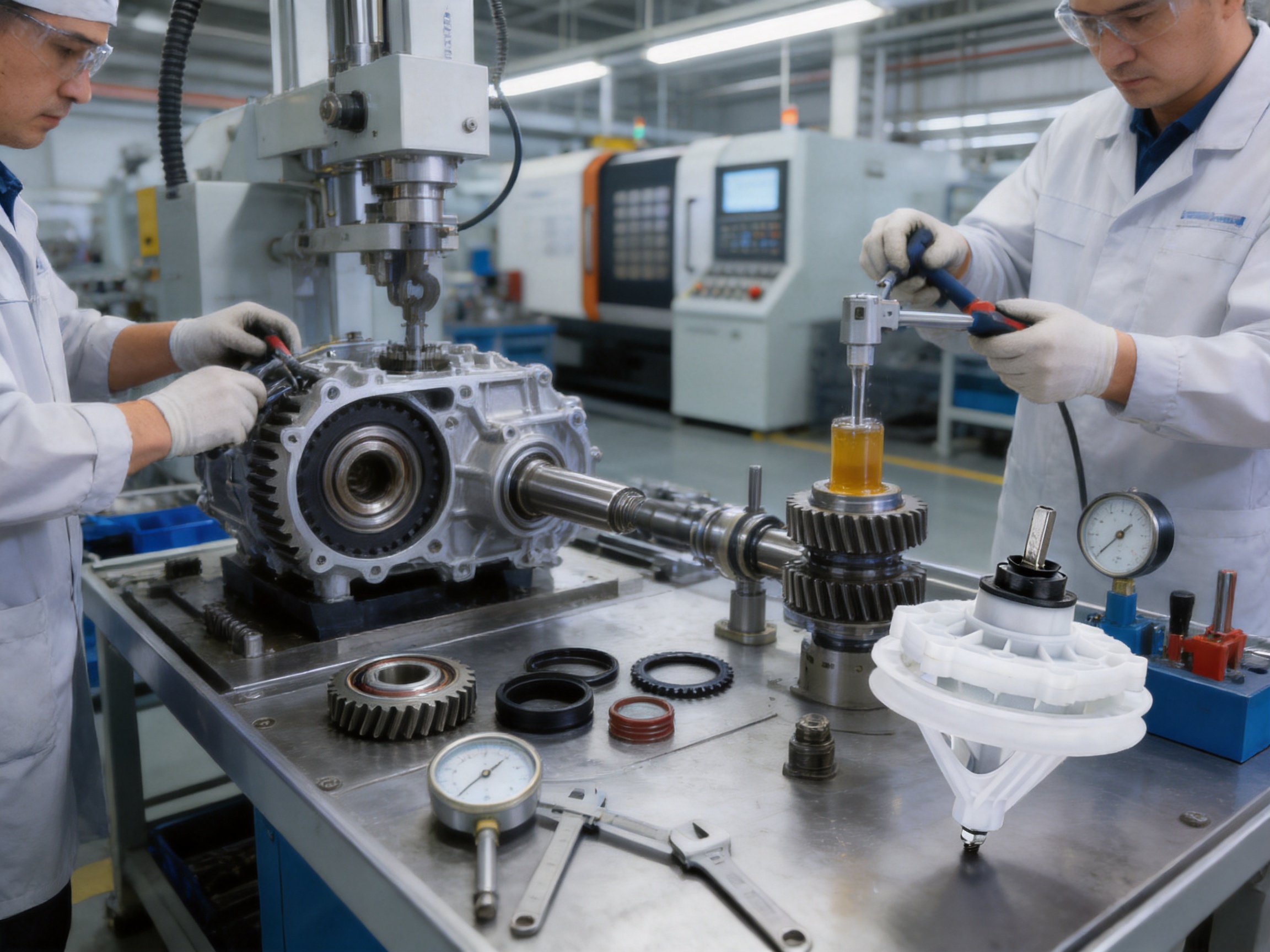
Assembly involves positioning gears, shafts, bearings, seals, spacers, fasteners, and lubricant in the correct sequence. The process must control component orientation, insertion force, clearance, torque, and sealing condition.
Assembly fixtures can improve repeatability by holding components in the correct position and reducing manual variation. Torque-controlled tools help ensure that fasteners are tightened consistently. Work instructions and inspection checkpoints guide operators through critical steps.
Lubricant quantity and placement should be controlled according to the product design. Seals must be installed without cuts, deformation, or contamination. Before closing the housing, the assembler or inspection operator should confirm that internal components are correctly positioned and free of visible foreign material.
4.8 Functional Testing
Finished transmissions may undergo functional testing to verify rotation, noise, resistance, leakage, and general operating behavior. The exact test method depends on the product design and customer requirements.
Functional testing can identify assembly errors that are not visible during dimensional inspection. Abnormal resistance may indicate incorrect bearing installation, gear interference, excessive seal friction, or misalignment. Unusual sound may suggest gear damage, inadequate lubrication, foreign material, or incorrect clearance.
4.9 Traceability and Process Records
Traceability supports quality improvement and customer service. Production records may link a transmission to material batches, machine settings, operator information, inspection results, assembly time, testing results, and shipment data.
When an issue is identified, traceability helps determine whether the cause is isolated or related to a broader process condition. It also supports corrective action, supplier management, and continuous improvement.
5. Quality Management and Certifications
A dependable washing machine transmission supplier should manage quality through an organized system rather than relying solely on final inspection. Process planning, documented work instructions, equipment maintenance, employee training, incoming material control, in-process inspection, and final testing should work together.
The manufacturer described in the supplied company information operates under ISO 9001 Quality Management System and ISO 14001 Environmental Management System certifications. ISO 9001 supports a structured approach to customer requirements, process control, corrective action, and continual improvement. ISO 14001 reflects attention to environmental management and the controlled use of resources and processes.
Products that comply with RoHS requirements support the needs of markets that restrict certain hazardous substances. Compliance management requires attention to material declarations, supplier control, component selection, and documentation. It is not limited to the final product appearance.
5.1 Incoming Inspection
Incoming inspection helps verify that purchased or internally produced parts meet their specifications before entering production. Typical checks may include dimensions, material identification, surface condition, hardness where applicable, and visual quality.
Critical components should receive inspection attention based on their effect on product performance. For example, a small deviation in a shaft diameter or seal dimension may have a greater functional impact than a noncritical cosmetic variation on an external surface.
5.2 In-Process Inspection
In-process inspection identifies deviations while correction is still efficient. Operators and quality personnel may inspect machining dimensions, gear features, housing interfaces, assembly position, fastening torque, lubricant quantity, and sealing condition.
Statistical methods may be used where production volume and process stability justify them. Inspection frequency should be based on risk, historical performance, process capability, and customer requirements.
5.3 Final Inspection
Final inspection confirms that the completed transmission matches the approved product definition. It may include appearance, critical dimensions, shaft rotation, output resistance, noise, leakage, packaging, labels, and quantity.
Final inspection should not replace process control, but it provides an important final verification before shipment. Clear acceptance criteria reduce uncertainty and help ensure that products supplied to different customers remain consistent.
5.4 Continuous Improvement
Continuous improvement may involve reducing variation, improving tooling, optimizing machining parameters, redesigning fixtures, improving cleaning, reducing material waste, or simplifying assembly without weakening product performance.
Customer feedback, warranty data, production records, inspection trends, and service information can all provide useful input. A manufacturer committed to long-term partnerships treats these sources as opportunities to strengthen product reliability and service quality.
6. Manufacturing Strengths and Supply Advantages
The supplier profile provided for this product indicates that the company was established in 2002 and operates in Ningbo, Zhejiang, China. Its production base covers approximately 10,000 square meters, and around 90 percent of core materials are produced in-house. These capabilities are relevant to customers seeking stable quality, reliable delivery, and long-term component support.
6.1 Long-Term Industry Experience
More than two decades of experience in washing machine components can provide practical knowledge that is difficult to obtain from general machinery suppliers. Product experience includes understanding common appliance structures, recurring failure modes, dimensional matching, gear reduction requirements, sealing challenges, and the needs of OEM and aftermarket customers.
Experience is most valuable when it is supported by documented processes and technical learning. A manufacturer that retains product knowledge can respond more effectively to specification questions, replacement requirements, design changes, and production improvement requests.
6.2 Integrated Production Capability
In-house production of a high proportion of core materials can improve control over quality and lead times. It may reduce the number of external interfaces involved in producing critical parts and allow closer coordination between material preparation, machining, assembly, and testing.
Integrated production can also support customized orders. When a customer requests a modified shaft, housing, gear, or mounting arrangement, internal manufacturing resources may make it easier to evaluate and implement the change.
6.3 Modern Equipment and Mature Processes
Advanced machinery supports precision, repeatability, and manufacturing efficiency. However, equipment alone does not guarantee quality. It must be combined with suitable tooling, calibrated measurement systems, trained personnel, preventive maintenance, and well-defined process parameters.
Mature processes reduce variation between production batches. This is especially important for replacement parts, where a distributor may order the same component at different times and expect consistent fit and function.
6.4 OEM and ODM Service
OEM service allows customers to purchase components manufactured according to their approved design or product requirements. ODM service can provide broader support during product development, including design adaptation, sample production, process planning, and technical coordination.
For a washing machine transmission, OEM and ODM collaboration may address gear ratio, shaft interface, housing shape, installation points, motor connection, sealing arrangement, packaging, and labeling. The process should begin with clear technical information and proceed through sample approval before mass production.
6.5 Established Customer Relationships
The supplied company information identifies long-term partnerships with Sharp Corporation, Panasonic Corporation, and Midea Group. Such relationships indicate experience in serving established appliance companies with demanding expectations for quality, consistency, delivery, and communication.
Past customer relationships do not replace product-specific evaluation, but they can demonstrate that the manufacturer understands the discipline required for professional appliance-component supply.
6.6 Stable Supply for Price-Sensitive Markets
Many washing machine markets require a careful balance between affordability and durability. A supplier that can manage production internally, optimize material usage, and maintain consistent processes can help customers control total purchasing cost rather than focusing only on the initial unit price.
Total cost includes purchase price, inspection, installation, warranty claims, returns, stock management, emergency replenishment, and customer service. A reliable transmission can help reduce hidden costs associated with premature failure or inconsistent compatibility.
7. Comparing Purpose-Built Products with Generic Alternatives
Customers often compare washing machine transmissions based on visible dimensions and price. These factors are important, but they do not provide a complete evaluation. Two products may look similar while differing significantly in gear accuracy, material quality, seal performance, assembly control, and service life.
7.1 Dimensional Similarity versus Functional Compatibility
A generic gearbox may have a similar external size but still fail to match the required shaft height, rotation direction, mounting pattern, input speed, or output torque. Functional compatibility requires more than visual similarity.
A purpose-built transmission is evaluated against the washing machine’s working conditions. This includes the relationship between the motor and agitator, expected load changes, installation structure, and environmental exposure.
7.2 Initial Price versus Total Value
The lowest unit price may appear attractive, but a product with inconsistent quality can create additional costs through installation problems, returns, field failures, and interrupted production. A slightly higher-quality component may provide better value if it reduces these risks.
Total value should consider product consistency, technical support, documentation, packaging, delivery reliability, warranty handling, and expected service performance.
7.3 General Gearbox Experience versus Appliance Expertise
Industrial gearbox suppliers may have strong experience in other applications, but washing machine transmissions have specific requirements. Compact installation space, frequent reversing, moisture exposure, low-cost production targets, and integration with appliance assemblies all influence the design.
A supplier focused on washing machine components is more likely to understand these combined requirements and to maintain suitable tooling, inspection standards, and replacement-part knowledge.
7.4 Manual Assembly versus Controlled Assembly
Manual work can be effective when supported by clear instructions and inspection. However, uncontrolled manual assembly may result in variation in seal installation, lubricant quantity, fastener torque, and component positioning.
Controlled assembly using fixtures, torque tools, standardized work instructions, and inspection checkpoints provides stronger repeatability. This is particularly important for high-volume OEM orders and aftermarket parts that must remain interchangeable.
8. Applications and Customer Segments
The washing machine transmission is primarily intended for semi-automatic agitator washing machines. Its application may include new appliance production, replacement-part distribution, repair networks, and aftermarket maintenance programs.
8.1 Appliance Manufacturers
Appliance manufacturers can use the transmission as part of a complete washing machine platform or as a replacement for an existing drive assembly. The manufacturer may support technical review, sample approval, production planning, and regular supply.
8.2 Importers and Distributors
Importers and distributors may require stable product specifications, reliable packaging, consistent labeling, and repeatable delivery. Clear product identification is important when different transmission models have similar external appearances.
8.3 Repair and Maintenance Providers
Repair providers need replacement components that can be installed efficiently and operate reliably after service. Accurate model matching, shaft compatibility, mounting consistency, and practical technical communication can reduce repair time.
8.4 Private-Label Brands
Private-label customers may require customized packaging, product labels, documentation, and order quantities. OEM and ODM capability can help adapt the product presentation while maintaining controlled manufacturing of the internal component.
9. Selecting the Correct Washing Machine Transmission
Before placing an order, customers should collect the technical information needed to confirm compatibility. This reduces the risk of receiving a component that is visually similar but mechanically unsuitable.
9.1 Key Information to Confirm
Important information may include the washing machine model, motor type, input connection, output shaft dimensions, mounting-hole pattern, overall height, rotation direction, agitator interface, desired quantity, operating market, and packaging requirements.
Photographs can assist initial evaluation, but drawings and measured dimensions are more reliable for final confirmation. If the original part is available, customers should record shaft diameters, mounting locations, connector details, and any identification markings.
9.2 Samples and Approval
For customized products or uncertain replacement applications, sample approval is recommended. A sample can be checked for fit, installation, rotation, noise, agitator movement, and interaction with the washing machine assembly.
Approval criteria should be documented before mass production. This may include approved drawings, sample photographs, inspection dimensions, performance requirements, packaging instructions, and labeling details.
9.3 Packaging and Transportation
Gearboxes and transmissions should be protected against impact, dust, moisture, and movement during transportation. Packaging design should consider product weight, shaft protection, stacking, storage duration, and destination climate.
For export orders, packaging and labeling should be coordinated with the customer’s import, warehouse, and distribution requirements. Good packaging reduces the possibility of damage before the component reaches the production line or repair location.
10. Installation and Maintenance Considerations
Correct installation supports the intended performance of the transmission. Before installation, the user should verify that the replacement part matches the washing machine model and that the motor, belt, pulley, agitator, mounting points, and connected components are in suitable condition.
The mounting structure should be clean and free of damaged threads, excessive corrosion, or deformation. The output shaft should align correctly with the agitator connection. Fasteners should be tightened according to the applicable assembly requirements, and belts or couplings should not be subjected to excessive tension or misalignment.
If the transmission is replaced because of a failure, the cause of the original failure should be considered. A worn bearing, damaged belt, overloaded agitator, water leak, incorrect installation, or motor problem may damage a new transmission if the underlying issue is not corrected.
Routine maintenance depends on the washing machine design. Users should avoid overloading the appliance, operating it with abnormal vibration, or continuing to use it when unusual noise, leakage, burning odor, or irregular agitation occurs. Early attention can prevent secondary damage.
11. Sustainability and Responsible Manufacturing
Environmental responsibility is relevant to both product design and factory operations. A durable transmission can reduce replacement frequency and the material consumption associated with repeated repairs. Efficient production can also reduce scrap, energy use, packaging waste, and unnecessary transportation.
ISO 14001 environmental management certification provides a framework for identifying environmental impacts, setting objectives, monitoring performance, and improving operational controls. RoHS compliance supports responsible material selection for markets with restrictions on certain hazardous substances.
In-house production may also support material utilization and process optimization. When core processes are coordinated within one production base, the manufacturer can improve planning, reduce unnecessary movement between suppliers, and respond more efficiently to quality or environmental issues.
12. Why Professional Technical Communication Matters
A successful transmission project depends on clear communication between the customer and manufacturer. Technical information should be shared in a structured form so that design, production, quality, and logistics teams are working from the same requirements.
Customers should explain the intended application, expected order volume, target market, existing part information, performance concerns, and customization needs. The manufacturer should clarify the available design, required drawings, sample process, production lead time, quality documentation, testing method, and packaging conditions.
Professional communication is particularly important when a product is described as a washing machine gearbox, reducer, transmission, drive assembly, or agitator drive component. Different markets may use these terms differently. Confirming the actual function and interface prevents misunderstandings during quotation and production.
13. Frequently Asked Questions
What is the main function of a washing machine transmission?
The main function is to convert the motor’s high-speed rotation into lower-speed, higher-torque output suitable for the agitator. It transfers power while supporting controlled washing movement under changing loads.
Which washing machines use this type of transmission?
This product is intended for semi-automatic agitator washing machines. Final compatibility depends on the washing machine model, motor connection, mounting structure, output shaft, agitator interface, and other dimensions.
Why is gear reduction necessary?
The motor normally rotates faster than the agitator should move. Gear reduction lowers the output speed and increases usable torque, allowing the agitator to move water and clothing more effectively.
Can the transmission be customized?
OEM and ODM customization may be available for dimensions, shaft interfaces, mounting points, gear arrangements, housing details, packaging, labeling, and other approved requirements. Technical drawings and sample confirmation should be completed before mass production.
How does the transmission handle a humid environment?
Environmental stability depends on the housing, seals, shaft surface, lubricant, corrosion control, and assembly quality. These elements work together to limit moisture entry and protect the internal gear system.
What information is needed to confirm compatibility?
Useful information includes the washing machine model, photographs, original transmission dimensions, motor input arrangement, output shaft size, mounting pattern, overall dimensions, rotation direction, agitator connection, and required quantity.
What is the difference between a washing machine transmission and a general gearbox?
A washing machine transmission is designed around appliance-specific requirements such as compact installation, intermittent operation, repeated starting and stopping, agitator torque, humid conditions, low noise, and cost-efficient mass production. A general gearbox may not meet all of these requirements.
How can buyers evaluate product quality?
Buyers should review the supplier’s manufacturing experience, quality system, material control, production capabilities, inspection process, testing methods, customization support, traceability, customer references, and ability to provide consistent repeat orders.
Does a higher purchase price always mean better performance?
Not necessarily. Product value depends on design suitability, material quality, manufacturing consistency, compatibility, service support, and total ownership cost. A suitable, well-controlled transmission can provide better value than a cheaper product with uncertain quality.
What should be checked after installation?
The installer should check mounting security, shaft alignment, belt or coupling condition, rotation, agitator movement, abnormal noise, vibration, and possible leakage. Any underlying issue that caused the original transmission failure should also be addressed.
Can the product support aftermarket replacement programs?
Yes, a washing machine transmission can be supplied for aftermarket applications when the dimensions and interfaces are properly matched. Consistent specifications, packaging, labeling, and repeatable quality are important for replacement-part distribution.
Why is in-house production beneficial?
In-house production of core materials and components can improve control over quality, scheduling, process coordination, customization, and supply stability. It may also reduce dependence on multiple external sources for critical parts.
14. Conclusion
A washing machine transmission is a compact but essential power-transfer component. By converting motor speed into practical agitator torque, it supports the washing action that defines semi-automatic agitator washing machines. Its performance depends on gear accuracy, shaft alignment, bearing support, sealing, lubrication, housing strength, assembly quality, and compatibility with the complete appliance.
The product described in this article offers a combination of application-focused design, durable construction, humid-environment stability, cost-efficient engineering, and OEM or ODM flexibility. These characteristics make it suitable for appliance manufacturers, aftermarket distributors, repair organizations, and private-label customers seeking dependable washing machine drive components.
The manufacturing strengths of Cixi Gaite Electric Co., Ltd. include experience dating from 2002, a production base of approximately 10,000 square meters, substantial in-house production of core materials, modern machinery, mature manufacturing processes, ISO 9001 and ISO 14001 certifications, RoHS compliance, and established cooperation with major appliance companies. Together, these capabilities support a structured approach to product consistency, customization, supply stability, and continuous improvement.
For customers selecting a transmission, the most important decision is not simply choosing the lowest-priced gearbox. The better approach is to evaluate functional compatibility, manufacturing control, quality documentation, environmental suitability, technical support, delivery reliability, and total value. When these factors are managed together, a washing machine transmission can contribute to stable appliance performance, lower maintenance risk, and a stronger long-term supply relationship.
References
1. ISO 9001, Quality Management Systems — Requirements.
2. ISO 14001, Environmental Management Systems — Requirements with Guidance for Use.
3. RoHS Directive requirements concerning the restriction of hazardous substances in electrical and electronic equipment.
4. General principles of mechanical power transmission, gear reduction, shaft alignment, bearing support, and sealing technology.
5. General appliance engineering practices for washing machine drive systems and agitator mechanisms.
6. Manufacturer-provided product information for washing machine transmissions, gearboxes, drive components, and related OEM and ODM services.

 English
 عربى



 +86-574-63256717 /63267914
info@gaite.cn
 gaite@gaite.cn
 No. 208 Miaoshan Road, Shiyan Village, Henghe Town, Cixi City, Ningbo City, Zhejiang Province, China
