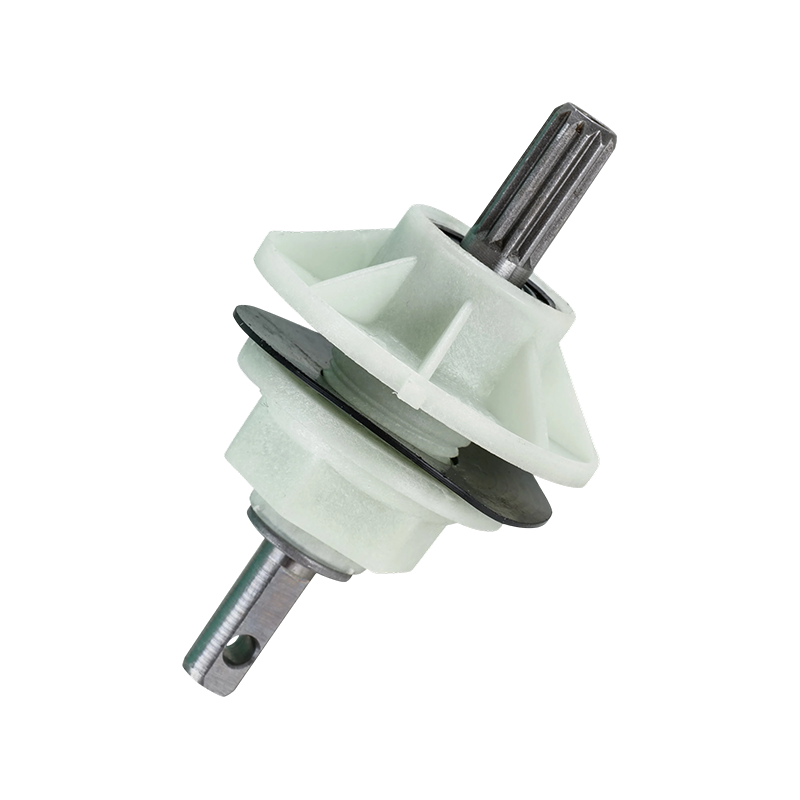
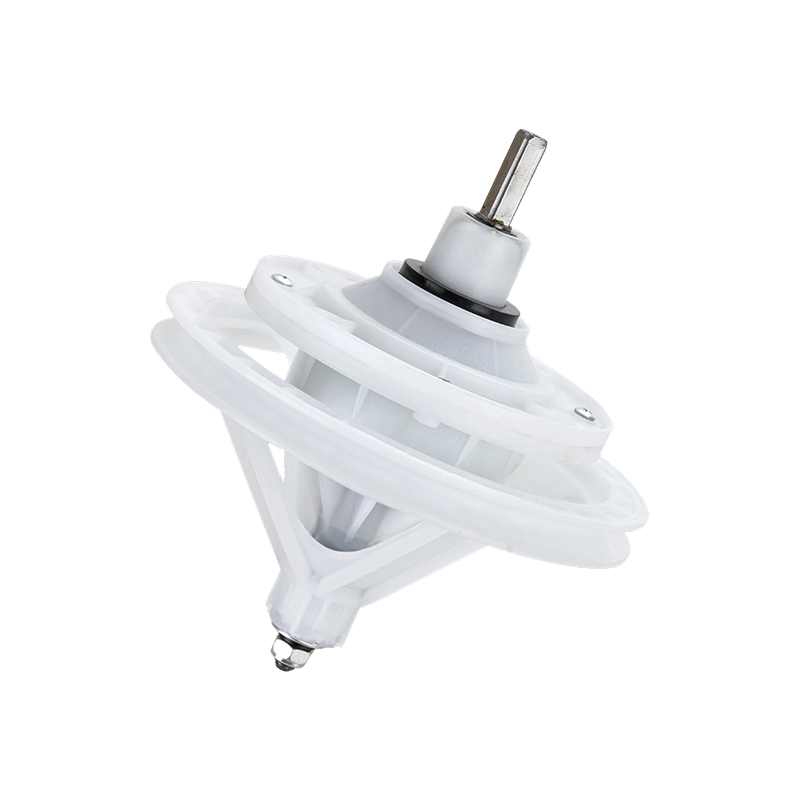
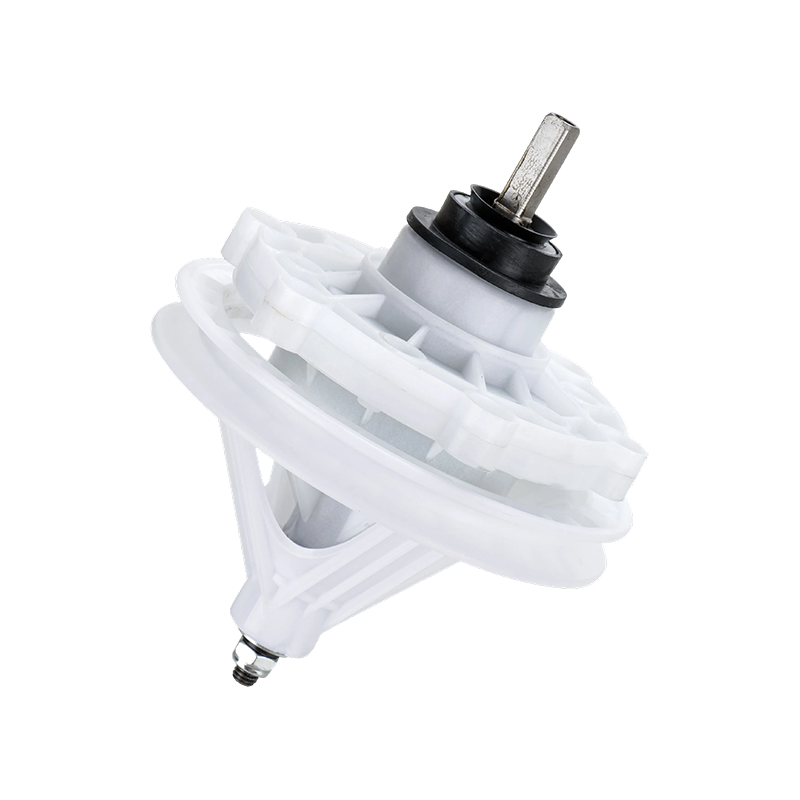
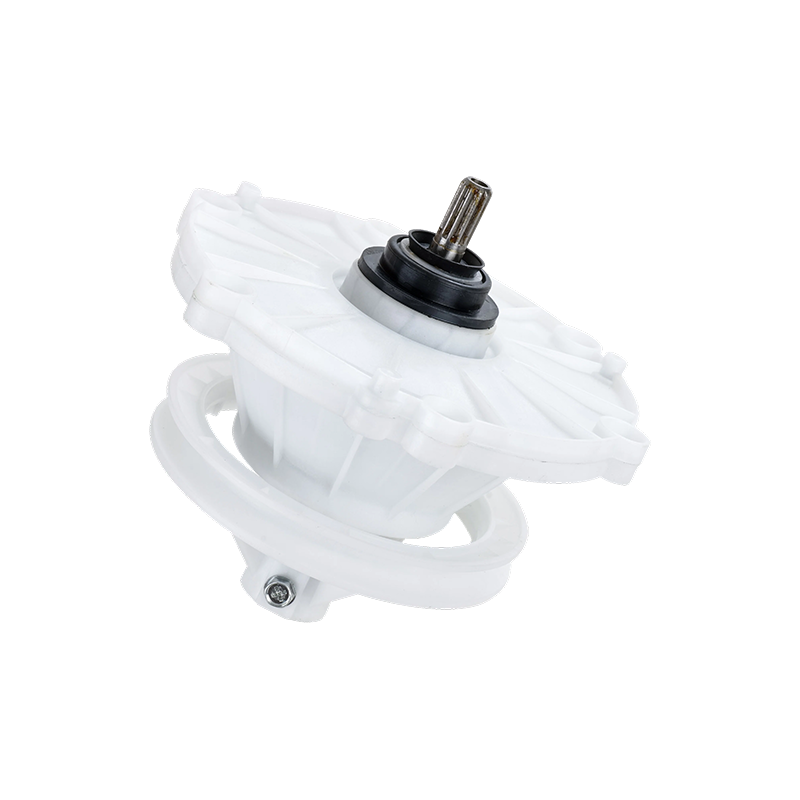
A washing machine gear case is one of the most important transmission components in a semi-automatic agitator washing machine. Although it is installed inside the machine and is not visible during normal operation, it directly influences washing action, motor efficiency, operating noise, durability, maintenance requirements, and the overall user experience. The gear case receives high-speed rotation from the motor and converts it into the lower-speed, higher-torque movement required to drive the agitator. This controlled transmission enables the agitator to move clothes and water effectively while maintaining stable operation over repeated washing cycles.
The Washing Machine Gear Case supplied by Cixi Gaite Electric Co., Ltd. is designed for manufacturers, distributors, repair channels, and appliance brands seeking a practical combination of performance, durability, and cost efficiency. It is suitable for semi-automatic agitator washing machines that require dependable transmission power in humid operating environments. Its design is intended to support long-term service, stable output, and economical production without sacrificing the essential mechanical functions of a washing machine gearbox.
As washing machine manufacturers face increasing pressure to improve product reliability while controlling production costs, the choice of transmission components has become increasingly important. A gearbox that is poorly matched to the motor, inadequately sealed, or manufactured with inconsistent tolerances may result in excessive noise, unstable agitator movement, oil leakage, premature wear, or customer complaints. By contrast, a properly engineered gear case can provide reliable torque conversion and help washing machine manufacturers maintain consistent product performance.
This article examines the role, construction, operating advantages, manufacturing strengths, customization potential, quality considerations, and application value of the Washing Machine Gear Case. It also explains why a specialized component manufacturer with in-house material capabilities, established production processes, and quality management systems can offer important advantages over less specialized or less integrated suppliers.
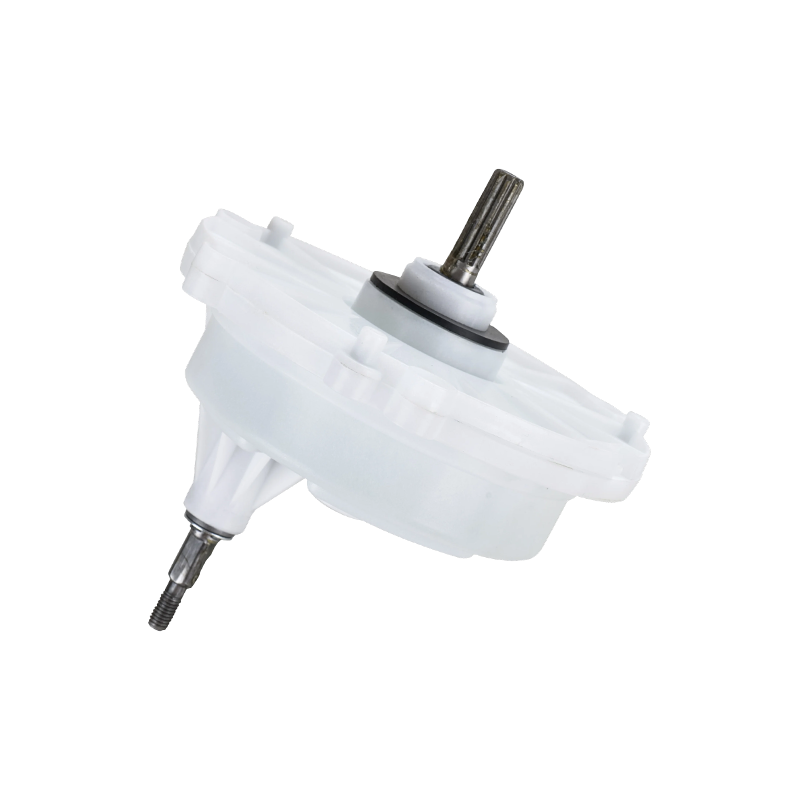
Washing Machine Gear Case
1. The Function of a Washing Machine Gear Case
The motor in a semi-automatic washing machine normally rotates at a relatively high speed. The agitator, however, does not require the same high rotational speed. Instead, it requires controlled, lower-speed movement combined with sufficient torque to circulate water and laundry. The gear case performs this conversion through a series of mechanical transmission elements, including gears, shafts, bearings, seals, and a protective housing.
In simple terms, the gear case changes the character of the motor’s output. It reduces rotational speed while increasing usable torque. This allows the agitator to move a load of clothing through water without placing excessive demands on the motor. The transmission must also manage repeated starting, stopping, reversing, and load variation. During operation, the washing load is not constant. Clothing may be evenly distributed at one moment and concentrated at another, creating changing resistance that the gear case must withstand.
The gear case also helps maintain the alignment between the motor-driven input and the agitator-driven output. Accurate alignment is essential because misalignment can increase friction, vibration, wear, and mechanical noise. A well-designed gear case provides a stable structural foundation for the internal transmission system and protects the gears and other components from external contamination.
In semi-automatic washing machines, the gearbox must function in a demanding environment. Water, detergent, humidity, vibration, and changing temperatures may all affect component performance. For this reason, the gear case is not simply a group of gears enclosed in a housing. It is a coordinated mechanical assembly that must provide transmission accuracy, sealing performance, structural strength, and long-term reliability.
1.1 Speed Reduction and Torque Multiplication
The primary purpose of the gear case is speed reduction. If the motor rotates too quickly for direct agitator operation, direct connection would result in inefficient washing action, excessive mechanical stress, and possible damage to clothing or machine components. The gear train reduces the input speed to a more suitable output speed.
At the same time, the gear case increases output torque. Torque is the turning force available at the output shaft. Higher torque allows the agitator to overcome the resistance created by water, clothing, detergent, and the washing tub. The relationship between speed reduction and torque multiplication must be carefully balanced. Excessive reduction may reduce washing movement, while insufficient reduction may create over-speed operation and unnecessary mechanical stress.
A suitable gear case therefore supports the motor by placing the output within the correct operating range. This can help the washing machine achieve effective agitation while using the motor’s energy more productively.
1.2 Agitator Drive and Reversing Operation
Many semi-automatic agitator washing machines use alternating or reversing movement to loosen dirt and move clothing through the wash water. The gear case must transfer the motor’s rotational force to the agitator while tolerating changes in direction and frequent cycling.
Reversing operation can place particular demands on gears, shafts, bearings, and key connection points. Sudden changes in direction may create impact loads, especially when the wash load is heavy or uneven. A robust transmission design helps distribute these loads and reduces the possibility of premature damage.
The output shaft must also maintain stable connection with the agitator. Any looseness at this connection can cause vibration, irregular washing action, or accelerated wear. The gear case therefore contributes not only to torque transfer but also to the consistency of the agitator’s movement.
1.3 Protection of Internal Components
The housing protects the internal transmission components from water, detergent residue, dust, and mechanical impact. It also helps retain lubricant around the gears and bearings. Proper protection is especially important in washing machines because the surrounding environment may be humid for long periods.
A protective housing must be sufficiently strong to support the transmission assembly and resist deformation during installation and operation. It must also be manufactured with appropriate dimensional accuracy so that the bearings, seals, and shafts remain correctly positioned. A housing with poor dimensional consistency can create alignment problems even when the internal gears are manufactured correctly.
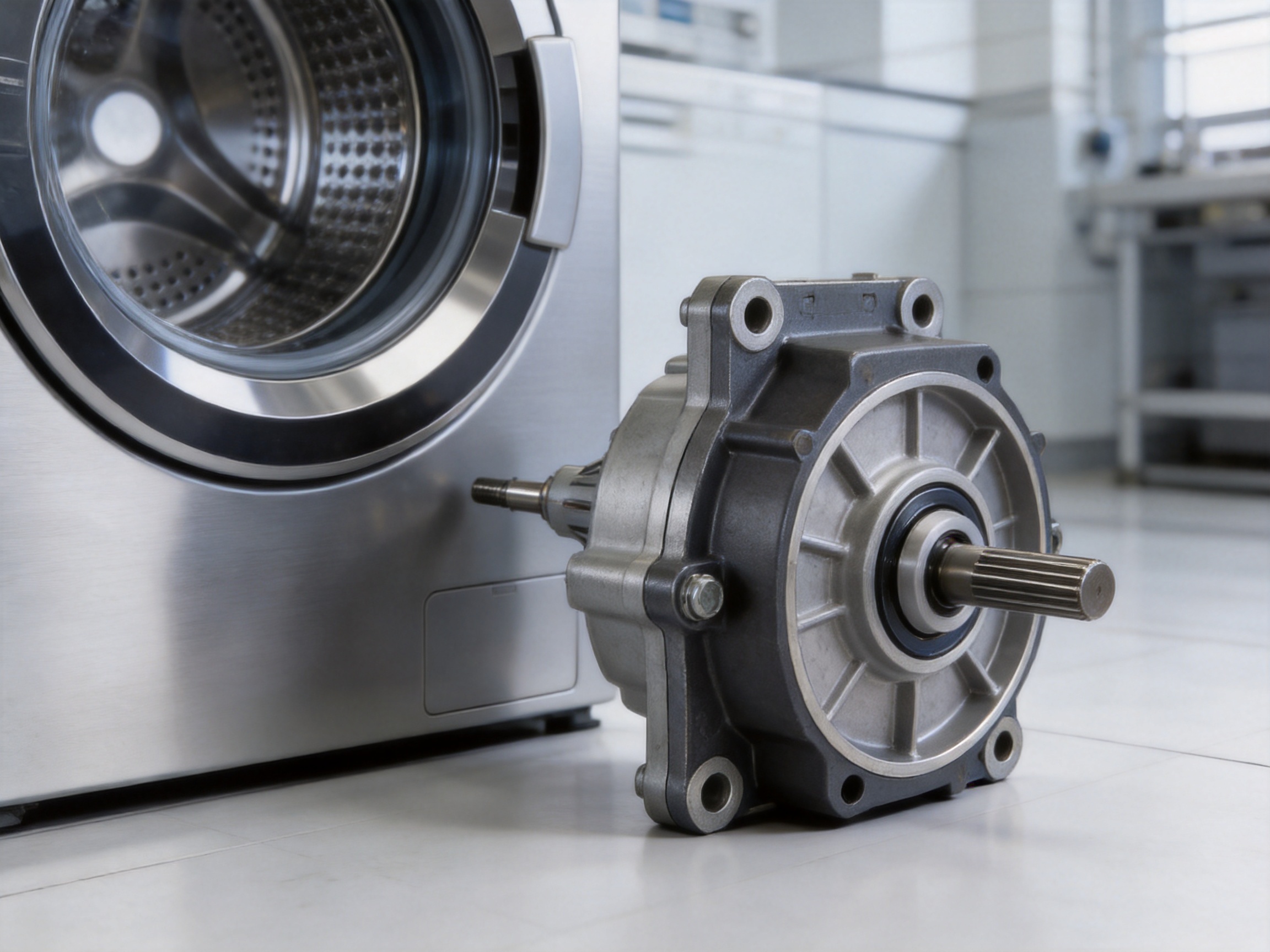
2. Construction and Main Components
The exact internal configuration of a washing machine gear case may vary according to the machine design, motor arrangement, output speed, mounting structure, and agitator requirements. Nevertheless, most gear cases contain several common functional elements.
2.1 Gear Set
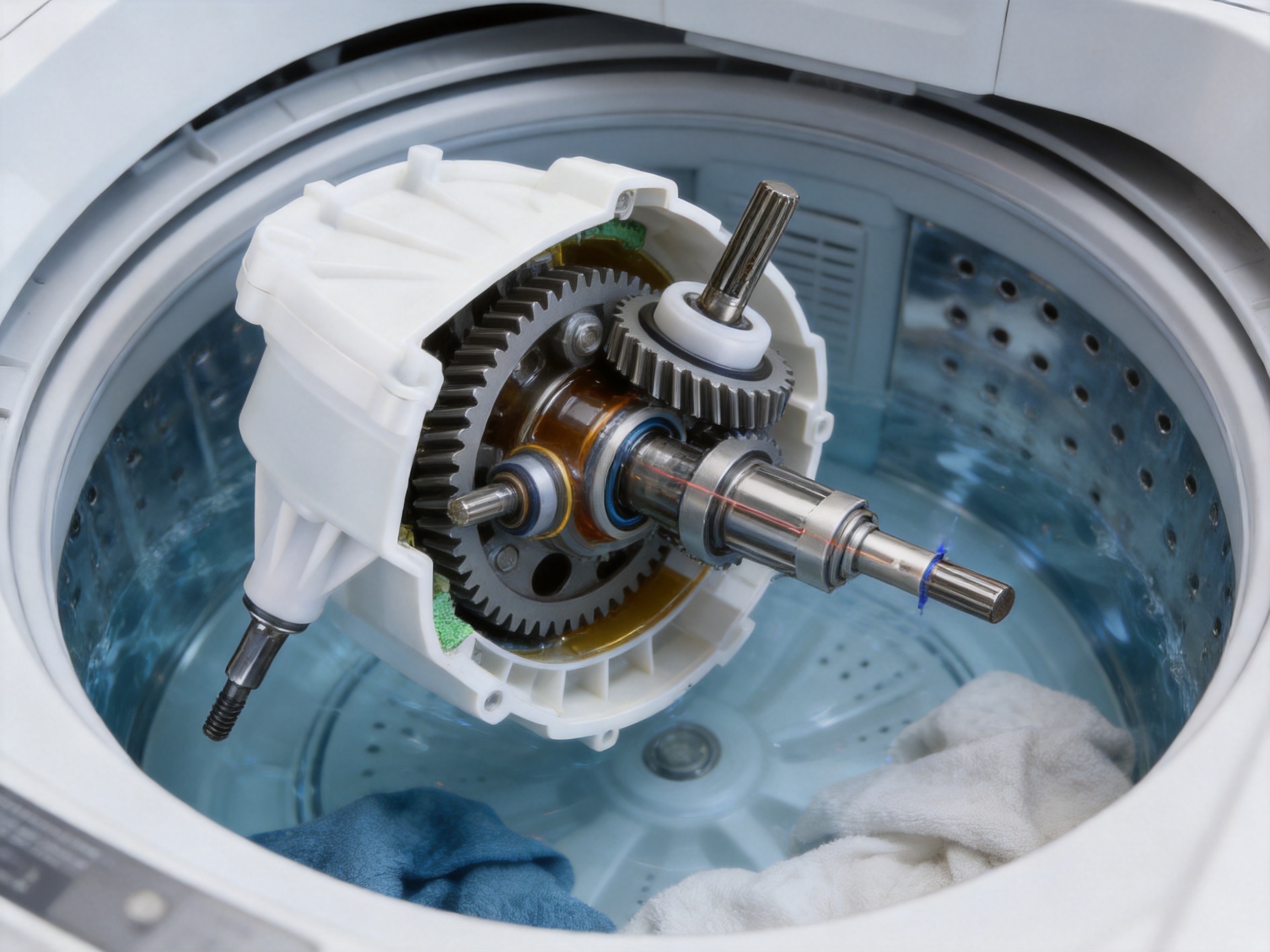
The gear set provides the required speed reduction and torque multiplication. Gear teeth must be produced with suitable accuracy and surface quality because they operate under repeated load cycles. Proper tooth engagement helps reduce friction, vibration, and uneven wear.
In a well-designed gear case, the gear ratio is selected according to the intended washing machine application. The gear ratio must work with the motor’s rated speed and torque so that the final agitator movement is effective without placing excessive stress on the motor or transmission.
Gear materials and heat treatment also influence service life. The gears must resist tooth wear, deformation, and fatigue. Consistent material quality is particularly important for OEM production, where large numbers of washing machines may use the same component over an extended period.
2.2 Input Shaft
The input shaft receives power from the motor or motor-connected transmission mechanism. It must maintain a reliable connection and transfer rotational force without excessive deflection. The shaft’s dimensional accuracy influences the positioning of gears, bearings, and couplings.
Because the input shaft is exposed to repeated rotational loading, its surface quality, hardness, and concentricity are important. Poor surface condition may increase wear at bearing or seal contact areas. Inconsistent shaft dimensions can also make assembly more difficult and create variation in machine performance.
2.3 Output Shaft
The output shaft transfers the reduced-speed, higher-torque movement to the agitator. It is commonly exposed to substantial torsional loading because it must move wet clothing and water while coping with changing resistance.
The output shaft must be compatible with the washing machine’s agitator connection, mounting arrangement, and sealing structure. Its length, diameter, keyway, threaded section, or other connection features must be controlled carefully. For this reason, OEM and ODM customers often require precise drawings, samples, or technical specifications before approving a gear case for production.
2.4 Bearings and Support Structures
Bearings support rotating shafts and help maintain alignment inside the gear case. They reduce friction and allow the shafts to rotate smoothly under load. Bearing seats and support structures must be manufactured accurately so that the bearings are neither excessively loose nor forced into an unsuitable position.
Correct bearing installation is also important. Excessive assembly force, contamination, or misalignment can shorten bearing life. A specialized manufacturer can reduce these risks by using controlled assembly procedures, appropriate fixtures, and inspection checkpoints.
2.5 Seals and Lubrication
Seals help prevent lubricant from escaping and protect the internal mechanism from external moisture and contaminants. Seal performance depends on the selected sealing material, shaft surface quality, installation accuracy, and housing design.
Lubrication reduces friction between moving components and helps control heat generated during operation. The lubricant must remain in the appropriate areas of the gear case throughout repeated washing cycles. If lubricant is lost or contaminated, gears and bearings may experience accelerated wear.
Because washing machines commonly operate in humid locations, sealing and lubrication are closely connected to long-term reliability. A gear case that maintains a stable internal environment can help reduce maintenance needs and protect the transmission system.
2.6 Housing
The housing encloses and supports the transmission components. It may include mounting points, bearing locations, sealing interfaces, and connection features for the washing machine assembly. The housing must have sufficient mechanical strength while maintaining accurate dimensions.
A properly manufactured housing also contributes to noise and vibration control. If the housing is distorted or the internal components are not held securely, the transmission may produce unwanted vibration during operation. Stable housing geometry helps preserve the intended relationship between gears, shafts, bearings, and seals.
3. Performance Advantages of the Gear Case
The Washing Machine Gear Case is designed around the practical requirements of semi-automatic agitator washing machines. Its principal advantages are stable torque transmission, durability in humid environments, economical production, and compatibility with OEM and ODM supply programs.
3.1 Stable Power Transmission
The most important advantage of the gear case is its ability to provide stable power from the motor to the agitator. By converting high-speed input into controlled output, it enables the washing machine to perform its intended cleaning action with greater consistency.
Stable power transmission helps maintain uniform agitation across different loads. It can also reduce sudden mechanical stress on the motor and other connected parts. For appliance manufacturers, this consistency is valuable because a stable transmission contributes to predictable washing performance during product testing and mass production.
3.2 High-Torque Output for Effective Agitation
Wet clothing can be heavy and resistant to movement. The agitator must generate sufficient force to circulate the load through the water. The gear case increases available output torque, helping the agitator maintain movement when the load becomes more demanding.
A high-torque transmission is particularly useful during starting and reversing. It helps the washing machine overcome initial resistance and continue operating when clothing gathers around the agitator. This characteristic supports effective washing while reducing the risk that the motor will struggle under normal load conditions.
3.3 Suitability for Humid Operating Environments
Washing machines are frequently installed in laundry rooms, kitchens, bathrooms, utility areas, or other locations where humidity may be elevated. Internal transmission components must therefore be protected from environmental moisture and the effects of repeated washing cycles.
The gear case design combines enclosed mechanical protection with sealing and lubrication considerations. This makes it suitable for long-term operation in the humid conditions associated with semi-automatic washing machines. Although proper machine installation and maintenance remain important, a transmission designed for this environment provides a stronger foundation for reliable operation.
3.4 Durability Under Repeated Cycles
A washing machine may complete many operating cycles during its service life. The gear case must withstand repeated acceleration, deceleration, reversing, vibration, and load variation. Durable gears, shafts, bearings, seals, and housing structures help the assembly maintain performance over time.
Durability reduces the likelihood of premature replacement and supports a lower total cost of ownership. For distributors and service organizations, durable components can also reduce warranty claims, return rates, and after-sales labor.
3.5 Cost Efficiency
Cost efficiency does not mean simply selecting the lowest-priced gearbox. It involves balancing purchase price, service life, failure risk, assembly efficiency, availability, and technical support. A gear case that performs consistently and is supplied with stable quality may provide better overall value than a cheaper component with unpredictable performance.
The product is positioned as an economical transmission solution for customers who value both stability and controlled manufacturing costs. Its design is intended to meet the essential requirements of semi-automatic agitator washing machines without adding unnecessary complexity.
3.6 Compatibility with OEM and ODM Requirements
Washing machine manufacturers often require components that match specific installation dimensions, output connections, motor arrangements, or performance targets. A specialized supplier can support these requirements through technical communication, drawing review, sample development, and production coordination.
OEM and ODM cooperation can help customers integrate the gear case into existing products or develop new washing machine models. The ability to discuss design requirements directly with the manufacturer can reduce communication delays and improve the efficiency of product adaptation.
4. Advantages Compared with Less Specialized Alternatives
Competition in the washing machine component market includes general mechanical part suppliers, trading companies, low-cost producers, and manufacturers with limited in-house capabilities. The value of a specialized gear case supplier becomes clear when the requirements of quality consistency, technical coordination, and long-term supply are considered.
4.1 More Consistent Manufacturing Control
A supplier that focuses on washing machine components develops production experience around the specific demands of gear reducers, synchronizers, gearboxes, transmissions, and related parts. This specialization supports a deeper understanding of the mechanical interfaces, operating conditions, and common failure risks associated with washing machine applications.
By comparison, a general supplier may have experience producing similar mechanical parts but may not fully understand the reversing cycles, humid environment, agitator loading, and installation requirements of washing machines. Application-specific experience can therefore reduce development and quality risks.
4.2 Better Control of Core Materials
Cixi Gaite Electric Co., Ltd. produces approximately 90% of its core materials in-house. This level of internal production can provide stronger control over material consistency, dimensional stability, and supply planning. It also reduces dependence on multiple outside sources for critical components.
In-house material production does not eliminate the need for inspection and supplier management, but it can improve traceability and reduce variation between batches. For customers purchasing components over a long period, stable material control is especially valuable because it supports more consistent product performance.
4.3 More Reliable Supply Continuity
Supply continuity is a major concern for appliance manufacturers. Production interruptions may occur when a supplier depends heavily on external sources, has limited production capacity, or cannot respond quickly to changes in demand. An established production base with internal capabilities can support more reliable scheduling and coordination.
GAITE operates a production base of approximately 10,000 square meters. Its manufacturing infrastructure and specialized product focus provide a foundation for handling repeat orders, customer specifications, and ongoing supply programs.
4.4 Practical Balance Between Quality and Price
Some high-end transmission suppliers offer advanced products at prices that may not be suitable for cost-sensitive semi-automatic washing machine markets. At the other extreme, low-cost components may involve greater variation in materials, machining, assembly, or sealing performance.
The Washing Machine Gear Case is intended to occupy a practical middle ground: dependable enough for long-term appliance operation while remaining suitable for customers who prioritize manufacturing economy. This balance is especially relevant in markets where consumers require affordable washing machines and manufacturers must control bill-of-materials costs.
4.5 Easier Technical Communication
When the supplier understands the application, technical discussions can focus on the issues that matter most: torque requirements, motor matching, mounting dimensions, shaft design, sealing, noise, vibration, and cycle life. This is more efficient than explaining the entire washing machine application to a supplier with no relevant industry background.
Clear technical communication also helps prevent misunderstandings about drawings, samples, tolerances, packaging, inspection methods, and production changes. For OEM and ODM projects, this can shorten development time and reduce the risk of late-stage modifications.
5. Advanced Manufacturing Strengths
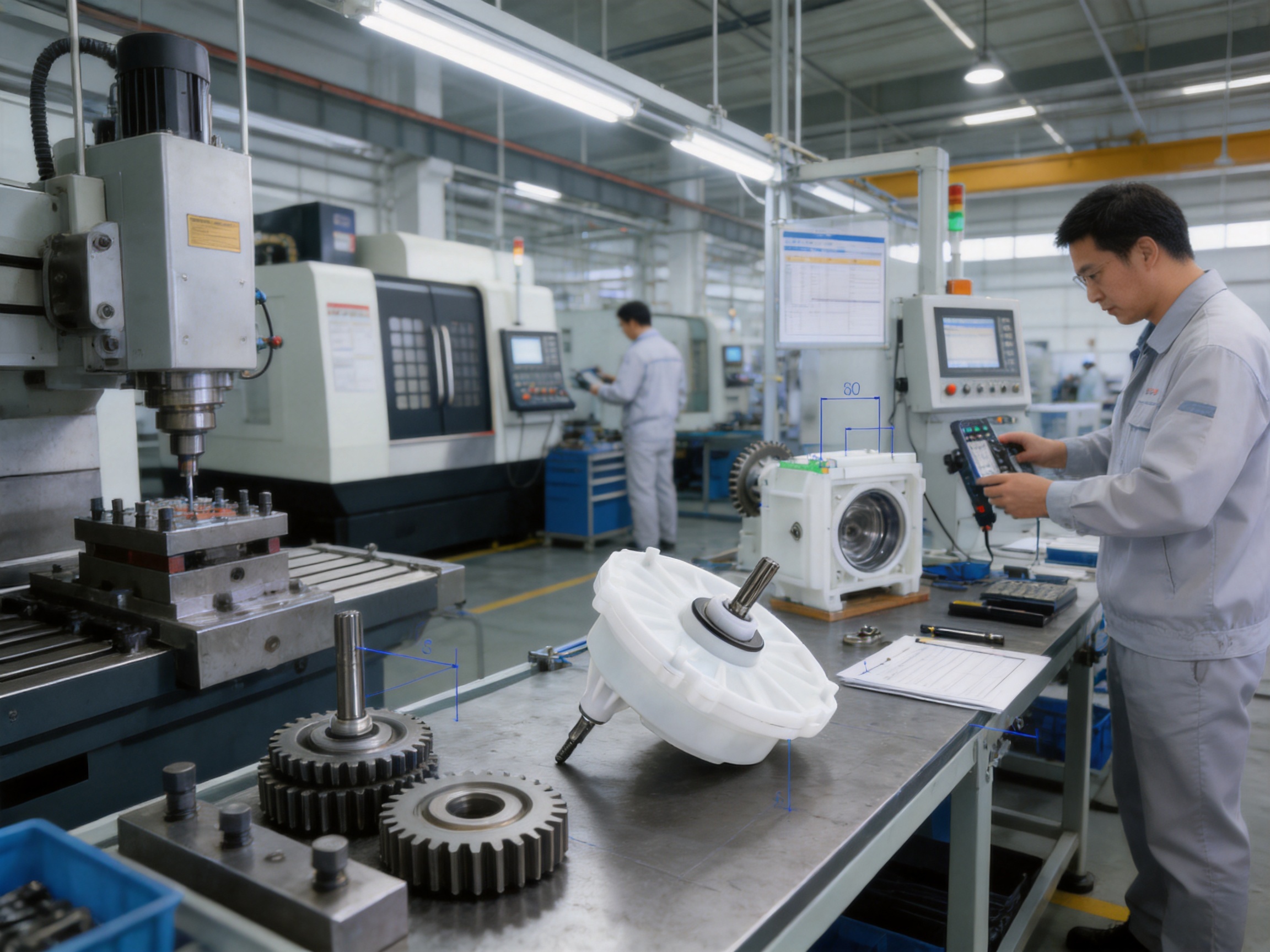
The performance of a gear case depends not only on its design but also on the way it is manufactured. Small dimensional errors, inconsistent heat treatment, inadequate cleaning, or improper assembly can affect the operation of the finished transmission. A capable manufacturer must therefore combine engineering knowledge with disciplined production control.
5.1 Integrated Production Capability
GAITE has developed its manufacturing capabilities around core washing machine components. The company’s product range includes washing machine parts, washing machine gearboxes, gear reducers, synchronizers, and P-shafts. This focused product portfolio allows manufacturing resources, process knowledge, and quality experience to be applied across related component categories.
The company’s approximately 10,000-square-meter production base provides space for machining, component preparation, assembly, inspection, storage, and production coordination. An organized production environment helps separate process stages and supports more efficient material flow.
5.2 In-House Core Material Production
Producing approximately 90% of core materials in-house is a significant manufacturing strength. It gives the manufacturer greater influence over the production conditions of important parts and reduces exposure to inconsistent external processing.
Internal production can support closer control of material specifications, machining allowances, surface preparation, and batch identification. It may also make it easier to investigate a quality issue because production records and process information are available within one manufacturing system.
5.3 Precision Machining
Gear case components require controlled machining of shafts, housings, bearing seats, gear interfaces, and sealing surfaces. Precision machining helps maintain the dimensional relationships needed for smooth transmission operation.
For example, the bearing seat must be produced within an appropriate tolerance so that the bearing remains secure without excessive stress. Shaft diameters must be compatible with bearings and seals. Mounting surfaces must allow the gear case to be installed correctly in the washing machine assembly.
Consistent machining also improves interchangeability. When components are produced within controlled tolerances, assembly teams can install them with fewer adjustments, and replacement parts can be supplied more reliably in the aftermarket.
5.4 Controlled Gear Processing
Gear processing requires attention to tooth form, pitch, surface quality, concentricity, and engagement. Inconsistent gear geometry may create noise, vibration, friction, and uneven wear. Controlled processing helps ensure that the gear set operates as intended throughout the transmission cycle.
Gear quality is especially important in reversing applications. When the direction of rotation changes, the tooth contact pattern and load distribution can shift. Properly produced gears help manage these repeated changes more effectively.
5.5 Heat Treatment and Surface Performance
Where required by the component design, heat treatment can improve the wear resistance and fatigue performance of gear and shaft materials. The process must be controlled carefully because excessive hardness, insufficient hardness, distortion, or inconsistent treatment may create new problems.
Surface performance is also important at seal contact areas and bearing locations. Smooth and accurately finished surfaces help reduce friction and support stable sealing. Manufacturing controls should therefore consider not only the basic dimensions but also the condition of functional surfaces.
5.6 Controlled Assembly
Assembly quality has a direct effect on the final performance of the gear case. Gears, shafts, bearings, seals, fasteners, and lubricant must be installed in the correct sequence and condition. Contamination, incorrect positioning, insufficient lubrication, or excessive assembly force can reduce service life.
A mature assembly process uses appropriate fixtures, work instructions, operator training, and inspection checkpoints. These controls help ensure that each assembled unit meets the required configuration before shipment.
5.7 Testing and Inspection
Quality inspection may include dimensional verification, appearance checks, component inspection, assembly checks, rotation testing, leakage checks, and functional evaluation. The exact inspection plan depends on customer requirements and product specifications.
Functional testing is particularly useful because it evaluates the assembled transmission rather than only individual components. It can help identify abnormal noise, excessive resistance, output instability, or leakage before the product reaches the customer.
6. Quality Management and Compliance
Quality management is essential for a component that operates inside an appliance and is expected to function reliably for an extended period. Cixi Gaite Electric Co., Ltd. has obtained ISO 9001 Quality Management System certification and ISO 14001 Environmental Management System certification.
6.1 ISO 9001 Quality Management System
ISO 9001 provides a framework for managing processes that influence product quality and customer satisfaction. In a gear case manufacturing operation, this may include document control, production planning, incoming material management, process inspection, final inspection, corrective action, and customer feedback.
A quality management system encourages the manufacturer to treat quality as a continuous process rather than a final inspection activity. This is important because many potential problems originate during design review, material selection, machining, assembly, or process changes.
6.2 ISO 14001 Environmental Management System
ISO 14001 focuses on environmental management and continuous improvement in environmental performance. Manufacturing processes may involve energy use, metal processing, lubricants, packaging, waste management, and other environmental considerations.
An environmental management system helps establish a more systematic approach to identifying and controlling these impacts. For international customers, environmental responsibility is increasingly relevant when evaluating long-term suppliers.
6.3 RoHS Compliance
The company’s products comply with RoHS requirements. RoHS compliance supports restrictions on certain hazardous substances in electrical and electronic products and related supply chains. For washing machine manufacturers serving regulated or international markets, compliance information can support product documentation and market access requirements.
Customers should confirm the specific compliance documentation required for their product, market, and final assembly. A qualified supplier can assist with relevant declarations, material information, and supporting records as needed.
7. Application in Semi-Automatic Agitator Washing Machines
The Washing Machine Gear Case is intended for semi-automatic agitator washing machines. These machines commonly use a separate washing tub and spin tub, with the agitator responsible for moving water and clothing during the wash process. The transmission must therefore provide stable drive power in a compact and cost-conscious appliance structure.
7.1 Washing Cycle Requirements
During a typical washing cycle, the transmission may experience repeated starts, stops, reversals, and periods of continuous operation. The resistance changes according to water level, garment type, clothing distribution, and detergent conditions.
The gear case must maintain adequate output torque under these changing conditions. It must also protect the internal gears and bearings from excessive shock loads. Stable performance across these operating variations contributes to consistent cleaning action.
7.2 Humidity and Water Exposure
Even when the gear case is not directly immersed in water, it operates close to a wet washing system. Humidity, splashing, condensation, and detergent residue may affect nearby mechanical components. Effective sealing and appropriate housing design help protect the internal transmission environment.
Manufacturers should also ensure that the completed washing machine provides suitable drainage, ventilation, and installation protection. The gear case is one part of the overall appliance system, and its performance is supported by correct integration into the machine.
7.3 Load Variation
Washing loads vary widely. Lightweight garments may create relatively low resistance, while towels, blankets, and heavily saturated clothing may produce higher loads. Uneven distribution can create additional vibration and torque variation.
A robust gear case provides a stronger margin for normal load variation. However, the washing machine should still be designed with appropriate motor capacity, tub dimensions, control settings, and overload protection. Correct system matching remains essential.
8. OEM and ODM Customization Support
Different washing machine brands and models may use different mounting patterns, output shaft configurations, gear ratios, dimensions, and performance requirements. A standard product may meet the needs of some customers, while others may require customized development.
8.1 Design Review
Customization normally begins with technical information such as drawings, samples, machine specifications, target output speed, motor data, installation space, and expected operating cycles. The supplier can review these requirements and identify the main design and manufacturing considerations.
Early design review is valuable because it can identify interference, sealing limitations, shaft connection issues, or assembly challenges before tooling and mass production begin.
8.2 Sample Development
Samples allow the customer to evaluate fit, connection, rotation, noise, vibration, and basic functional performance. Sample testing can be completed in the customer’s washing machine assembly or through a coordinated supplier evaluation process.
Feedback from sample testing may lead to changes in dimensions, materials, gear ratio, seals, mounting features, or assembly details. A structured sample approval process helps ensure that the final product corresponds to the customer’s actual requirements.
8.3 Production Transfer
After design approval, the product must be transferred into repeatable mass production. This involves confirming process documents, inspection standards, material specifications, packaging, labeling, and delivery arrangements.
A manufacturer with established production systems can support this transfer more effectively than a supplier that only produces occasional prototypes. The goal is to ensure that the approved sample remains representative of future production batches.
8.4 Aftermarket Requirements
Aftermarket customers may need replacement gear cases for existing washing machine models. In this situation, compatibility with the original installation dimensions and shaft connection is especially important. Clear product identification, stable availability, protective packaging, and technical communication can help distributors and service providers manage replacement demand.
Replacement components should be installed by qualified personnel who can verify compatibility and inspect related parts before operation. A worn motor coupling, damaged mounting structure, or incorrect installation may affect the performance of a new gear case.
9. Installation and Integration Considerations
Correct installation is essential for achieving the intended performance of any washing machine transmission component. Even a well-manufactured gear case may produce abnormal noise or premature wear if it is installed incorrectly.
9.1 Dimensional Compatibility
Before installation, customers should verify the gear case dimensions, mounting points, shaft length, output connection, and interface with the washing machine frame or tub assembly. The component should not be forced into position or modified without technical approval.
Incorrect mounting can create stress on the housing or shafts. It may also affect alignment between the motor and input shaft. Dimensional verification before assembly helps prevent avoidable problems.
9.2 Alignment
Input and output alignment must be maintained according to the washing machine design. Excessive angular or parallel misalignment may increase bearing loads, seal wear, vibration, and noise.
Mounting fasteners should be tightened according to the applicable assembly requirements. Uneven tightening or inadequate support may distort the housing or allow movement during operation.
9.3 Coupling and Agitator Connection
The motor connection and agitator connection should be inspected for wear, damage, contamination, and correct engagement. A loose coupling may create impact loads and irregular movement. An improper agitator connection may cause slipping or excessive vibration.
9.4 Functional Inspection After Installation
After installation, the washing machine should be checked for abnormal noise, leakage, excessive vibration, irregular agitator movement, and unusual heat. Initial operation should be monitored before the appliance is returned to normal service.
If any abnormal condition appears, the machine should be stopped and inspected. Continued operation under abnormal conditions may damage the gear case or other washing machine components.
10. Maintenance and Service Life Considerations
The gear case is designed for long-term operation, but service life depends on the complete washing machine system and operating conditions. Proper loading, correct water levels, suitable installation, and regular inspection all contribute to transmission durability.
10.1 Avoiding Overload
Overloading the washing machine increases torque demand and may create excessive stress on the motor, gear case, agitator, and mounting structure. Users should follow the washing machine’s specified capacity and avoid operating with loads that exceed the machine’s design limits.
10.2 Monitoring Noise and Vibration
Changes in operating noise or vibration may indicate wear, loose mounting, bearing problems, coupling damage, or an uneven load. Early investigation can help prevent a minor issue from developing into a major transmission failure.
10.3 Checking for Leakage
Oil or lubricant leakage around the gear case should be investigated promptly. Leakage may result from seal wear, shaft damage, housing damage, excessive pressure, or installation problems. Continued operation with insufficient lubrication can increase gear and bearing wear.
10.4 Protecting the Washing Machine Environment
Good drainage and ventilation help reduce moisture accumulation around the transmission area. The appliance should be installed on a stable, level surface and protected from unnecessary water exposure. These general practices support the performance of the gear case and other mechanical components.
11. Why Manufacturing Location and Experience Matter
Component sourcing decisions involve more than product specifications. Customers also evaluate manufacturing experience, production stability, quality systems, communication, and the supplier’s ability to support future requirements.
GAITE was established in 2002 and is located in Ningbo, Zhejiang, China, a region with extensive manufacturing capabilities and supply-chain resources. Over time, the company has developed long-term partnerships with Sharp Corporation, Panasonic Corporation, and Midea Group. These relationships reflect experience in serving established appliance organizations and supporting demanding supply requirements.
The company’s long-term focus on washing machine components allows it to build knowledge across product development, manufacturing, quality management, and customer service. Its development goal is to become a leading and trusted long-term partner in the washing machine components sector.
For customers, a long-term partnership can provide benefits beyond the initial purchase. These may include more consistent technical records, faster communication during design changes, improved production planning, and a better understanding of the customer’s product platform.
12. Selecting the Right Gear Case Supplier
When comparing suppliers, purchasing teams should evaluate the complete supply proposition rather than focusing only on unit price. The following factors can help guide the selection process.
12.1 Product Application Experience
Ask whether the supplier regularly manufactures washing machine gearboxes, transmissions, gear reducers, P-shafts, or related components. Application-specific experience can reduce development risk and improve technical communication.
12.2 Manufacturing Integration
Review the proportion of core production completed in-house, the availability of machining and assembly resources, and the supplier’s ability to control key processes. Greater manufacturing integration can support quality consistency and supply stability.
12.3 Quality Certifications
Confirm whether the supplier maintains relevant quality and environmental management systems. ISO 9001 and ISO 14001 certifications provide useful evidence of structured management practices, although customers should also review product-specific quality procedures.
12.4 Testing Capability
Ask about dimensional inspection, leakage testing, functional testing, noise evaluation, and sample approval procedures. Testing should be appropriate to the product’s operating requirements and customer specifications.
12.5 Customization and Communication
OEM and ODM customers should confirm whether the supplier can review drawings, develop samples, manage engineering changes, and maintain communication throughout the project. Direct contact with a knowledgeable representative can make the development process more efficient.
12.6 Supply and After-Sales Support
Consider production capacity, lead-time management, packaging, replacement support, technical documentation, and response to quality issues. A reliable supplier should be prepared to support the product after the first shipment.
13. Recommended Technical Information for an Inquiry
Customers requesting a quotation or technical evaluation can improve response efficiency by providing complete information. Useful data may include the washing machine model, motor type, rated speed, rated power, output requirements, mounting dimensions, shaft drawings, gear ratio, operating cycle, target service life, and expected annual quantity.
Photographs or physical samples can help clarify connection features and installation conditions. If the product is intended as a replacement component, information about the original gear case, machine model, and failure symptoms may also be useful.
Customers should identify whether they require a standard product, a modified standard product, or a fully customized OEM or ODM design. They should also specify packaging, labeling, inspection, certification, and delivery requirements at an early stage.
Early and complete communication allows the manufacturer to evaluate feasibility more accurately. It also reduces the possibility of unexpected changes after sample approval or during mass production.
14. Q&A About the Washing Machine Gear Case
Q1: What is the main function of a washing machine gear case?
The main function is to convert the motor’s high-speed rotation into lower-speed, higher-torque output for the agitator. This allows the agitator to move clothing and water effectively during the washing cycle.
Q2: Which washing machines use this gear case?
The product is designed for semi-automatic agitator washing machines. Compatibility should be confirmed according to the machine’s mounting dimensions, motor arrangement, shaft connection, gear ratio, and other technical requirements.
Q3: Why is high torque important in a washing machine transmission?
Wet clothing and water create resistance against the agitator. High torque helps the agitator start, reverse, and continue moving under changing load conditions. It also helps the motor operate through the transmission rather than carrying the entire mechanical burden directly.
Q4: Can the gear case operate in humid environments?
Yes. The design is intended for the humid operating environment associated with semi-automatic washing machines. Proper sealing, lubrication, housing protection, and correct appliance installation are all important for long-term performance.
Q5: What are the main signs of a failing gear case?
Possible signs include unusual grinding or knocking sounds, oil leakage, excessive vibration, irregular agitator movement, reduced washing action, difficulty starting, or abnormal heating. These symptoms may also be caused by other washing machine components, so professional inspection is recommended.
Q6: Is the product suitable for OEM projects?
Yes. The supplier provides OEM and ODM solutions for washing machine gearboxes, transmissions, P-shafts, and other drive components. Customers should provide drawings, samples, machine specifications, or other technical information for evaluation.
Q7: What manufacturing advantages does the supplier have?
The company has a production base of approximately 10,000 square meters and produces approximately 90% of its core materials in-house. It also has specialized experience in washing machine components and maintains ISO 9001 and ISO 14001 certifications.
Q8: Does the product comply with environmental requirements?
The company states that its products comply with RoHS requirements. Customers should confirm the specific documentation and compliance requirements applicable to their final product and target market.
Q9: Can the gear case be used as an aftermarket replacement?
It may be suitable for aftermarket replacement when the dimensions, shaft connection, mounting structure, gear ratio, and operating requirements match the original application. Compatibility should be verified before purchase and installation.
Q10: What information should be provided when requesting a quotation?
Customers should provide the washing machine model, drawings or samples, motor specifications, output requirements, mounting dimensions, annual demand, packaging requirements, and whether the project is standard, modified, OEM, or ODM.
Q11: How does a gear case affect washing performance?
The gear case influences agitator speed, torque, movement stability, noise, vibration, and mechanical efficiency. A properly matched transmission helps the agitator deliver consistent movement and supports reliable washing performance.
Q12: Why is supplier experience important for this product?
A gear case must work as part of a complete washing machine system. A supplier with relevant industry experience is more familiar with motor matching, reversing cycles, humidity, shaft connections, sealing, load variation, and appliance assembly requirements.
15. Conclusion
The Washing Machine Gear Case is a critical component for semi-automatic agitator washing machines. Its role extends beyond simple speed reduction. It must provide high-torque output, stable agitator movement, reliable reversing performance, protection from humid conditions, and sufficient durability for repeated washing cycles.
The product offers a practical combination of mechanical reliability and cost efficiency for OEM manufacturers, appliance brands, distributors, and aftermarket customers. Its value is supported by application-focused design, a specialized product portfolio, in-house production of approximately 90% of core materials, and a manufacturing base of approximately 10,000 square meters.
Cixi Gaite Electric Co., Ltd. strengthens its manufacturing position through experience in washing machine components, ISO 9001 and ISO 14001 certifications, RoHS compliance, and long-term cooperation with recognized appliance companies. These capabilities provide customers with a foundation for stable supply, consistent quality, technical cooperation, and customized development.
For customers selecting a transmission component, the most effective approach is to evaluate product fit, manufacturing control, quality systems, testing capability, customization support, and long-term service together. When these factors are properly aligned, a reliable gear case can improve washing machine performance, reduce lifecycle risks, and support economical appliance production.
References
1. ISO 9001, Quality Management Systems—Requirements.
2. ISO 14001, Environmental Management Systems—Requirements with Guidance for Use.
3. RoHS Requirements for the Restriction of Hazardous Substances in Electrical and Electronic Equipment.
4. General principles of gear transmission design, including speed reduction, torque multiplication, tooth engagement, and fatigue resistance.
5. General practices for washing machine mechanical system integration, including agitator drive, shaft alignment, sealing, lubrication, and vibration control.
6. Manufacturer-provided product and company information for the Washing Machine Gear Case and associated washing machine drive components.

 English
 عربى



 +86-574-63256717 /63267914
info@gaite.cn
 gaite@gaite.cn
 No. 208 Miaoshan Road, Shiyan Village, Henghe Town, Cixi City, Ningbo City, Zhejiang Province, China
