Semi-automatic twin-tub washing machines remain an important choice for households, rental properties, shared accommodation, service facilities, and markets where economical and easily maintainable laundry equipment is valued. Unlike fully automatic washing machines, these appliances generally separate the washing and spin-drying functions into two tubs. The washing tub uses a pulsator to move clothing through water and detergent, while the spin tub uses an independent drive system to remove excess water. This arrangement creates a practical, straightforward machine architecture in which each function can be operated separately.
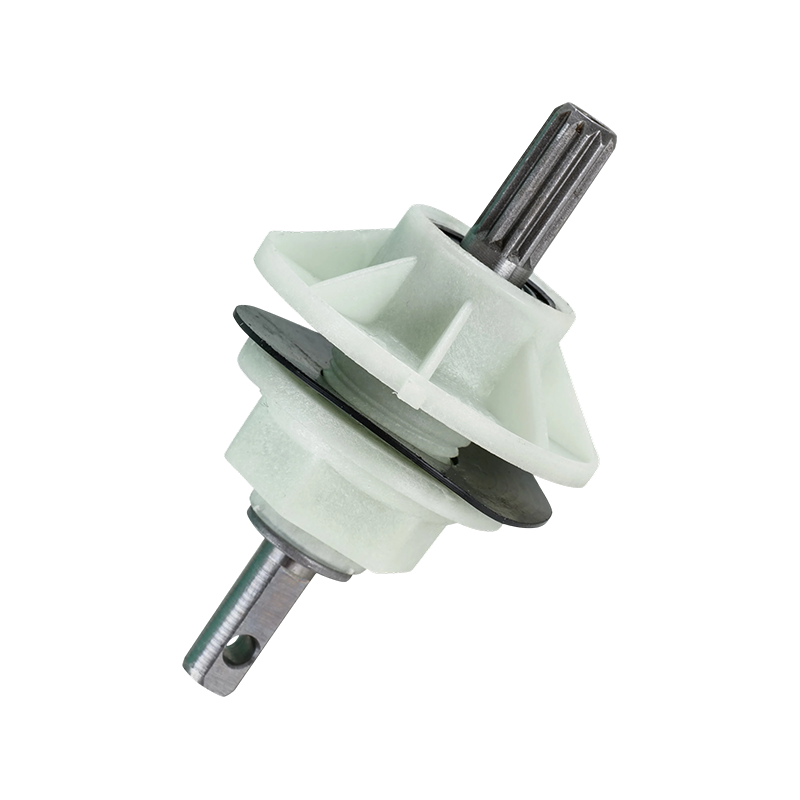
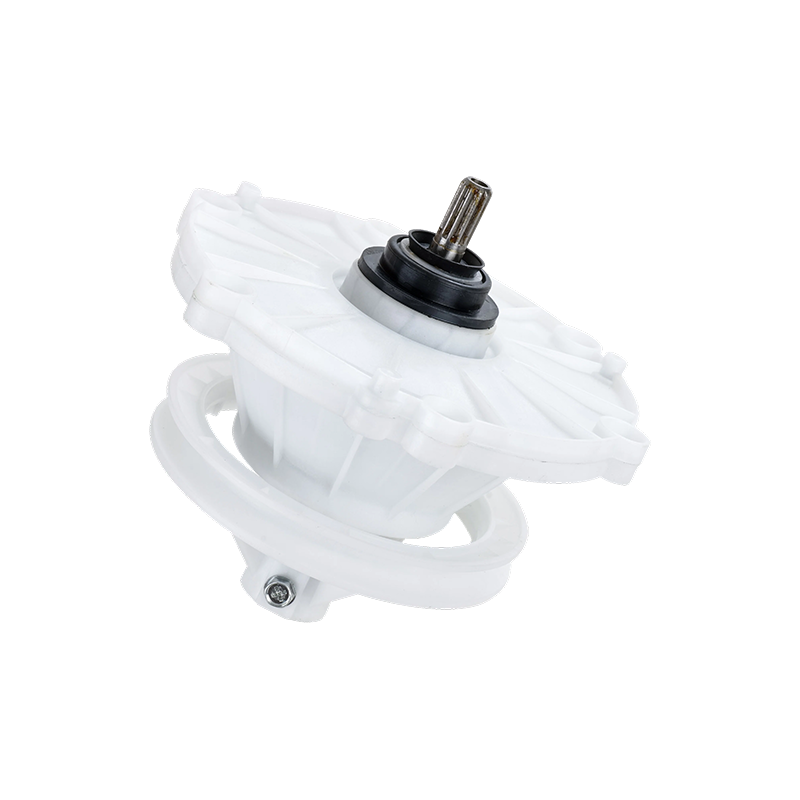
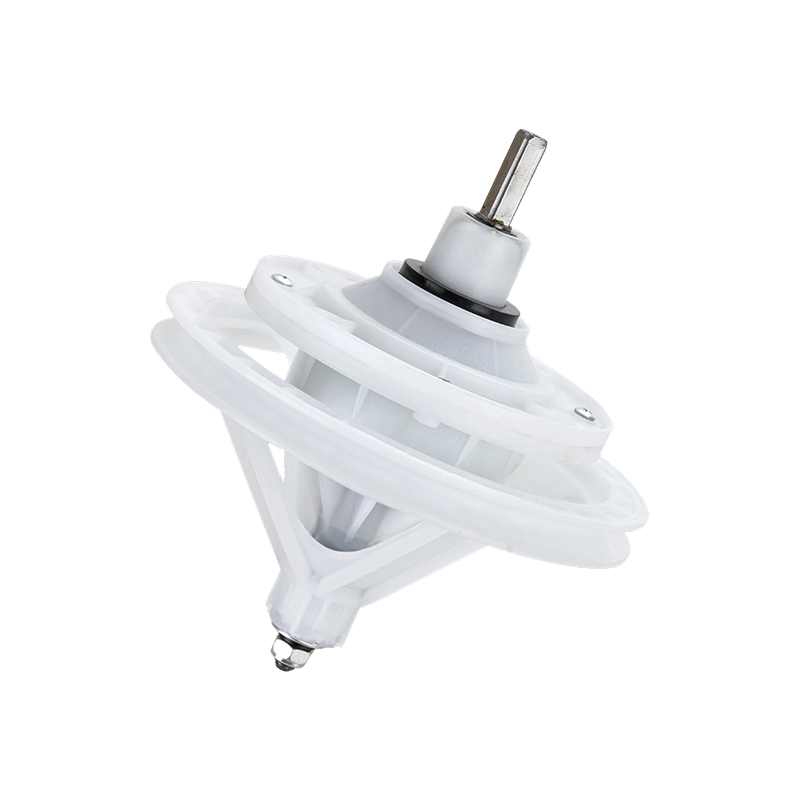
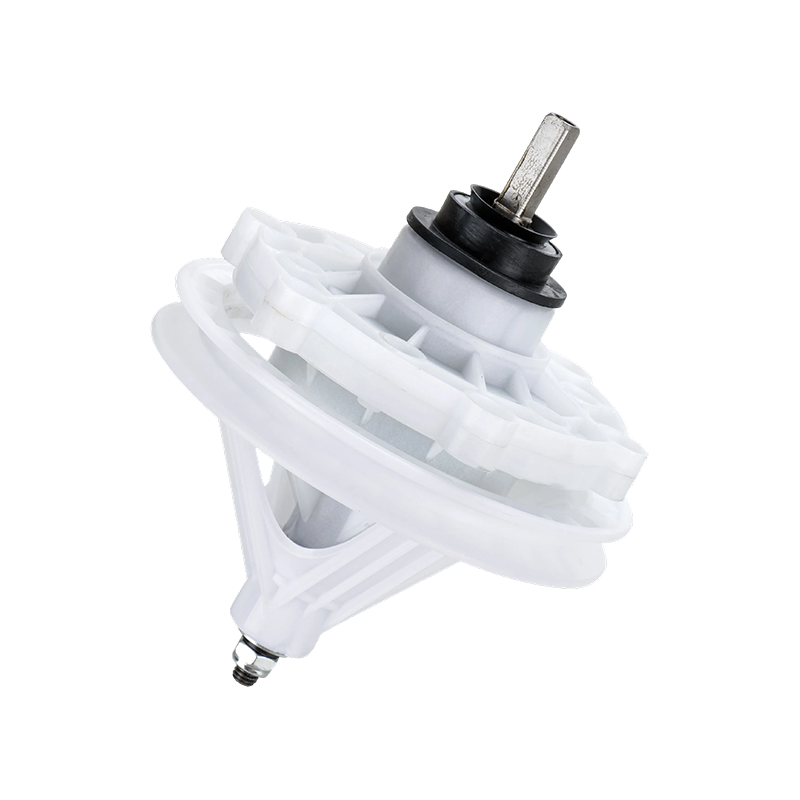
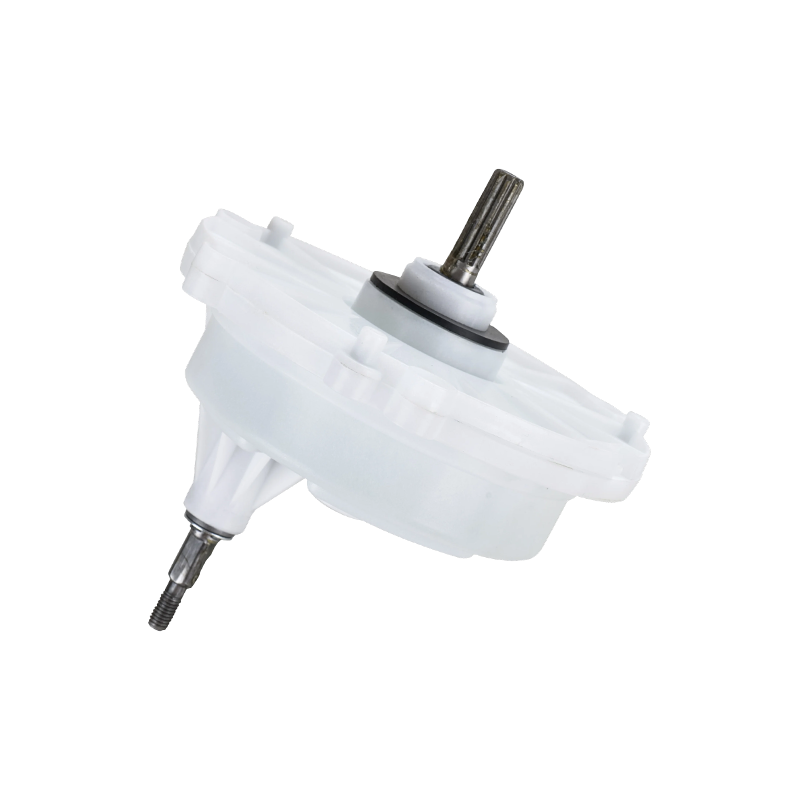
The washing-tub drive component described in this article is a straight-through pulsator shaft assembly, also known as a P-shaft assembly. It is designed for old-style semi-automatic twin-tub washing machines that use an external belt-and-pulley transmission rather than an internal gear reduction mechanism. The assembly features an integrated solid shaft, built-in bearings, and a waterproof mechanical seal. Its primary task is to transfer rotational power from the driven pulley to the washing pulsator while supporting the rotating parts and preventing wash-water leakage.
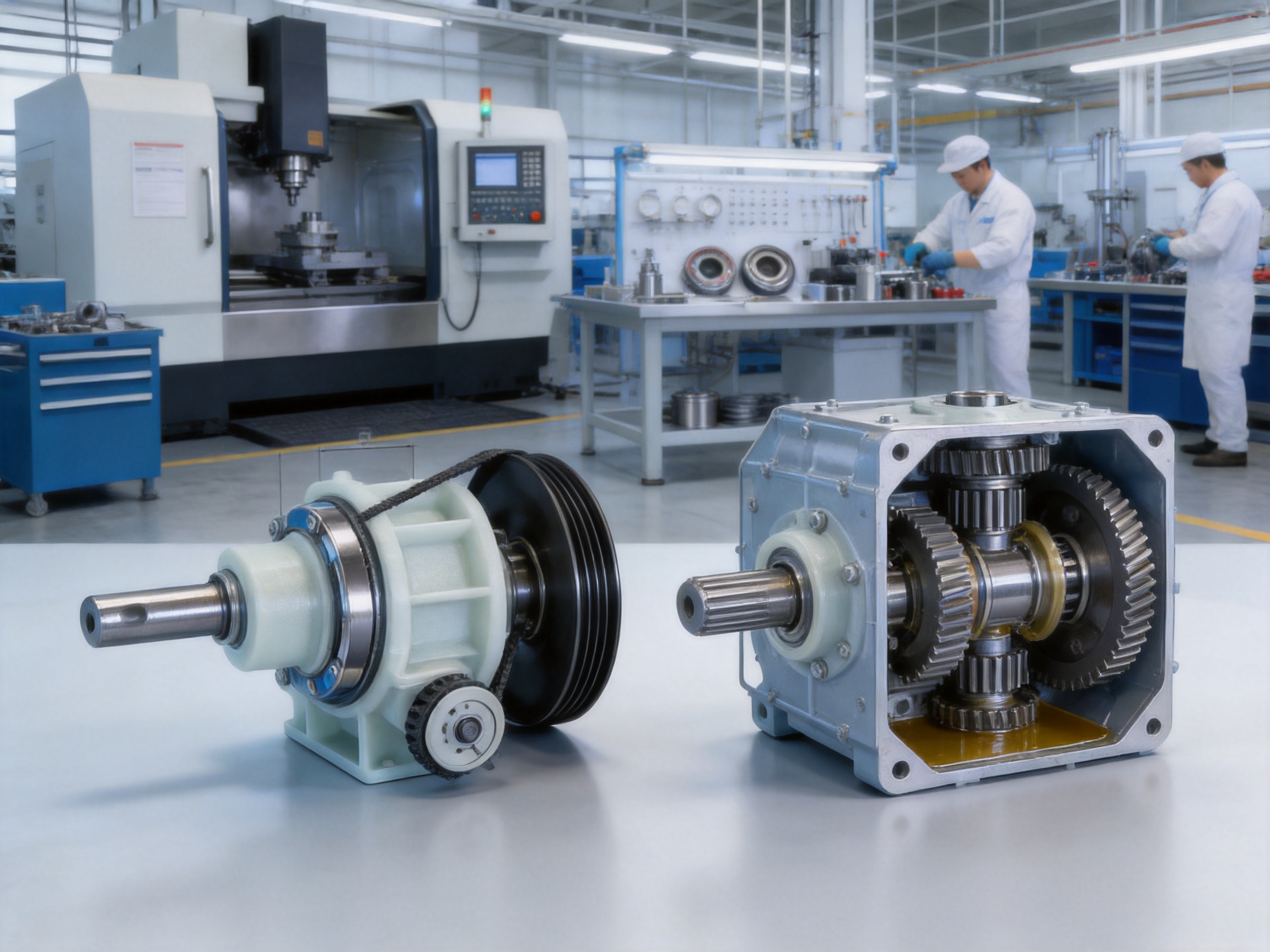
Although this component is sometimes commercially described as a washing machine gearbox, its internal construction is intentionally different from a conventional reduction gearbox. It does not contain internal reduction gears. Instead, speed reduction is achieved externally through the difference in diameter between the small motor pulley and the larger driven pulley. This design gives the machine a simple, direct, and service-friendly transmission path.
The combination of a solid shaft, external pulley reduction, bearing support, and mechanical sealing makes this assembly suitable for applications where dependable operation, low mechanical loss, quiet running, and convenient maintenance are more important than complex speed-control functions. It also gives component suppliers and washing machine manufacturers a practical replacement option for legacy twin-tub models.
Semi-Automatic Twin-Tub Washing Machine Gearbox
1. Product Overview
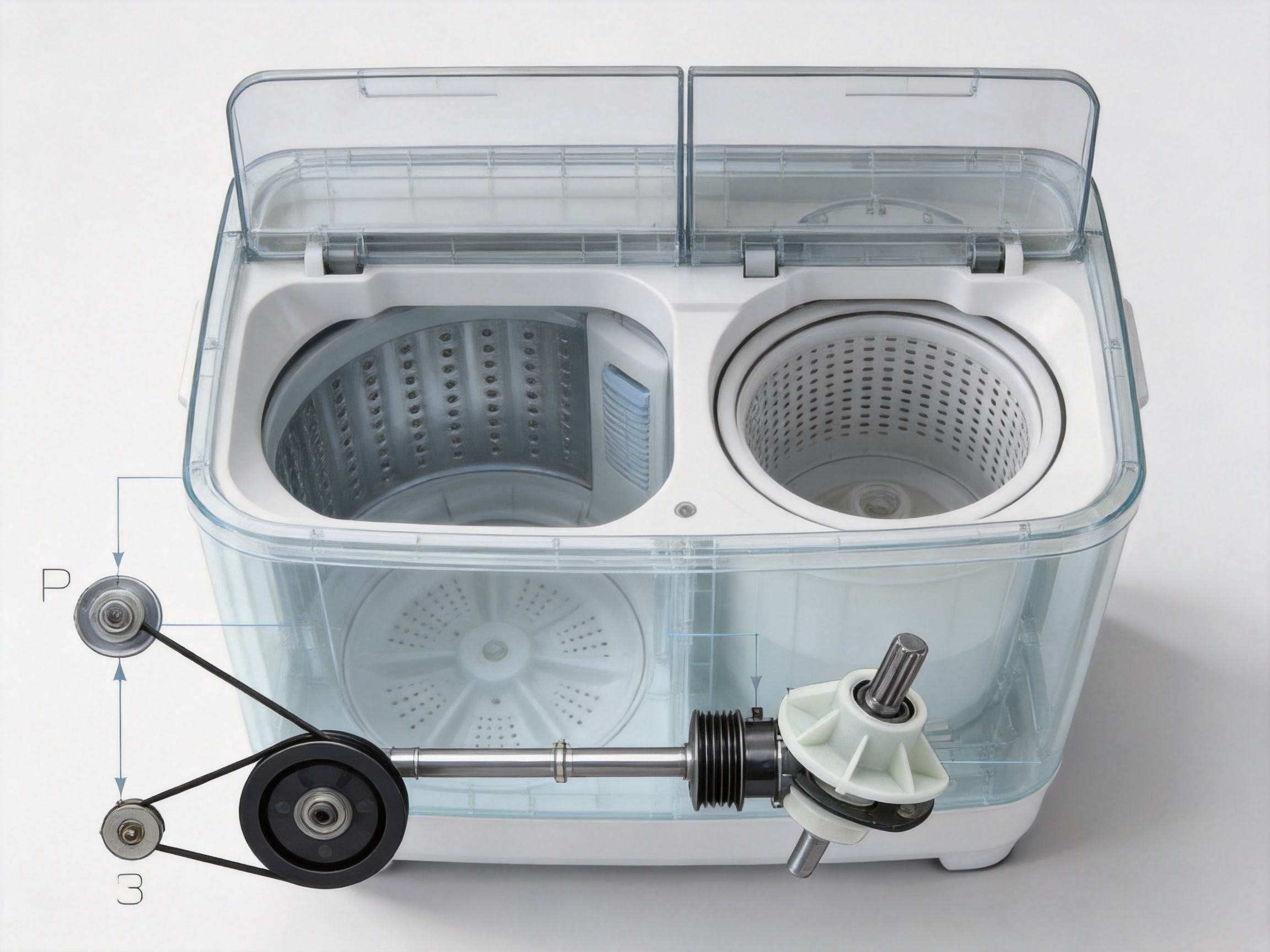
The semi-automatic twin-tub washing machine P-shaft assembly is the central rotating transmission component for the wash side of a twin-tub appliance. It connects the external driven pulley with the pulsator. When the washing motor operates, it turns the small motor pulley. A belt transfers this motion to the larger driven pulley attached to the transmission shaft. The shaft then rotates the pulsator inside the washing tub.
The shaft assembly is designed as a straight-through power-transmission structure. Power enters through the pulley side, passes through the solid shaft, and exits through the pulsator connection. There is no internal arrangement of multiple gears, gear carriers, or complicated reduction stages. The speed relationship is established by the pulley diameters selected by the washing machine designer.
This arrangement is especially suitable for semi-automatic twin-tub washing machines because these appliances typically use a dedicated motor and belt drive for the washing tub. The spin tub is driven separately by an independent motor and transmission path. As a result, the P-shaft does not need to perform both washing and spinning functions. It is optimized for the pulsator side only.
The assembly normally includes several functional areas:
1. An integrated solid shaft for transferring torque from the driven pulley to the pulsator.
2. Bearing positions that support the rotating shaft and help maintain correct alignment.
3. A waterproof mechanical seal that limits the escape of washing water along the shaft.
4. A pulley-side interface for connection with the external belt transmission.
5. A pulsator-side splined or keyed connection for transmitting torque to the pulsator.
6. A housing and support arrangement that allows the component to be installed in the washing-tub structure.
Every one of these areas contributes to the service life and operating quality of the washing machine. A shaft with adequate torque strength but poor sealing may leak. A well-sealed assembly with inaccurate bearing positioning may develop vibration. A correctly manufactured body with insufficient spline precision may cause pulsator looseness. Reliable performance therefore depends on the complete assembly rather than on one individual part.
2. Operating Principle
The operating principle is based on external speed reduction and direct shaft transmission. The washing motor rotates at a relatively high speed. Its small pulley is connected by a belt to a larger driven pulley mounted on the P-shaft. Because the driven pulley has a greater diameter than the motor pulley, the shaft rotates more slowly than the motor. At the same time, the torque available at the shaft is increased relative to the motor-side output.
This speed and torque relationship is essential for washing. The pulsator must move clothing and water through the tub with sufficient force, but it does not need to rotate at the high speed of the motor. External pulley reduction provides a practical way to achieve the required operating condition without adding an internal gear train.
The P-shaft rotates synchronously with the driven pulley and the pulsator. This direct relationship reduces the number of internal moving parts and creates a clear transmission path. When the belt is correctly tensioned and the pulley is properly aligned, the motor power can be transferred efficiently to the washing pulsator.
During operation, the bearings maintain the shaft position and reduce friction between the rotating shaft and the stationary support structure. They also help control radial movement caused by belt tension, pulsator resistance, and the changing load created by clothes and water in the tub. Correct bearing support is therefore important for smooth operation and reduced vibration.
The mechanical seal performs a second critical function. Water in the washing tub must be prevented from traveling along the rotating shaft toward the bearing or pulley area. The seal creates a controlled contact interface around the shaft. When the shaft surface, seal lip, and installation position are properly matched, the seal helps protect the bearing area and keeps wastewater inside the washing tub.
This design does not use the internal oil bath found in many conventional gearboxes. Therefore, it avoids a number of issues associated with internal gear lubrication, including gear tooth wear, oil degradation, oil leakage, and gear breakage. Its maintenance profile is instead concentrated on the belt, bearings, seal, shaft connection, and pulley alignment.
3. Key Construction Features
3.1 Integrated Solid Shaft
The integrated solid shaft is the primary load-bearing and torque-transmitting element. A solid construction provides a continuous path between the pulley connection and the pulsator connection. Compared with an assembly made from several separately joined shaft sections, an integrated shaft can reduce the number of joints and potential points of looseness.
The shaft must withstand repeated torsional loading during washing cycles. It is exposed to starting torque, stopping torque, reversing or alternating pulsator movement, and resistance caused by wet clothing. These operating conditions place repeated stress on the shaft and its connection features. Dimensional accuracy and material consistency are therefore essential.
The shaft ends require suitable interfaces for the pulley and pulsator. The pulsator side may use a spline or comparable torque-transmitting profile. The accuracy of this profile affects the fit between the shaft and pulsator. Excessive clearance can lead to rattling, impact loading, and wear, while insufficient clearance may make assembly difficult or cause damage during installation.
3.2 Built-In Bearings
Built-in bearings provide radial support and help keep the shaft concentric with the surrounding housing. They reduce friction during rotation and assist in controlling vibration. Their location within the assembly also simplifies installation because the shaft, bearing support, and sealing structure can be supplied as a coordinated unit.
Bearing performance depends on several factors, including bearing quality, shaft diameter accuracy, housing fit, axial positioning, belt tension, and contamination control. If the belt is overtightened, the resulting radial load may shorten bearing life. If the housing fit is loose, the bearing may move during operation. If water or detergent reaches the bearing because of seal failure, corrosion and noise may occur.
Compared with an improvised repair using separate bearings and an unknown shaft, a complete P-shaft assembly provides a more controlled replacement solution. The supplier can manage the relationship between bearing seats, shaft dimensions, seal location, and overall installation geometry.
3.3 Waterproof Mechanical Seal
The waterproof mechanical seal is designed to protect the bearing area and prevent washing wastewater from escaping along the shaft. Twin-tub washing machines handle water containing detergent, dirt, textile fibers, and other contaminants. A suitable seal must therefore maintain its sealing function in a wet and chemically active environment.
Seal reliability depends on the smoothness and accuracy of the shaft surface at the sealing location. Scratches, burrs, corrosion, or incorrect shaft dimensions can damage the sealing lip. The seal also requires correct installation depth and alignment. A seal installed at the wrong position may experience excessive friction or fail to contact the shaft correctly.
A good mechanical seal contributes to several benefits. It helps protect the bearings, limits water leakage, reduces contamination around the drive area, and supports a cleaner washing machine structure. It also reduces the likelihood that users will need to disassemble the machine because of water escaping under the washing tub.
3.4 External Pulley Transmission
The P-shaft assembly is intended to work with an external large driven pulley. The pulley receives power through the belt and transfers it directly to the shaft. The external nature of this reduction system makes the relationship between motor speed, shaft speed, and pulley diameter relatively easy to understand and service.
Technicians can inspect the belt, pulleys, and alignment without opening an internal gearbox. If the belt becomes loose or worn, it can normally be replaced as a separate service item. If pulley alignment changes, the cause can be investigated through visible mechanical components rather than through an enclosed gear mechanism.
3.5 Independent Spin-Tub Drive
The component is dedicated to the washing tub. The spin tub is driven by a separate motor and its own transmission system. This separation allows the P-shaft to remain structurally simple and specifically optimized for pulsator operation.
Independent drive systems also make the appliance easier to operate. Users can wash clothing, transfer it manually to the spin tub, and then activate the spin cycle. From a component-design perspective, the separation reduces the functional requirements placed on the wash-side shaft. It does not need to accommodate the high-speed spinning conditions of the spin basket.
4. Advantages Compared with More Complex Transmission Designs
4.1 Simple Internal Structure
The most obvious advantage is the absence of internal gears. Gearboxes can provide precise speed reduction, but they also introduce gear teeth, shafts, bushings, lubrication requirements, and additional assembly relationships. Each added part creates another potential wear point or manufacturing variable.
By using a direct shaft and external pulley reduction, this P-shaft assembly keeps the internal structure compact and understandable. Fewer internal moving parts can reduce the number of possible mechanical failure modes. This is particularly valuable for older washing machines where ease of repair and replacement is important.
4.2 Reduced Risk of Gear Breakage
Internal gears can suffer from tooth wear, impact damage, lubrication problems, or fracture caused by excessive loading. The described P-shaft does not rely on internal gear teeth, so failures associated specifically with broken reduction gears are avoided.
This does not mean that the component is failure-free. Bearings can wear, seals can leak, splined connections can become worn, and belts can slip. However, these service conditions are generally more visible and more directly replaceable than damage inside a sealed gear mechanism.
4.3 No Internal Gear-Oil Leakage
Because the assembly does not depend on an internal oil-filled gear chamber, it avoids the common concern of gear-oil leakage. The waterproof mechanical seal is intended to control washing-water leakage around the shaft, not to retain gearbox oil. This distinction simplifies the operating environment and eliminates the need to monitor internal gear lubricant.
4.4 Low Power Loss
The straight-through shaft arrangement provides a relatively direct transfer path from the driven pulley to the pulsator. Eliminating multiple gear meshes can reduce mechanical losses associated with gear contact, lubrication drag, and additional rotating elements. Actual efficiency depends on belt condition, bearing quality, alignment, load, and the pulley ratio, but the architecture is naturally suited to low-loss transmission.
4.5 Quiet Operation
Gear contact can produce meshing noise, especially when gears are worn, poorly lubricated, or manufactured with insufficient precision. A direct shaft assembly avoids internal gear-meshing noise. With good bearings, correct belt tension, balanced pulleys, and proper installation, the washing drive can operate with a comparatively quiet mechanical profile.
Noise reduction is especially important in household appliances used near living spaces. A worn bearing or slipping belt can still produce noise, but these conditions can generally be diagnosed through inspection and service. The normal operation of the P-shaft itself does not require the sound produced by internal gear engagement.
4.6 Easier Maintenance
Maintenance personnel can concentrate on a limited group of service items: belt condition, pulley alignment, bearing noise, seal leakage, shaft fit, and pulsator connection. This supports a practical troubleshooting process and can reduce the time needed to identify a problem.
For distributors and repair networks, a complete replacement assembly may also reduce the need to stock numerous internal gearbox components. Instead of replacing individual gears, bushings, seals, and shafts separately, a technician can install a matched P-shaft assembly when the existing unit has reached the end of its useful life.
4.7 Suitability for Legacy Machines
Many older semi-automatic twin-tub washing machines continue to operate effectively even after their original drive components wear out. The P-shaft assembly is matched to this type of machine architecture. It gives owners and service providers a way to restore the washing function without replacing the entire appliance.
For markets where durable appliance repair is preferred over frequent replacement, this compatibility has both economic and environmental value. Extending the service life of a washing machine reduces the need for a complete new appliance and lowers the amount of equipment sent to waste or recycling facilities.
5. Comparison of Transmission Approaches
| Feature | Straight-Through P-Shaft Assembly | Internal Gear Reduction Design | Service Implication |
|---|
| Speed reduction |
Achieved externally through motor and driven pulley diameters |
Achieved through internal gear ratios |
External reduction is easier to inspect and adjust |
| Internal moving parts |
Solid shaft, bearings, and sealing components |
Multiple gears, shafts, supports, and lubrication elements |
Fewer internal parts can simplify maintenance |
| Gear tooth failure |
Not applicable because there are no internal reduction gears |
Possible under overload, wear, or lubrication problems |
Reduces one common gearbox failure category |
| Lubrication |
No internal gear-oil system required |
Internal gears generally require suitable lubrication |
Eliminates gear-oil inspection and leakage concerns |
| Noise sources |
Primarily bearings, belt, pulley, and structural vibration |
Includes gear-mesh noise as well as bearing and structural noise |
Direct transmission can support quieter operation |
| Common service parts |
Bearings, mechanical seal, belt, pulley, and shaft interface |
Gears, shafts, seals, bearings, bushings, and lubricant |
Replacement planning is more straightforward |
| Application |
Wash-side drive of semi-automatic twin-tub machines |
Machines requiring enclosed multi-stage reduction |
Selection should match the original appliance design |
The comparison demonstrates that the P-shaft should not be judged as a universal replacement for every washing machine transmission. Its advantage comes from matching the requirements of a particular appliance category. For semi-automatic twin-tub machines with an external belt drive, its straightforward architecture is a strong practical solution.
6. Manufacturing Quality Requirements
Reliable performance begins with controlled manufacturing. A washing machine drive component operates under repeated cycles, water exposure, vibration, changing loads, and intermittent starting and stopping. Even though the part is relatively compact, it requires accurate machining, controlled assembly, and consistent inspection.
6.1 Material and Process Consistency
The shaft material must provide suitable strength, dimensional stability, and resistance to surface wear at the bearing and sealing locations. Material consistency helps ensure that shafts from different production batches behave similarly during machining and service.
Core materials produced under controlled in-house or closely managed processes can support more stable quality. They also give the manufacturer greater control over supply continuity. This is important for aftermarket parts, where customers may require repeat orders over many years rather than only one production batch.
6.2 Precision Machining
Machining operations must control shaft diameter, bearing seats, seal surfaces, pulley interfaces, and spline or key profiles. The bearing seat must provide the correct fit. A seat that is too tight may create installation stress or excessive bearing preload, while a seat that is too loose may allow movement during operation.
The seal surface requires special care because even small scratches or burrs can affect sealing performance. Edges should be properly finished so that the seal is not damaged during installation. The pulsator connection also requires accurate geometry to ensure that torque is transmitted without abnormal clearance.
Consistent machining is not only a quality issue; it also improves assembly efficiency. Parts that remain within controlled tolerances are easier to install, produce fewer fitting problems, and reduce the need for manual correction.
6.3 Bearing and Seal Assembly
Bearings and seals must be installed in the correct orientation and position. Pressing force should be applied appropriately so that the bearing rings are not damaged. The mechanical seal must be protected from impact, distortion, contamination, and incorrect seating depth.
Assembly areas should be organized to reduce the risk of dust, metal chips, and foreign material entering the bearing or seal interface. Clean handling is particularly important because contaminants can increase friction, create premature wear, or damage the sealing lip.
6.4 Dimensional Inspection
Inspection may include shaft diameter checks, bearing-seat measurements, overall length verification, spline or key-profile checks, runout inspection, and seal-position verification. The purpose is to confirm that the finished assembly can be installed correctly and operate concentrically.
Runout is especially important. Excessive runout can cause pulsator wobble, uneven loading, vibration, seal wear, and belt misalignment. A controlled inspection process helps prevent these problems from reaching the customer.
6.5 Functional Testing
Where appropriate, finished assemblies can be checked for smooth rotation, abnormal noise, bearing resistance, shaft alignment, and sealing performance. Functional testing complements dimensional inspection because a component can meet individual measurements yet still perform poorly if parts are incorrectly assembled.
Testing methods should be selected according to the product design and customer requirements. For OEM supply, the manufacturer may require defined inspection records, sampling plans, or endurance validation. For aftermarket supply, repeatability, interchangeability, and clear identification are especially important.
7. Manufacturing Strengths of the Supplier
The product is manufactured by Cixi Gaite Electric Co., Ltd., a Ningbo, Zhejiang-based company specializing in washing machine components. Established in 2002, the company focuses on core parts such as washing machine gear reducers, synchronizers, P-shafts, and related drive components.
The company operates a production base of approximately 10,000 square meters. This scale provides space for machining, assembly, inspection, warehousing, and production management. A dedicated manufacturing base can improve process coordination and help maintain stable production capacity for both OEM programs and aftermarket orders.
Approximately 90 percent of core materials are produced in-house according to the supplied company information. Internal material and component production can provide several practical advantages. It may improve control over material consistency, reduce dependence on unstable external sources, support faster production adjustments, and make it easier to investigate quality issues through traceable process information.
In-house capability is also beneficial when customers require customized dimensions or product variations. A supplier that controls more of the manufacturing chain can generally evaluate changes to shaft length, bearing arrangement, seal position, pulley interface, or other application-specific details more efficiently than a trading company that relies entirely on subcontractors.
The company uses advanced machinery and established manufacturing processes to provide precise and cost-effective component solutions. For washing machine drive parts, the meaning of advanced manufacturing is not limited to the presence of modern equipment. It also includes repeatable process control, appropriate tooling, inspection discipline, experienced operators, and the ability to connect design requirements with stable mass production.
Research and development is another stated strength. The company specializes in the development and production of core washing machine components, which suggests an understanding of the mechanical relationships among the shaft, bearing, seal, pulley, pulsator, and washing tub. This application knowledge helps the supplier address practical problems such as water leakage, excessive vibration, belt slippage, bearing noise, and connection wear.
The company has obtained ISO 9001 Quality Management System certification and ISO 14001 Environmental Management System certification. ISO 9001 supports a systematic approach to quality planning, process control, documentation, corrective action, and continual improvement. ISO 14001 reflects attention to environmental management, resource use, operational controls, and environmental responsibilities.
The products comply with RoHS requirements according to the supplied information. RoHS compliance is relevant to international customers because it addresses restrictions on certain hazardous substances in applicable products and materials. Customers should still confirm the exact compliance scope and documentation required for their own market and product category.
The company has also developed long-term partnerships with recognized appliance groups, including Sharp Corporation, Panasonic Corporation, and Midea Group. Such relationships indicate experience with demanding supply requirements, production coordination, quality consistency, and customer communication. They do not eliminate the need for application-specific validation, but they support the supplier’s credibility as a specialized component manufacturer.
8. OEM and ODM Customization Capability
Washing machine manufacturers and replacement-part distributors do not always use identical shaft dimensions. Differences may exist in shaft length, bearing spacing, seal location, pulley mounting, pulsator connection, housing shape, or installation orientation. A supplier of P-shafts must therefore be capable of more than producing one standard part.
OEM customization typically begins with a drawing, sample, existing part, or appliance model. Engineers review the mating components and identify the dimensions that affect installation and performance. These may include the centerline of the driven pulley, the position of the washing tub, the distance between bearings, and the relationship between the seal and the water chamber.
ODM development may involve creating a component based on a performance requirement rather than copying an existing part. The customer may specify target torque, operating speed, available installation space, pulsator interface, or expected service conditions. The supplier then develops a suitable structure and validates it through prototype testing and production review.
Customization should preserve the essential design principles of the P-shaft: a reliable torque path, stable bearing support, effective water sealing, correct pulley alignment, and compatibility with the independent spin-tub arrangement. Changes to one dimension can affect the complete system, so engineering review is important before mass production.
Good technical communication is equally important. Customers should provide available drawings, samples, photographs, shaft measurements, pulley information, washing machine model details, and expected order quantities. The supplier can then confirm whether the requested part is a direct replacement, a modified version, or a new development.
9. Installation Considerations
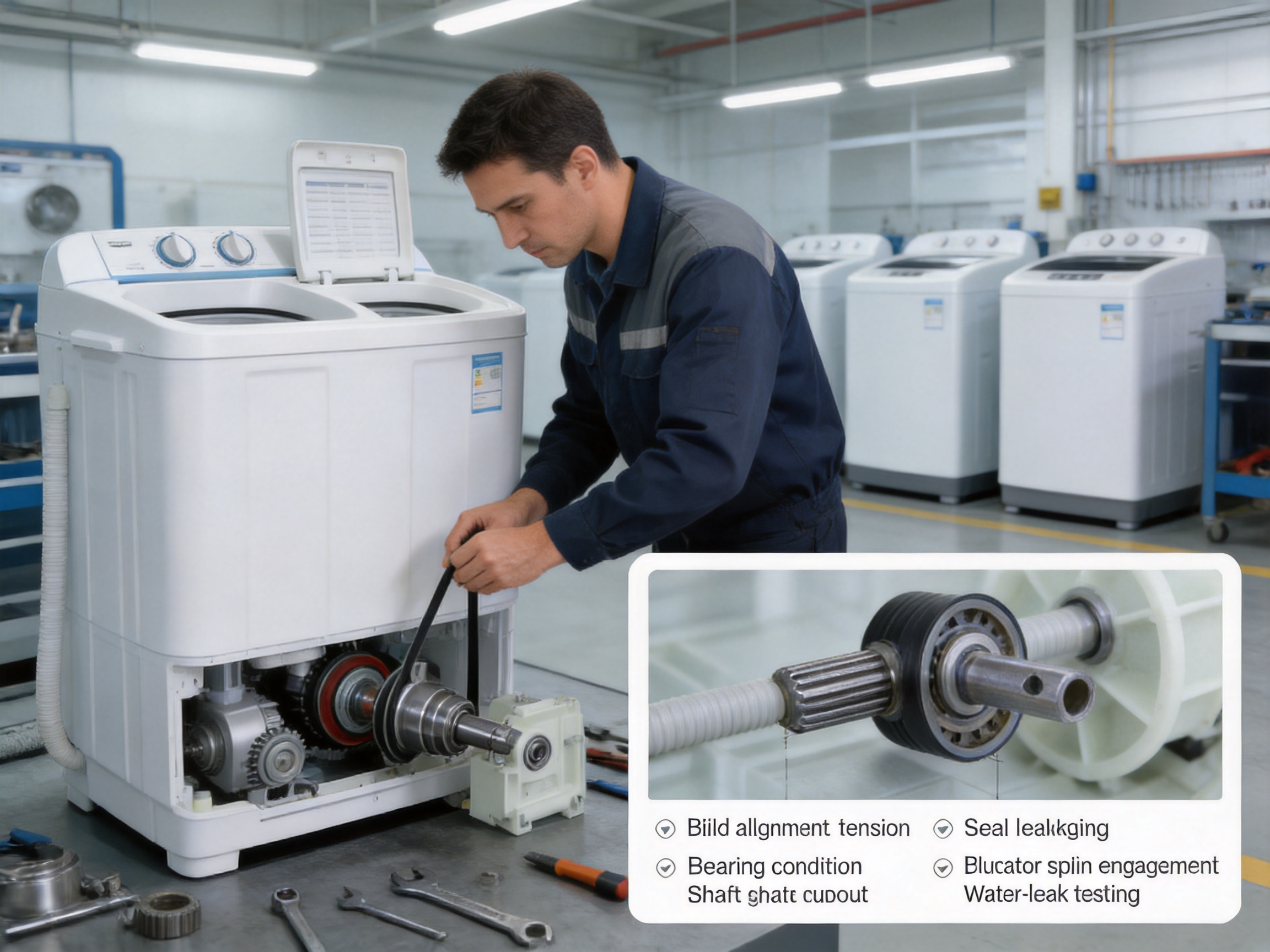
Correct installation is essential for achieving the intended service life of the P-shaft assembly. Before installation, the technician should compare the replacement part with the original component and confirm shaft length, bearing positions, seal orientation, pulley interface, pulsator connection, and housing fit.
The washing tub and mounting area should be cleaned before the assembly is installed. Old detergent residue, rust, metal fragments, and damaged sealing material can interfere with correct seating. The surrounding housing should be checked for cracks, distortion, or excessive wear.
Bearings should not be struck directly with a hammer. If pressing is necessary, the force should be applied to the appropriate bearing ring according to the fit being created. Incorrect installation force can damage the bearing before the machine is returned to service.
The mechanical seal should be installed without cutting, folding, or twisting its sealing lip. The shaft surface must be free from burrs and sharp edges. If the shaft passes through the seal during assembly, protective methods may be needed to prevent damage to the seal lip.
The driven pulley should be mounted securely and aligned with the motor pulley. Misalignment can cause belt tracking problems, edge wear, vibration, and additional radial load on the bearings. The belt should be tensioned according to the washing machine manufacturer’s requirements. Excessive tension is not a substitute for proper torque transmission and may shorten bearing life.
The pulsator connection should be clean and fully engaged. A loose spline or key connection can create repeated impact loads each time the pulsator changes direction. If the pulsator itself is worn, installing a new shaft alone may not eliminate looseness. The mating components should therefore be inspected together.
After installation, the technician should test the washing tub with a controlled amount of water and observe for leakage, abnormal noise, excessive vibration, belt movement, and pulsator wobble. The test should include the normal operating direction and, where applicable, the machine’s reversing or alternating washing action.
10. Troubleshooting and Common Failure Modes
10.1 Bearing Wear
Worn bearings may produce rumbling, grinding, squeaking, or irregular rotational resistance. The pulsator may also develop visible wobble. Bearing wear can be accelerated by excessive belt tension, water contamination, poor housing support, overload, or long-term operation.
If bearing noise is confirmed, the complete P-shaft assembly may be replaced, depending on the service strategy and product construction. Replacing only the bearing may be possible in some cases, but the shaft surface, housing fit, and seal condition should also be evaluated.
10.2 Mechanical Seal Leakage
Water leaking below the washing tub or around the shaft area may indicate a worn, damaged, incorrectly installed, or contaminated mechanical seal. A damaged shaft surface can also cause repeated seal failure even after a new seal is installed.
When leakage occurs, technicians should inspect the seal, shaft sealing surface, bearing condition, and housing alignment. If water has reached the bearing, replacing the seal alone may not be sufficient because the bearing may already be corroded or contaminated.
10.3 Splined Shaft Wear
A worn spline can cause looseness between the shaft and pulsator. Symptoms may include knocking, rattling, pulsator delay, or irregular movement. Spline wear may result from long-term use, excessive clearance, a loose pulsator fastener, or repeated operation under abnormal load.
The pulsator connection should be checked for wear on both mating sides. Installing a new shaft with an excessively worn pulsator may produce only a temporary improvement.
10.4 Belt Slipping
Belt slipping can reduce pulsator speed, lower washing effectiveness, create a burning odor, and produce squealing noise. Causes may include belt aging, insufficient tension, oil or water contamination, pulley misalignment, or excessive load.
Because the P-shaft relies on external pulley reduction, belt condition has a direct influence on washing performance. The belt should be inspected together with the motor pulley and driven pulley. A new belt may not solve the problem if a pulley is damaged or incorrectly positioned.
10.5 Excessive Vibration
Vibration can be caused by a bent or misaligned shaft, worn bearings, a loose pulsator, an unbalanced tub, pulley runout, incorrect belt tension, or a damaged mounting structure. Vibration should not automatically be attributed to the P-shaft alone.
A systematic inspection should begin with the easiest external causes. The technician can check tub mounting, pulsator tightness, belt tracking, pulley alignment, and visible shaft wobble before removing the assembly. This approach reduces unnecessary part replacement.
10.6 Pulsator Not Rotating
If the motor operates but the pulsator does not rotate, the technician should inspect the belt, driven pulley connection, shaft-to-pulsator interface, and any damaged mounting feature. A broken or severely worn spline may allow the motor and shaft to rotate while the pulsator remains stationary or moves intermittently.
Electrical faults should also be considered because a motor that hums, stops, or lacks sufficient torque may create symptoms that resemble a mechanical transmission failure.
11. Product Selection for Replacement Applications
Selecting the correct replacement P-shaft requires more than matching the general description “twin-tub washing machine gearbox.” The buyer should confirm the appliance structure and the exact mechanical interfaces. The following information is useful:
1. Washing machine brand and model, where available.
2. Whether the machine is semi-automatic and uses separate washing and spin tubs.
3. Whether the washing tub is driven by an external belt and pulley.
4. Shaft overall length and critical step dimensions.
5. Bearing arrangement and spacing.
6. Mechanical seal position and approximate size.
7. Driven pulley mounting style and dimensions.
8. Pulsator-side spline, key, or other connection profile.
9. Housing mounting dimensions.
10. Photographs or samples of the original part.
For OEM projects, additional information may be required, including motor speed, pulley ratio, washing load, operating cycle, expected service life, environmental conditions, and production volume. This information allows the supplier to confirm whether a standard assembly is suitable or whether an engineered variation is required.
Buyers should also distinguish between a true direct replacement and a visually similar part. Two assemblies may look alike but have different shaft lengths, bearing locations, seal dimensions, or spline profiles. Visual similarity alone is not sufficient for reliable interchangeability.
12. Logistics, Supply Stability, and Aftermarket Value
Aftermarket washing machine parts often have a longer commercial life than the original appliance production cycle. A model may remain in service for many years, creating demand for replacement components after the original machine manufacturer has changed its design or discontinued a part.
A specialized manufacturer with established production processes can support this type of demand more effectively than a supplier that only sources occasional batches. Stable material control, documented processes, and repeatable tooling help maintain consistency between orders.
Supply stability is also important for repair distributors. If a replacement component changes dimensions from one batch to the next, service centers may experience installation problems, returns, and customer dissatisfaction. Consistent production reduces these risks and makes it easier for distributors to maintain reliable stock.
The manufacturer’s location in Ningbo, Zhejiang, places it within a major manufacturing region with access to industrial suppliers, machining resources, logistics services, and export infrastructure. This can support efficient coordination for international OEM and aftermarket customers.
Customers should confirm packaging, labeling, minimum order quantities, lead times, inspection requirements, and documentation before placing an order. For customized products, approval samples and pre-production confirmation are recommended.
13. Environmental and Lifecycle Considerations
The simple structure of the P-shaft assembly supports a longer-service approach to appliance ownership. When a washing machine develops a leaking seal or worn bearing, replacing the drive assembly may restore the appliance without requiring disposal of the complete machine.
Extending equipment life can reduce the material and energy demand associated with manufacturing a replacement appliance. It can also reduce transportation, packaging, and waste-handling requirements. These benefits depend on correct repair and safe continued operation, but they are important considerations for distributors and end users.
ISO 14001 certification indicates that the manufacturer maintains an environmental management framework. Environmental management may involve control of production waste, resource use, emissions, chemical handling, and continual improvement. Customers seeking environmental documentation should request the specific records or declarations applicable to their project.
RoHS compliance is another consideration for international product supply. Buyers should confirm the compliance status of the specific product configuration, especially when materials, coatings, lubricants, packaging, or customer-specific modifications are introduced.
14. Why Specialized Component Manufacturing Matters
A washing machine transmission component may appear simple when viewed from the outside, but its reliability depends on the interaction of several precise parts. The shaft must carry torque. The bearings must maintain alignment. The seal must retain water. The pulley must remain secure. The pulsator connection must avoid excessive clearance. The housing must support the complete assembly without distortion.
A supplier that specializes in washing machine parts can develop knowledge across these interfaces. This application experience is valuable when diagnosing field failures, improving seal life, adjusting bearing placement, or designing a replacement for an obsolete component.
Specialization also supports product-family development. A manufacturer may produce related P-shafts, synchronizers, gear reducers, and other drive components. Shared engineering knowledge, equipment, quality systems, and supplier management can improve the development process for new models and customized applications.
For customers, the ideal supplier is not simply the one offering the lowest unit price. Total value also includes dimensional consistency, low return rates, technical support, production stability, documentation, delivery performance, and the ability to respond when a product requires modification.
15. Recommended Quality-Control Checklist
Before shipment, a P-shaft assembly should be evaluated according to the customer’s technical requirements. A general checklist may include the following points:
1. Confirm that the shaft material and core components match the approved specification.
2. Check overall length and all critical mounting dimensions.
3. Inspect bearing-seat dimensions and bearing installation condition.
4. Verify that the shaft rotates smoothly without abnormal resistance.
5. Check shaft runout and concentricity where required.
6. Inspect the mechanical seal for correct orientation, seating, and visible damage.
7. Confirm the spline, key, or pulsator connection profile.
8. Verify pulley mounting dimensions and fastening features.
9. Check for burrs, scratches, corrosion, contamination, or machining defects.
10. Confirm product identification, packaging, and batch traceability.
11. Perform application-specific leakage or functional testing when required.
12. Retain inspection records according to the quality-management procedure.
The final checklist should be adapted to the customer’s drawing and validation requirements. OEM customers may require more extensive dimensional reports, capability studies, endurance tests, or approval documentation.
16. Frequently Asked Questions
Q1: Is this product a conventional gearbox with internal gears?
No. It is commonly described as a washing machine gearbox or transmission assembly for commercial identification, but its internal design is a straight-through pulsator shaft assembly without internal reduction gears. Speed reduction is achieved externally through the difference between the small motor pulley and the larger driven pulley.
Q2: Which part of the washing machine does it drive?
It drives the washing tub pulsator. The spin tub is driven separately by an independent motor and transmission system. The P-shaft should therefore be selected for the wash-side drive rather than for the spin basket.
Q3: What are the main advantages of the straight-through design?
The main advantages include a simple structure, direct power transmission, low internal power loss, quiet operation, no internal gear-oil system, reduced risk of gear breakage, and easier inspection and maintenance.
Q4: What are the most common failure points?
The main possible failures include bearing wear, mechanical seal leakage, spline or shaft-interface wear, belt slipping, pulley misalignment, and excessive vibration caused by installation or supporting-structure problems.
Q5: Does the assembly require internal gear oil?
No. The design does not use internal reduction gears or an internal gear-oil chamber. The mechanical seal is used to control washing-water leakage around the shaft.
Q6: Can this part be used in any washing machine?
No. It is intended for compatible semi-automatic twin-tub washing machines that use an external belt-and-pulley washing drive. Shaft dimensions, bearing positions, pulley interfaces, seal sizes, and pulsator connections must be checked before purchase.
Q7: How can a buyer confirm compatibility?
The buyer should provide the washing machine model, original part photographs, shaft dimensions, pulley information, bearing spacing, seal position, and pulsator connection details. A physical sample or technical drawing is the most reliable basis for confirmation.
Q8: Can the supplier produce customized versions?
Yes. The manufacturer offers OEM and ODM solutions for washing machine drive components. Custom development may address shaft length, bearing arrangement, seal position, pulley connection, housing dimensions, or other application requirements, subject to engineering review and validation.
Q9: What should be checked if the pulsator is noisy?
Inspect the bearings, shaft-to-pulsator spline or key connection, pulsator fastener, belt tension, pulley alignment, and tub mounting. Noise may result from a worn P-shaft, but it can also originate from the pulsator or another part of the washing machine.
Q10: What causes water leakage after replacement?
Possible causes include incorrect seal installation, a damaged sealing lip, a scratched or worn shaft surface, incorrect seal dimensions, housing distortion, or bearing movement. The complete sealing area should be inspected rather than replacing the seal without checking the shaft and housing.
Q11: Why is belt tension important?
Insufficient tension can cause belt slipping and reduced pulsator performance. Excessive tension can impose unnecessary radial load on the bearings and may shorten their service life. The belt should be adjusted according to the washing machine design.
Q12: Does the product support international OEM supply?
The manufacturer provides OEM and ODM washing machine component solutions and has experience serving appliance manufacturers and aftermarket customers. Project details such as drawings, samples, quality requirements, order quantity, packaging, and delivery schedule should be confirmed directly for each application.
Q13: What quality certifications are associated with the manufacturer?
The company has obtained ISO 9001 Quality Management System and ISO 14001 Environmental Management System certifications. Its products are also stated to comply with RoHS requirements. Customers should request current documentation relevant to the specific order.
Q14: Why choose a complete assembly instead of individual parts?
A complete assembly provides coordinated shaft, bearing, seal, and interface dimensions. This can reduce fitting problems and simplify installation. Individual-part replacement may still be appropriate for certain repairs, but the condition of all mating parts should be verified first.
17. Conclusion
The semi-automatic twin-tub washing machine P-shaft assembly is a practical transmission solution for the washing side of legacy and current twin-tub appliances that use an external belt drive. Its integrated solid shaft transfers power directly from the driven pulley to the pulsator. Built-in bearings support the shaft, while the waterproof mechanical seal helps prevent washing-water leakage.
Its most important competitive advantages come from structural simplicity. Without internal reduction gears, the assembly avoids gear tooth breakage, internal gear-oil leakage, and gear-mesh noise. External pulley reduction makes the speed relationship visible and serviceable. The design can deliver low power loss and quiet operation when the belt, pulleys, bearings, seal, and mounting structure are correctly matched.
The assembly is not a universal replacement for every washing machine transmission. It must be selected for the correct semi-automatic twin-tub application and verified against the original dimensions and interfaces. Proper installation, belt adjustment, shaft alignment, and pulsator engagement are essential to achieving reliable service life.
Cixi Gaite Electric Co., Ltd. brings specialized experience in washing machine drive components, including P-shafts, gear reducers, synchronizers, and related parts. Its established operation since 2002, approximately 10,000-square-meter production base, high level of in-house core-material production, OEM and ODM capability, quality and environmental certifications, and experience with recognized appliance companies provide a strong foundation for component supply.
For appliance manufacturers, distributors, and repair networks, this product offers a combination of straightforward mechanical design, practical serviceability, and application-specific manufacturing support. When supported by controlled machining, careful assembly, dimensional inspection, and stable supply management, the P-shaft assembly can help extend the operating life and reliability of semi-automatic twin-tub washing machines.
References
1. Cixi Gaite Electric Co., Ltd. Product information for semi-automatic twin-tub washing machine P-shaft assemblies.
2. Cixi Gaite Electric Co., Ltd. Corporate information, manufacturing capabilities, certifications, and product scope.
3. General engineering principles for belt-and-pulley speed reduction and torque transmission.
4. General maintenance practices for washing machine bearings, mechanical seals, belts, pulleys, and pulsator drive interfaces.
5. ISO 9001, Quality Management Systems — Requirements.
6. ISO 14001, Environmental Management Systems — Requirements with Guidance for Use.
7. RoHS compliance principles for restricted substances in electrical and electronic equipment.
8. General appliance service procedures for semi-automatic twin-tub washing machines.

 English
 عربى



 +86-574-63256717 /63267914
info@gaite.cn
 gaite@gaite.cn
 No. 208 Miaoshan Road, Shiyan Village, Henghe Town, Cixi City, Ningbo City, Zhejiang Province, China
