Introduction
The washing machine transmission is one of the most important power-transmission components in a semi-automatic agitator washing machine. Although it is installed inside the appliance and is rarely visible to the end user, its performance directly affects washing force, operating stability, noise behavior, service life, maintenance requirements, and the overall cost of the finished washing machine.
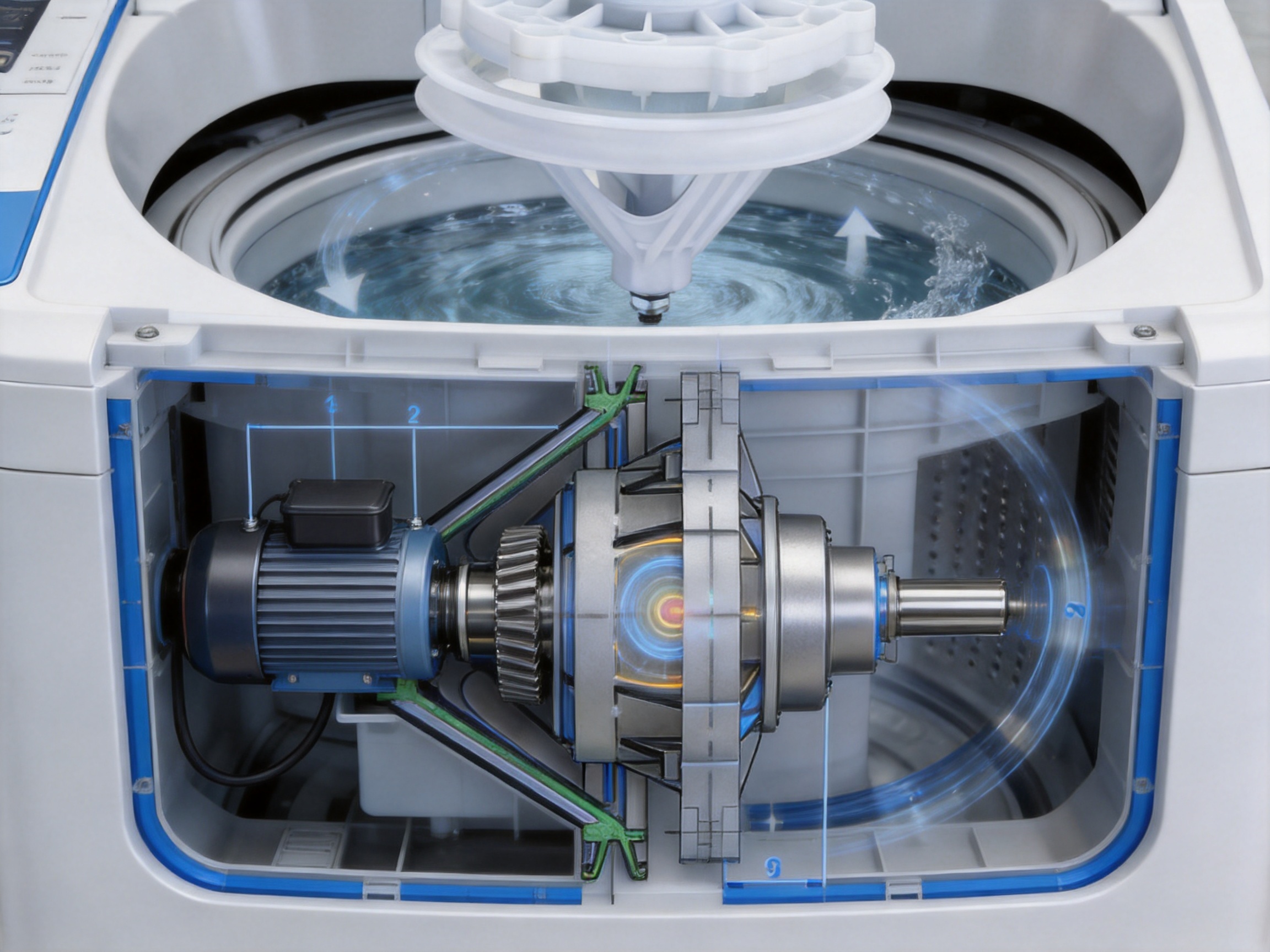
A washing machine motor generally rotates at a speed that is too high for direct connection to an agitator. The agitator requires controlled, low-speed, high-torque movement to create the water circulation and mechanical action needed to loosen dirt from fabrics. The transmission performs this conversion by receiving high-speed motor rotation and delivering suitable output to the agitator through a reduction mechanism and related drive components.
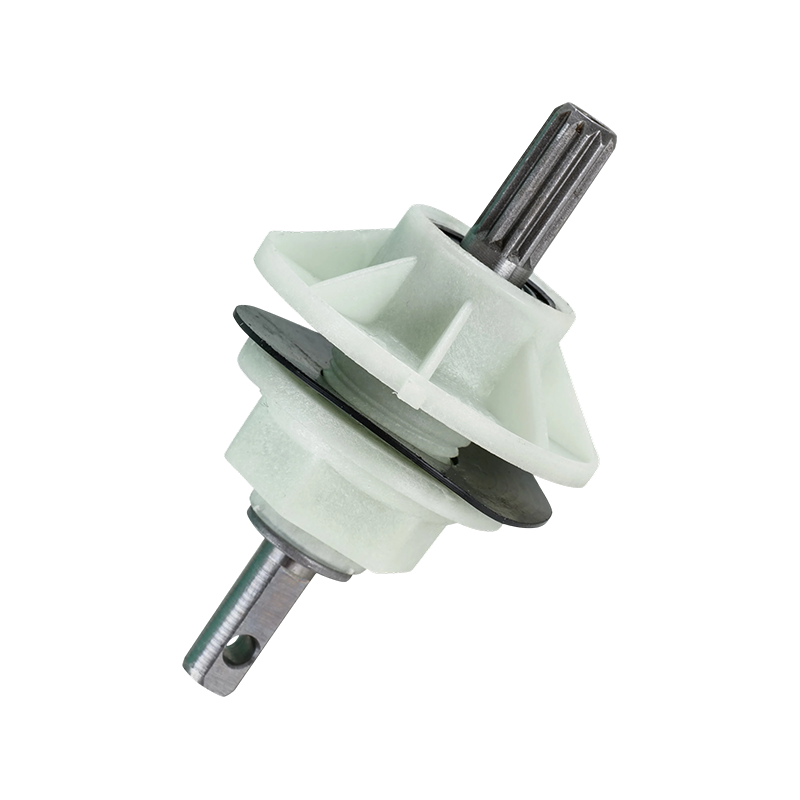
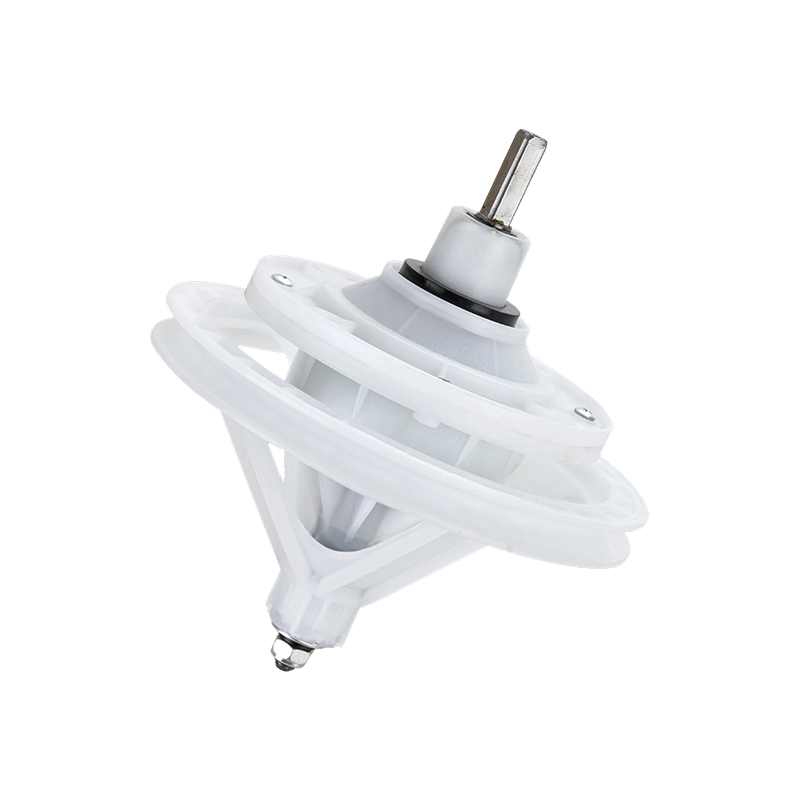
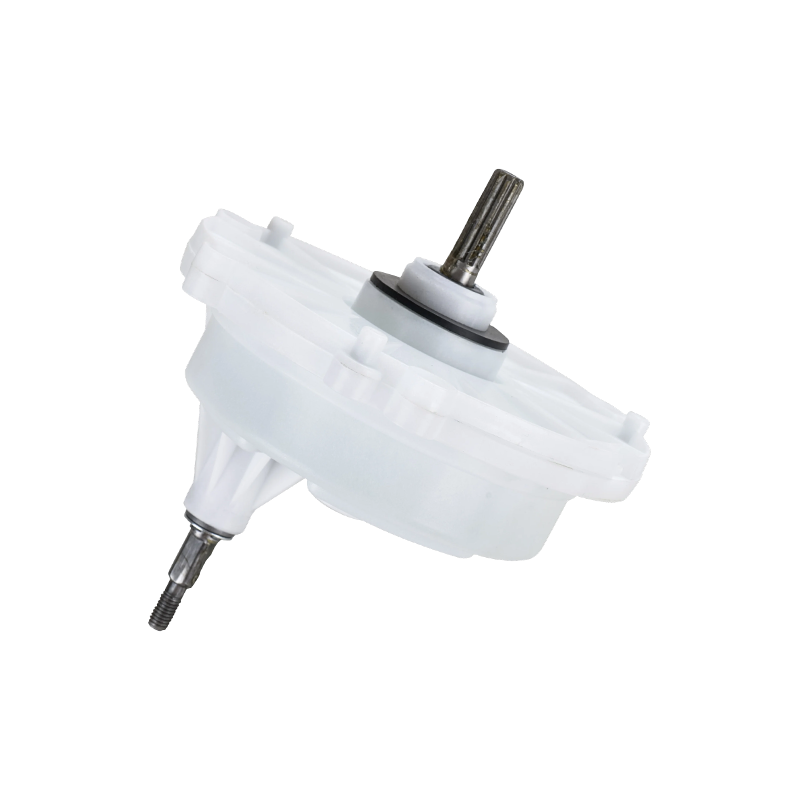
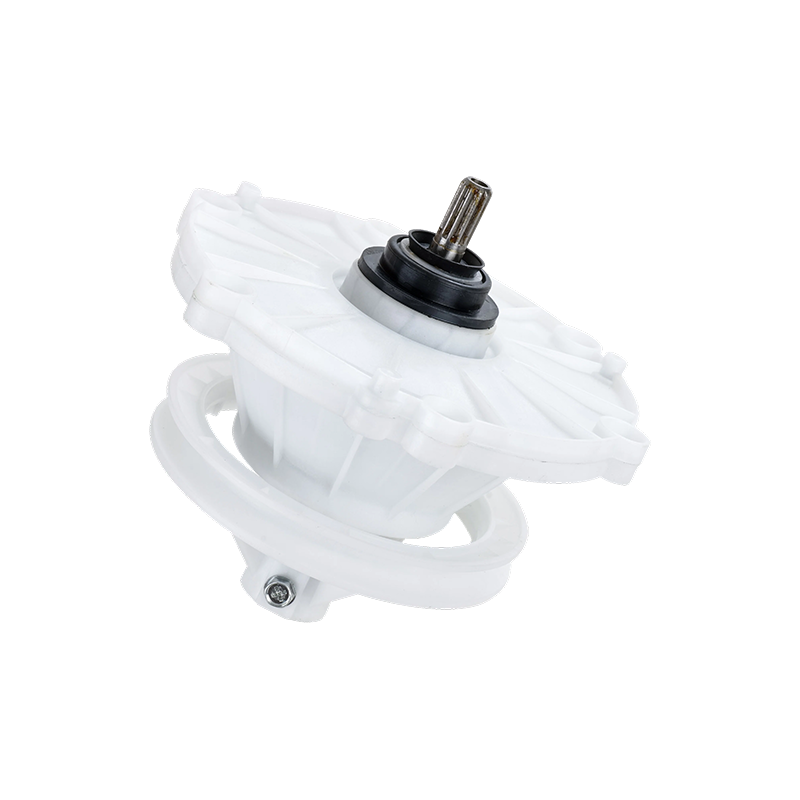
The product described in this article is a washing machine transmission designed for semi-automatic agitator washing machines. It is developed as a durable and economical gearbox solution for appliance manufacturers, replacement-parts distributors, service providers, and other buyers seeking reliable washing machine drive components. Its design focus includes power conversion, stable operation, cost control, suitability for humid environments, and compatibility with price-sensitive markets.
For manufacturers, selecting the right transmission is not simply a matter of purchasing an individual mechanical part. The transmission must work as part of a complete washing system that includes the motor, agitator, drive shaft, housing, seals, fasteners, control system, and cabinet structure. A well-matched transmission can help improve washing performance while reducing the risk of premature wear, excessive vibration, service calls, and inconsistent production quality.
This article explains the operating role, construction considerations, performance advantages, manufacturing strengths, quality controls, customization capabilities, application value, and procurement considerations associated with this type of washing machine transmission.
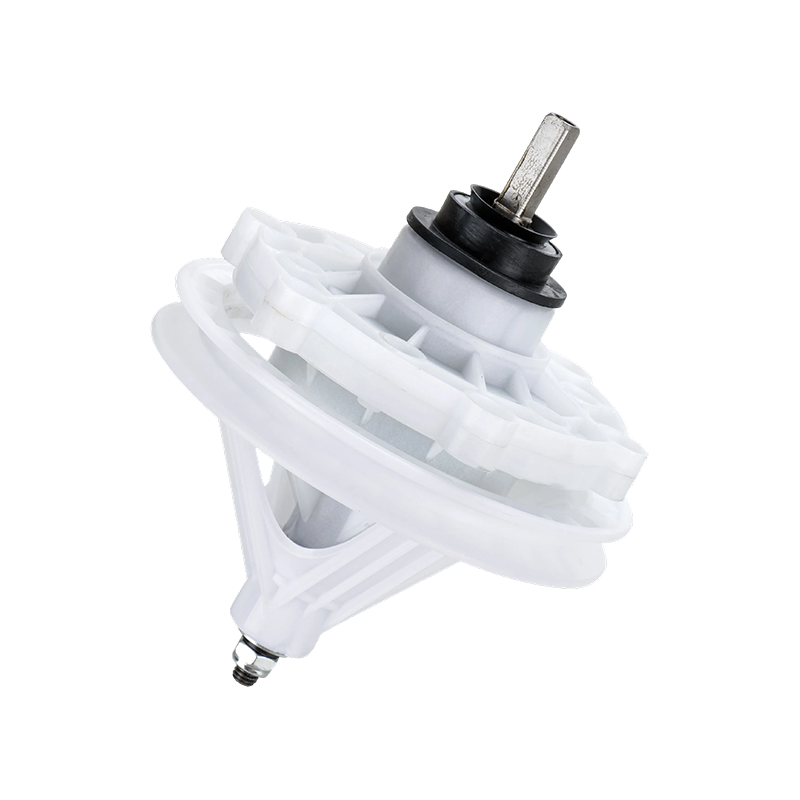
Washing Machine Transmission
What Is a Washing Machine Transmission?
A washing machine transmission is a mechanical power-conversion unit installed between the motor and the agitator or related washing mechanism. Its primary purpose is to modify the motor’s rotational characteristics so that the output is appropriate for washing action.
In a typical semi-automatic agitator washing machine, the motor produces relatively high rotational speed. High motor speed is useful for achieving compact motor dimensions and efficient electrical operation, but it is not directly suitable for driving an agitator. If the agitator were connected directly to the motor, the movement could be too fast and the available torque at the required operating point might not be appropriate for washing loads.
The transmission reduces rotational speed and increases usable output torque. This allows the agitator to move at a more suitable speed while maintaining the mechanical force required to circulate water and clothing. Depending on the appliance design, the transmission may also support a particular direction of movement, intermittent motion, oscillation, or other operating pattern required by the washing system.
The transmission normally includes a combination of precision-produced mechanical elements, such as gears, shafts, bearings or bearing surfaces, housings, seals, and fastening structures. The exact internal arrangement depends on the product design and the operating requirements of the washing machine. The external geometry must also correspond to the appliance structure so that installation, alignment, and connection can be completed correctly.
Because washing machines operate in the presence of water, detergent, vibration, and repeated load changes, the transmission must be designed for more than basic rotational movement. It must also provide mechanical stability, protection against environmental exposure, consistent alignment, and reliable operation throughout repeated washing cycles.
Core Operating Function
High-Speed Input and Reduced-Speed Output
The most important function of the transmission is speed reduction. The motor input is converted into lower-speed output through the gear-reduction mechanism. At the same time, the reduction process increases torque at the output shaft, allowing the agitator to work effectively against the resistance of water, clothing, and the washing tub.
This relationship between speed and torque is central to washing machine design. A transmission that provides insufficient torque may cause weak agitation, slow starting, unstable operation, or excessive motor loading. A transmission that is not properly matched to the appliance may also create unnecessary noise, vibration, heat, and energy loss.
A correctly engineered washing machine transmission creates a balanced operating condition. It allows the motor to work within a practical speed range while supplying the agitator with a controlled output. This contributes to repeatable washing movement and helps the appliance maintain consistent performance across different load conditions.
Mechanical Support for the Agitator
The transmission does not simply reduce speed. It also supports and guides the mechanical connection between the motor and the agitator. Shaft alignment, bearing support, gear engagement, and housing rigidity all influence how effectively power reaches the agitator.
When the shaft remains properly aligned, the rotating components can operate with reduced friction and less uneven loading. This helps control mechanical wear and can reduce the possibility of abnormal sound or vibration. A structurally stable housing also helps preserve the relative position of the gears and shafts during repeated operation.
The output connection must be designed to transfer torque securely. The connection may use a defined shaft profile, keyway, splined structure, threaded section, or another interface selected for the washing machine design. For this reason, dimensional accuracy and interface consistency are important requirements for both original equipment production and replacement applications.
Operation in a Humid Appliance Environment
Washing machines naturally expose internal components to moisture, detergent residues, temperature changes, and occasional splashing. The transmission must therefore be suitable for an environment in which humidity and contamination may affect metal surfaces, seals, lubricants, and moving interfaces.
A reliable design uses appropriate housing protection, sealing arrangements, material selection, and manufacturing controls. These measures help reduce the risk of moisture entering sensitive areas and help maintain stable lubrication around the gear and shaft system.
Environmental resistance does not eliminate the need for correct appliance installation or maintenance. However, a transmission designed with the operating environment in mind provides a stronger foundation for long-term service and reduces the likelihood that ordinary humidity will rapidly affect its mechanical function.
Product Advantages
Durable Mechanical Construction
Durability is one of the main advantages required from a washing machine transmission. Semi-automatic washing machines may be used frequently, and the transmission can experience repeated starting, stopping, reversing, load changes, and vibration. A product intended for this application must be able to withstand continuous mechanical cycling rather than only short-term operation.
The transmission is developed around the relationship between gear strength, shaft support, housing stability, and controlled assembly. These factors work together to help maintain reliable power transfer. When the gear train and shaft system remain properly positioned, the transmission can operate more consistently and resist the effects of repeated torque changes.
Durability also contributes to the total value of the appliance. A longer-lasting transmission can reduce the frequency of replacement, warranty claims, service interruptions, and customer complaints. For manufacturers and distributors, this can help lower the indirect costs associated with product returns and field maintenance.
Efficient Torque Conversion
The transmission converts the motor’s high-speed rotation into the low-speed, high-torque output required by the agitator. This mechanical conversion allows the washing machine to generate effective washing movement without requiring the motor itself to provide all of the output characteristics directly.
Efficient torque conversion can support smoother operation and more practical system design. It enables the use of a compact motor while still providing useful agitator force. It can also help manufacturers organize the internal appliance layout more effectively because the transmission serves as a dedicated mechanical interface between the motor and washing mechanism.
For the end user, the result is a washing system that can produce dependable agitation during ordinary household operation. For the appliance manufacturer, the result is a component that supports a balanced combination of mechanical output, product cost, and manufacturing practicality.
Stable Operation in Humid Conditions
The washing machine transmission is designed for stable operation in the humid environment commonly associated with laundry appliances. Attention to housing, sealing, materials, and assembly helps protect the internal mechanism from conditions that could otherwise accelerate corrosion, lubricant deterioration, or mechanical wear.
Stable operation is especially important in markets where washing machines are installed in utility rooms, balconies, bathrooms, outdoor-covered areas, or other locations with changing humidity. While installation conditions should always follow the appliance manufacturer’s recommendations, a transmission that is appropriately designed for a damp operating environment provides additional reliability value.
Cost-Effective Performance
Many semi-automatic washing machines are designed for customers who prioritize practical cleaning performance and affordable ownership. The transmission must therefore provide a useful balance between durability and cost. Excessive complexity can increase production expenses without creating proportional value, while insufficient construction quality can lead to premature failure.
This product is positioned as an economical power solution for price-sensitive markets. Its value comes from combining the essential performance of a washing machine gearbox with manufacturing efficiency, controlled material usage, standardized processes, and dependable quality management.
A cost-effective transmission should not be understood as a low-quality component. Instead, cost effectiveness means that the product delivers the required mechanical output and service value while avoiding unnecessary design or production expense. This balance is important for appliance brands competing in high-volume and highly price-sensitive markets.
Suitability for OEM and Replacement Applications
The transmission can serve both original equipment manufacturing and replacement-parts requirements. In OEM production, the component can be integrated into new semi-automatic agitator washing machine models. In the aftermarket, it can support repair, refurbishment, and replacement work when an existing transmission has become worn or damaged.
For OEM customers, dimensional consistency and stable supply are particularly important. For aftermarket customers, compatibility, installation practicality, and repeatable product availability are often the primary concerns. A manufacturer that understands both application types can provide more useful technical and commercial support.
Performance Factors That Matter in Selection
| Selection Factor | Why It Matters | Expected Product Benefit |
|---|
| Reduction ratio | Determines how motor speed is converted into agitator speed and influences output torque. | Suitable washing movement and improved motor-to-agitator matching. |
| Output torque | Determines the transmission’s ability to drive the agitator under load. | More dependable agitation during different washing conditions. |
| Shaft interface | Must match the agitator, motor-side connection, and appliance structure. | Easier integration and reduced installation problems. |
| Housing strength | Maintains gear and shaft alignment during repeated operation. | Improved stability, lower wear risk, and controlled vibration. |
| Sealing and protection | Helps limit moisture and contaminant entry. | Better suitability for humid washing-machine environments. |
| Material consistency | Affects strength, wear resistance, corrosion behavior, and dimensional stability. | More predictable service performance. |
| Assembly accuracy | Influences gear engagement, friction, noise, and overall reliability. | More consistent performance from unit to unit. |
| Supplier capability | Determines whether the manufacturer can maintain quality and supply over time. | Lower sourcing risk and better support for long-term programs. |
Purchasers should evaluate these factors together rather than selecting a transmission according to one specification alone. A high torque rating, for example, is not sufficient if the shaft interface does not match the appliance or if the housing cannot maintain alignment. Similarly, a low purchase price may not represent good value if the component has inconsistent dimensions or a short service life.
Manufacturing Strengths
Established Industry Experience
GAITE was established in 2002 and specializes in the research, development, and manufacture of core washing machine components. This long-term focus provides valuable experience in the practical requirements of washing machine gearboxes, transmissions, synchronizers, P-shafts, and related drive components.
Specialization allows a manufacturer to develop knowledge that is difficult to obtain from general mechanical production alone. Washing machine components must operate within a specific combination of moisture exposure, intermittent loading, compact appliance structures, cost requirements, and high-volume production demands. Experience with these conditions supports more informed product design and process improvement.
Long-term participation in the sector also helps a manufacturer understand the expectations of appliance OEMs and aftermarket customers. These expectations include stable dimensions, dependable output, responsive communication, consistent production, reasonable lead times, and the ability to solve application-specific problems.
Modern Production Base
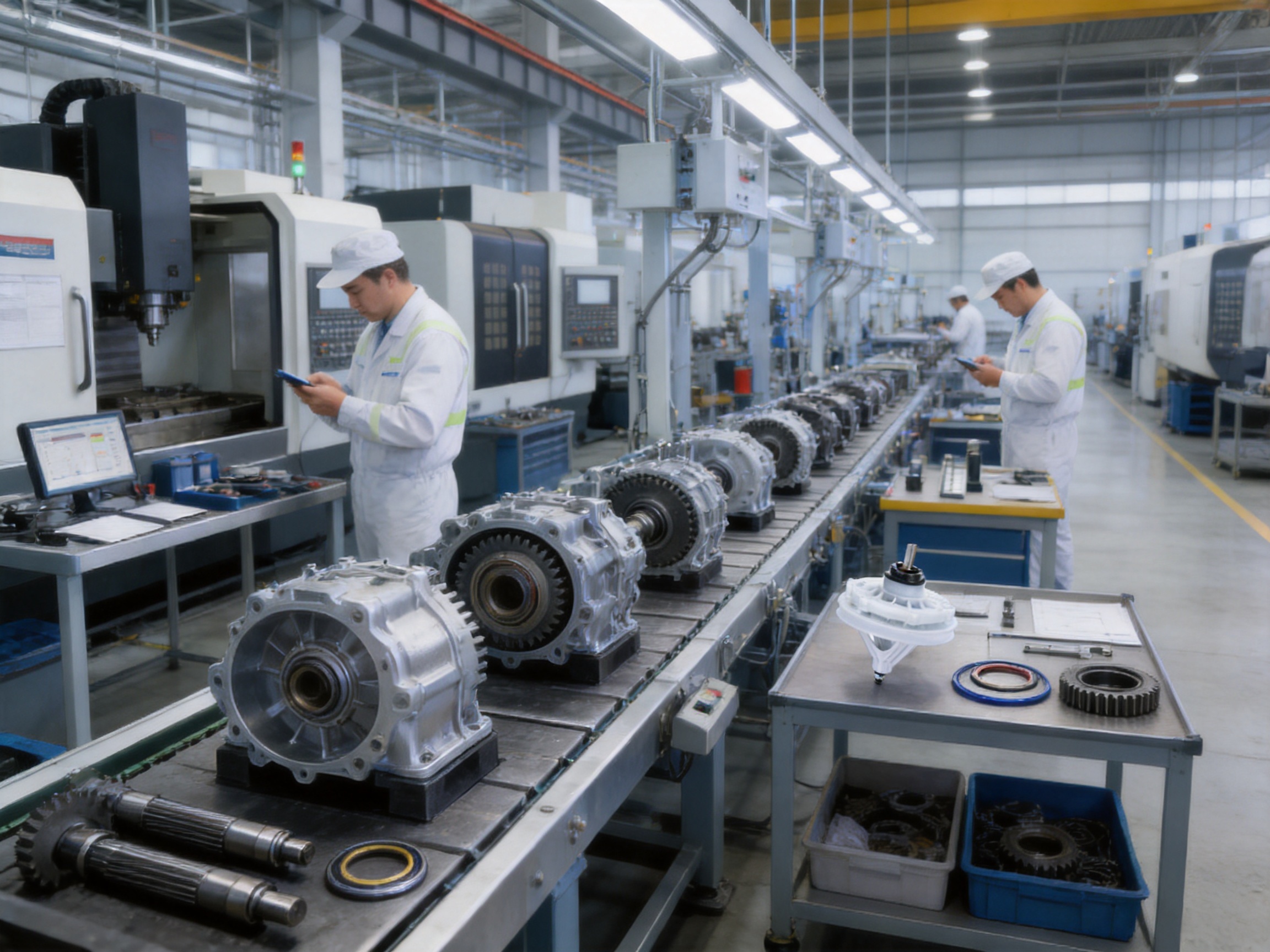
The company operates a modern production base of approximately 10,000 square meters. A dedicated production facility provides space for manufacturing, assembly, inspection, material management, product development, and related operational activities.
A structured production base can improve workflow control. Materials can move through defined stages, from incoming inspection and component preparation to machining, forming, assembly, testing, packaging, and shipment. Organized workflow reduces unnecessary handling and supports better traceability.
Production capacity is also important for customers that require repeat orders. Washing machine manufacturers often need components according to planned production schedules, while distributors require reliable replenishment. A production facility designed for ongoing component manufacturing can support a more stable supply relationship than a supplier that treats the product as an occasional custom item.
High Level of In-House Material Production
Approximately 90 percent of the company’s core materials are produced in-house. This level of internal control is a significant manufacturing strength because material availability and consistency directly affect product quality, cost, and delivery stability.
When a manufacturer produces a large proportion of core materials internally, it can exercise closer control over dimensions, material preparation, process timing, and production coordination. It may also reduce dependence on multiple external suppliers for critical parts. This can help minimize variation between batches and improve the ability to respond to customer requirements.
In-house production does not mean that every manufacturing activity is isolated from external supply chains. However, maintaining control over core materials gives the manufacturer a stronger foundation for managing the parts that most directly influence transmission performance.
Advanced Machinery and Mature Processes
The company uses advanced machinery and mature manufacturing processes to produce washing machine components. For transmission production, machinery and process maturity are important because gears, shafts, housings, and sealing interfaces must be manufactured with consistent dimensions and repeatable quality.
Advanced machinery can support accurate machining, stable forming, efficient production, and controlled finishing. Mature processes help ensure that the equipment is used within a defined manufacturing system rather than operated without standardized procedures. Together, equipment capability and process discipline improve production consistency.
Manufacturing maturity is also demonstrated through continuous improvement. Production processes may be reviewed to reduce defects, improve efficiency, simplify assembly, control material consumption, and strengthen inspection procedures. Continuous improvement helps maintain competitiveness while preserving the product’s essential performance characteristics.
Quality and Environmental Management
The company has obtained ISO 9001 Quality Management System certification and ISO 14001 Environmental Management System certification. ISO 9001 reflects the use of a structured approach to quality management, process control, customer requirements, corrective actions, and continual improvement.
ISO 14001 reflects attention to environmental management and the control of environmental responsibilities within company operations. For international customers, environmental management can be an important part of supplier evaluation, particularly when buyers are seeking long-term partners with responsible production practices.
The company’s products comply with RoHS requirements. RoHS compliance is relevant to international appliance supply chains because it addresses restrictions on certain hazardous substances in electrical and electronic products and related components. Customers should confirm the exact compliance documentation required for their intended market and product configuration.
Quality Control Across the Production Process
Incoming Material Control
Quality begins with the materials used to produce the transmission. Incoming materials and purchased items should be checked according to defined requirements. These requirements may include dimensions, material specifications, surface condition, hardness-related characteristics, corrosion condition, and supplier documentation.
Controlling materials at the beginning of the process helps prevent unsuitable components from entering machining or assembly. It also makes it easier to identify the source of a problem if later inspection reveals an abnormality.
Dimensional and Process Inspection
Transmission components require dimensional consistency because small deviations can affect assembly, alignment, gear engagement, sealing, or connection with the washing machine. Important dimensions may include shaft diameter, gear-related dimensions, housing features, mounting points, interface geometry, and sealing surfaces.
Process inspection can be performed during production rather than waiting until the final stage. This approach helps identify deviations early, reducing material waste and preventing large numbers of nonconforming components from progressing through the production line.
Assembly Control
Assembly quality has a direct influence on transmission performance. Gears, shafts, bearings, seals, and housing elements must be installed in the correct sequence and with suitable control of positioning, fastening, lubrication, and clearance.
Correct assembly helps reduce friction, abnormal gear contact, leakage risk, and unwanted mechanical noise. It also supports repeatable output from one transmission to the next. Standard operating procedures and trained personnel are essential parts of assembly control.
Functional Testing
Functional testing provides an opportunity to verify that the completed transmission operates as intended. Depending on the product model and customer requirements, testing may evaluate rotational movement, output behavior, abnormal noise, leakage, mechanical resistance, or other defined characteristics.
Testing should be connected to product specifications and application requirements. A washing machine transmission is not judged only by whether it rotates. It must rotate in a controlled way, transmit power effectively, maintain structural stability, and meet the expected interface and operating criteria.
Traceability and Corrective Action
Manufacturing traceability helps connect finished products with production batches, materials, processes, inspection results, and shipment information. Traceability is useful when investigating customer feedback, reviewing quality trends, or implementing corrective action.
If a quality issue is identified, a structured corrective-action process can help determine whether the cause is related to material, equipment, process settings, assembly, inspection, packaging, or handling. Corrective action should address the source of the problem rather than only sorting affected products.
Advantages Compared with General or Low-Control Alternatives
Washing machine transmissions from different suppliers may appear similar externally, but their internal quality and manufacturing discipline can vary significantly. The main competitive advantage of a specialized, controlled supplier is the ability to combine product knowledge with repeatable production.
General mechanical suppliers may be able to produce individual gears or shafts, but they may not fully understand the operating requirements of washing machine systems. A specialist manufacturer is more familiar with the relationship between motor speed, agitator movement, humidity, appliance integration, cost targets, and high-cycle operation.
Very low-cost alternatives may reduce material quality, inspection depth, sealing performance, or assembly consistency. Such reductions can create hidden costs through increased failures, customer complaints, product returns, and difficult installation. A transmission with controlled materials and stable production can offer better total value even when its initial price is not the lowest available.
Another advantage is supply continuity. Manufacturers that control a high proportion of core materials internally are generally better positioned to manage production stability, reduce dependency on multiple external sources, and support repeat orders. This is particularly useful for appliance programs that continue for several years.
Quality certifications and RoHS compliance also strengthen the supplier’s position in international markets. These credentials do not replace product-specific testing, but they demonstrate that the manufacturer has established systems for quality and environmental management.
Finally, a specialist supplier can provide more practical technical communication. Customers may need support with shaft interfaces, installation dimensions, performance matching, packaging, or product changes. A manufacturer experienced in washing machine components is better positioned to discuss these issues than a supplier with no appliance-specific background.
Customization and OEM Development
Different washing machine models may require different transmission dimensions, output interfaces, mounting structures, or performance characteristics. For this reason, OEM and ODM support can be important when a standard product does not fully match the customer’s appliance design.
Customization may involve external housing dimensions, mounting holes, shaft length, shaft profile, gear arrangement, output direction, sealing structure, material selection, packaging, or labeling. The exact scope depends on the customer’s technical requirements and production volume.
A successful custom development process should begin with clear technical information. Customers may provide drawings, three-dimensional models, sample parts, appliance specifications, motor information, target output characteristics, installation limitations, and expected operating conditions.
The manufacturer can then review the application and identify important design considerations. These may include load conditions, available space, connection geometry, moisture exposure, expected duty cycle, target cost, and production quantities.
Prototype or sample development can be used to verify fit and function before mass production. Testing may include installation checks, running tests, output evaluation, noise observation, leakage assessment, and compatibility with the complete washing machine assembly.
Design changes should be documented and controlled. Clear approval procedures help ensure that the sample tested by the customer is consistent with the version released for production. This is particularly important for long-term OEM programs, where unapproved changes can create assembly or performance problems.
Application in Semi-Automatic Agitator Washing Machines
Semi-automatic washing machines remain important in many markets because they offer practical operation, accessible pricing, and relatively simple maintenance. These appliances commonly use separate washing and spinning functions, allowing the user to transfer clothing between tubs or compartments.
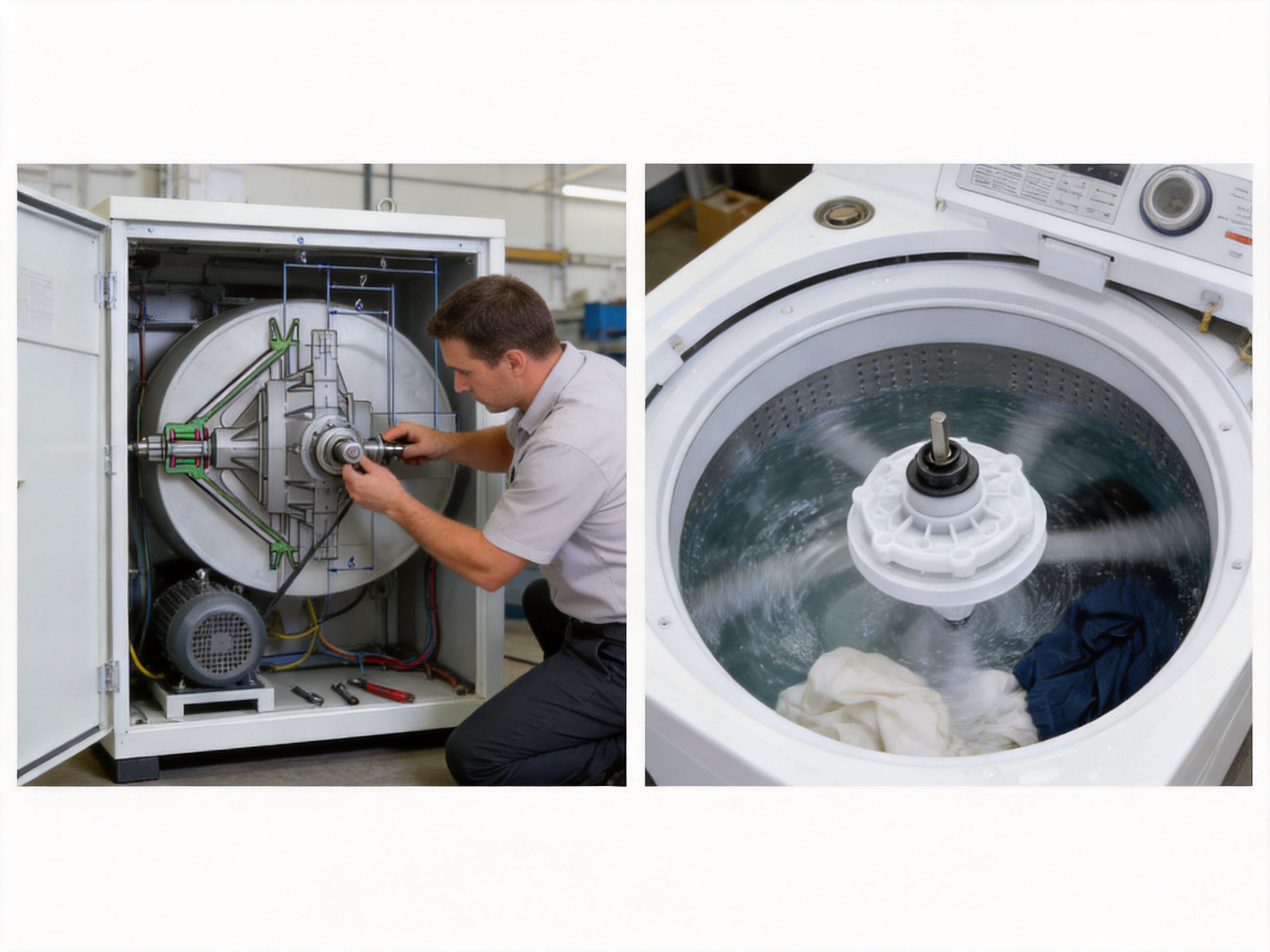
In the washing section, the agitator creates movement in the water and clothing. The transmission provides the mechanical output that drives this agitator. Its low-speed, high-torque function is especially suitable for the controlled movement required in this type of appliance.
These machines may be used in households, dormitories, rental properties, small businesses, worker accommodations, and other locations where affordability and repairability are important. The transmission must therefore deliver reliable service without adding unnecessary complexity to the appliance.
In price-sensitive markets, the transmission can influence the overall competitiveness of the finished washing machine. A component that combines practical performance with controlled cost allows manufacturers to offer an accessible product while maintaining an appropriate quality level.
Installation and Integration Considerations
Before installation, the transmission should be checked against the washing machine model and the required replacement or OEM specification. The external dimensions, mounting points, shaft interface, direction of rotation, and connection with the motor and agitator should be confirmed.
Correct alignment is essential. Misalignment between the motor, transmission, and agitator can increase load on the shaft and bearings, create vibration, and accelerate wear. Installation surfaces should be clean and properly secured, and fasteners should be tightened according to the appliance manufacturer’s requirements.
Seals and protective components should be inspected during installation. Damaged or incorrectly positioned sealing elements can increase the risk of moisture entering the transmission. The surrounding appliance structure should also be checked for cracks, deformation, loose supports, or other conditions that could transfer abnormal stress to the transmission.
After installation, the washing machine should be tested under safe operating conditions. The technician or manufacturer should observe startup behavior, agitator movement, unusual sound, vibration, leakage, and the general stability of the washing cycle.
Replacement parts should be installed by qualified personnel or according to appropriate service procedures. A transmission cannot compensate for problems elsewhere in the appliance, such as a damaged motor, worn agitator connection, defective control system, unbalanced structure, or incorrect belt tension where applicable.
Maintenance and Service Value
A well-designed transmission can support long service life, but overall appliance maintenance remains important. The washing machine should be installed on a stable surface and operated within the recommended load range. Excessive overloading can place additional stress on the motor, transmission, agitator, and supporting structure.
Users should avoid allowing water to accumulate around areas that are not designed for continuous exposure. Unusual noise, repeated failure to start, reduced agitation, abnormal vibration, leakage, or burning odor should be investigated promptly rather than ignored.
For service organizations, keeping accurate records of replacement models and installation dimensions can reduce repair time. A reliable supplier can also help distributors and technicians identify suitable transmission models for specific appliance applications.
From a lifecycle perspective, a durable transmission supports repairability. Replacing a failed drive component can extend the useful life of a washing machine and reduce the need to discard the complete appliance. This benefits consumers who prefer economical repairs and supports more responsible use of materials.
Packaging, Supply, and Customer Support
Transmission products should be packaged to protect shafts, housings, sealing surfaces, and mounting features during storage and transportation. Suitable packaging helps prevent impact damage, contamination, corrosion exposure, and deformation.
For OEM customers, delivery planning is connected to production scheduling. A supplier should be able to discuss forecast quantities, order cycles, packaging requirements, labeling, and shipment arrangements. Clear communication helps reduce the risk of production interruption caused by missing or delayed components.
For distributors, product identification and repeat availability are important. Consistent model information, clear packaging labels, and organized technical documentation can make inventory management easier and reduce the possibility of supplying an incompatible part.
GAITE provides OEM and ODM solutions for washing machine gearboxes, transmissions, P-shafts, synchronizers, and other washing machine drive components. Its customer-focused approach is intended to support both product development and ongoing supply relationships.
The company has developed long-term partnerships with Sharp Corporation, Panasonic Corporation, and Midea Group. These relationships reflect experience in serving established appliance organizations, although each customer application should still be reviewed according to its own technical and quality requirements.
Why Choose a Specialized Transmission Manufacturer?
Selecting a specialized transmission manufacturer can provide benefits throughout the product lifecycle. During development, the supplier can help evaluate interfaces, materials, performance requirements, and manufacturing feasibility. During production, the supplier can support quality control, repeatability, and delivery coordination. During the aftermarket phase, the supplier can contribute to replacement availability and technical identification.
A specialist manufacturer also understands that the transmission is part of a larger system. Its performance depends on how it interacts with the motor, agitator, shaft, housing, control system, and washing load. This system-level understanding helps prevent decisions based solely on isolated component price.
Another benefit is the possibility of long-term improvement. As customers provide field feedback or introduce new washing machine models, a specialized supplier can use its production knowledge to refine designs, improve material use, optimize processes, and support future product generations.
For international customers, certifications, environmental compliance, manufacturing capacity, and communication capability are additional considerations. The combination of ISO 9001, ISO 14001, RoHS compliance, in-house core-material production, and an established washing machine component focus creates a strong basis for supplier evaluation.
Frequently Asked Questions
What is the main purpose of a washing machine transmission?
The main purpose is to convert the motor’s high-speed rotation into low-speed, high-torque output suitable for driving the washing machine agitator. It also supports the shaft connection and helps maintain stable mechanical operation.
Which washing machines use this type of transmission?
This type of product is intended primarily for semi-automatic agitator washing machines. Exact compatibility depends on the appliance design, shaft interface, mounting arrangement, dimensions, and performance requirements.
Why cannot the motor drive the agitator directly?
A motor typically rotates too quickly for direct agitator operation. The agitator needs controlled movement and sufficient torque to work against water and clothing resistance. The transmission reduces speed and increases usable output torque.
Is the transmission suitable for humid environments?
It is designed to operate stably in the humid environment associated with washing machines. Housing protection, sealing, material selection, and assembly quality all contribute to this capability. Proper appliance installation and maintenance are still necessary.
What are the main advantages over a low-cost generic alternative?
The key advantages can include more consistent materials, better dimensional control, more reliable assembly, stronger application knowledge, improved supply stability, and greater suitability for repeated washing-machine operation. Total ownership value should be considered rather than purchase price alone.
Can the transmission be customized?
OEM and ODM customization may be available for dimensions, mounting structures, shaft interfaces, housing features, materials, packaging, and other application requirements. Customers should provide technical drawings, samples, or detailed appliance information for evaluation.
What information is needed when requesting a quotation?
Useful information includes the washing machine model, application type, drawings or photographs, mounting dimensions, shaft dimensions, motor information, target quantity, expected annual demand, packaging requirements, and any required certifications or compliance documents.
How does in-house production benefit customers?
Producing approximately 90 percent of core materials in-house can improve control over material consistency, production coordination, quality, and supply continuity. It may also help the manufacturer respond more effectively to repeat orders and customized requirements.
What quality certifications does the manufacturer have?
The company has obtained ISO 9001 Quality Management System and ISO 14001 Environmental Management System certifications. Its products comply with RoHS requirements. Customers should request product-specific documentation for their intended market and application.
Can this product be used as a replacement part?
It may be used in replacement applications when the dimensions, mounting points, shaft interface, output characteristics, and other specifications match the original appliance requirements. Compatibility should be confirmed before installation.
What symptoms may indicate a transmission problem?
Possible symptoms include weak or irregular agitation, unusual grinding or knocking sounds, excessive vibration, leakage, failure to transfer motor power, difficult startup, or repeated mechanical stoppage. Other appliance components can produce similar symptoms, so diagnosis should be completed carefully.
Where is the manufacturer located?
The company is located in Cixi City, Ningbo City, Zhejiang Province, China. Its production base focuses on washing machine components and related drive systems.
How can customers contact the company?
Customers can contact the company through its business email addresses, telephone numbers, or WhatsApp contact provided in the product information. The designated contact is Jane Lu.
Conclusion
The washing machine transmission is a compact but essential component that determines how effectively motor power is delivered to the agitator. By converting high-speed motor rotation into low-speed, high-torque output, it supports the washing movement required by semi-automatic agitator washing machines.
The product described here combines practical mechanical performance with durability, humid-environment suitability, stable operation, and cost-conscious design. These characteristics make it appropriate for appliance manufacturers and replacement-part suppliers serving markets where reliability and affordability must be balanced carefully.
Its competitive value is strengthened by the manufacturer’s specialization in washing machine components, experience since 2002, modern approximately 10,000-square-meter production base, advanced machinery, mature processes, and internal production of around 90 percent of core materials. ISO 9001 and ISO 14001 certifications, together with RoHS compliance, provide additional support for international sourcing and quality evaluation.
For customers selecting a transmission, the most important considerations are not limited to price. Reduction performance, torque capacity, shaft compatibility, housing strength, sealing, dimensional consistency, assembly quality, supply continuity, and technical support all contribute to the final result. A specialized manufacturer that can address these factors offers a stronger foundation for reliable OEM production and long-term aftermarket service.
With suitable technical confirmation and application matching, a dependable washing machine transmission can improve appliance performance, reduce service risk, and help manufacturers deliver economical washing machines with consistent mechanical quality.
References
1. Appliance Mechanical Drive Design Principles, technical reference on speed reduction, torque conversion, shaft alignment, and gear transmission systems.
2. ISO 9001 Quality Management Systems, general principles for process control, customer satisfaction, corrective action, and continual improvement.
3. ISO 14001 Environmental Management Systems, general principles for environmental responsibility and operational management.
4. Restriction of Hazardous Substances Requirements, general reference for RoHS-related material and product compliance.
5. Washing Machine Service and Maintenance Practices, technical guidance on agitator systems, drive components, installation, and troubleshooting.
6. Gearbox Manufacturing and Inspection Methods, reference material concerning gear production, dimensional control, assembly, lubrication, and functional testing.

 English
 عربى



 +86-574-63256717 /63267914
info@gaite.cn
 gaite@gaite.cn
 No. 208 Miaoshan Road, Shiyan Village, Henghe Town, Cixi City, Ningbo City, Zhejiang Province, China
