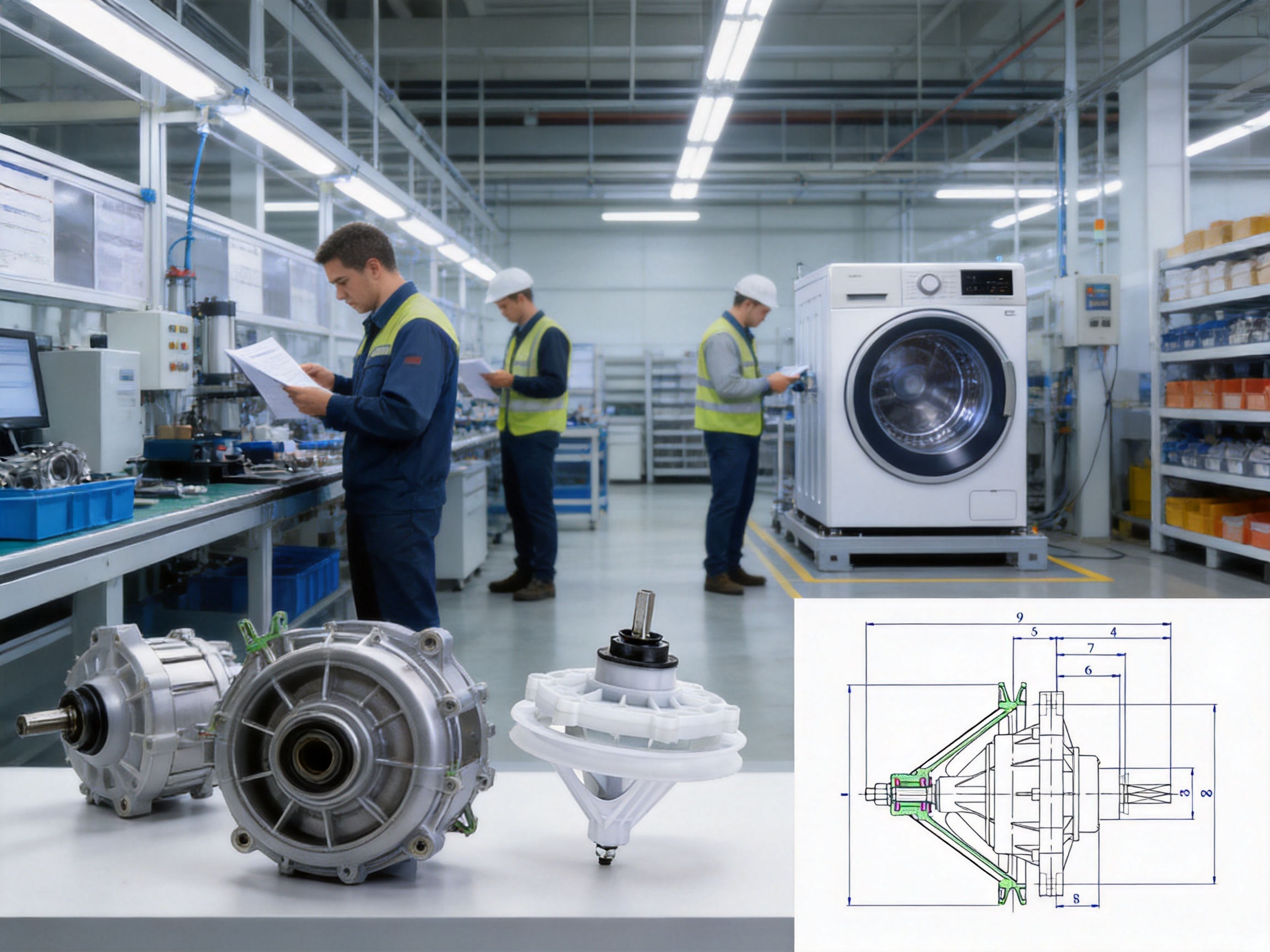
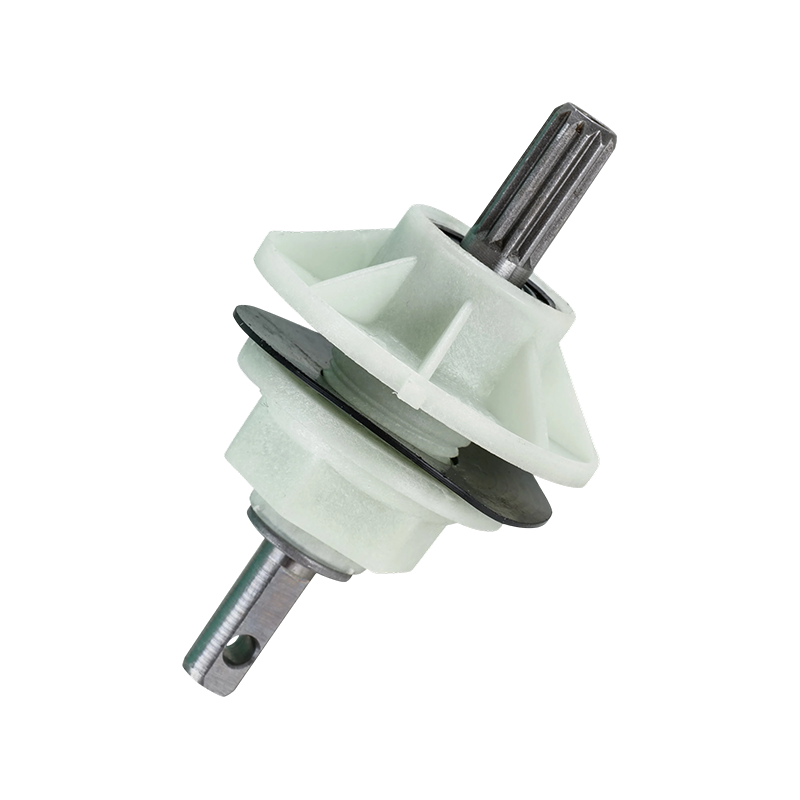
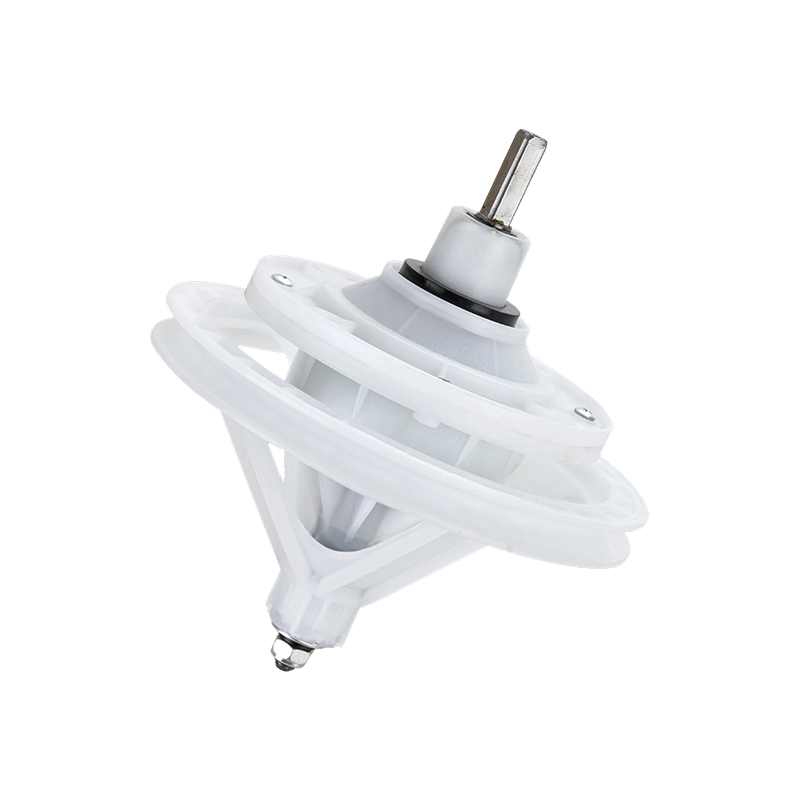
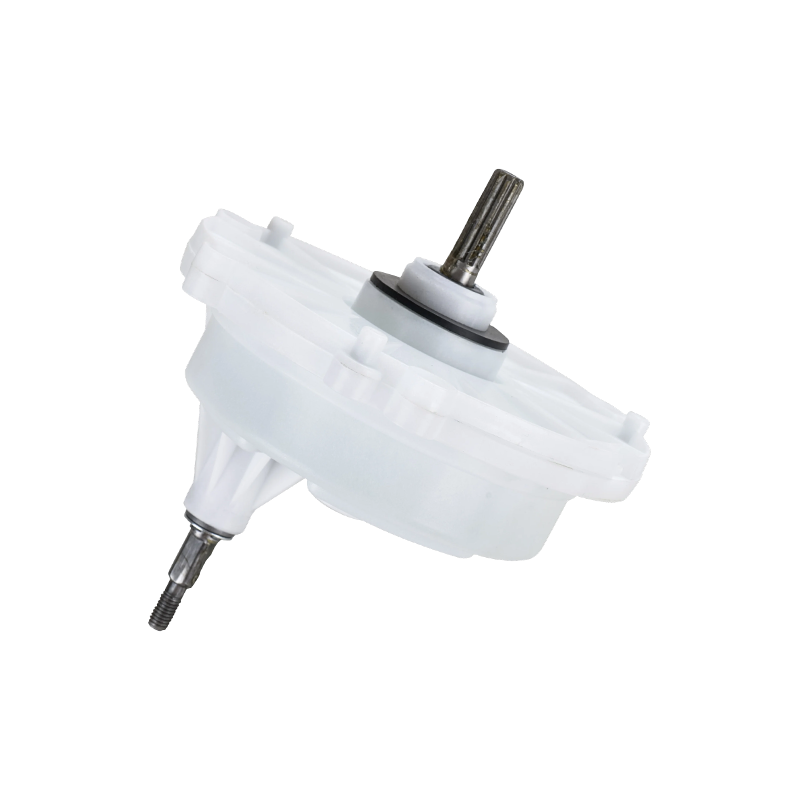
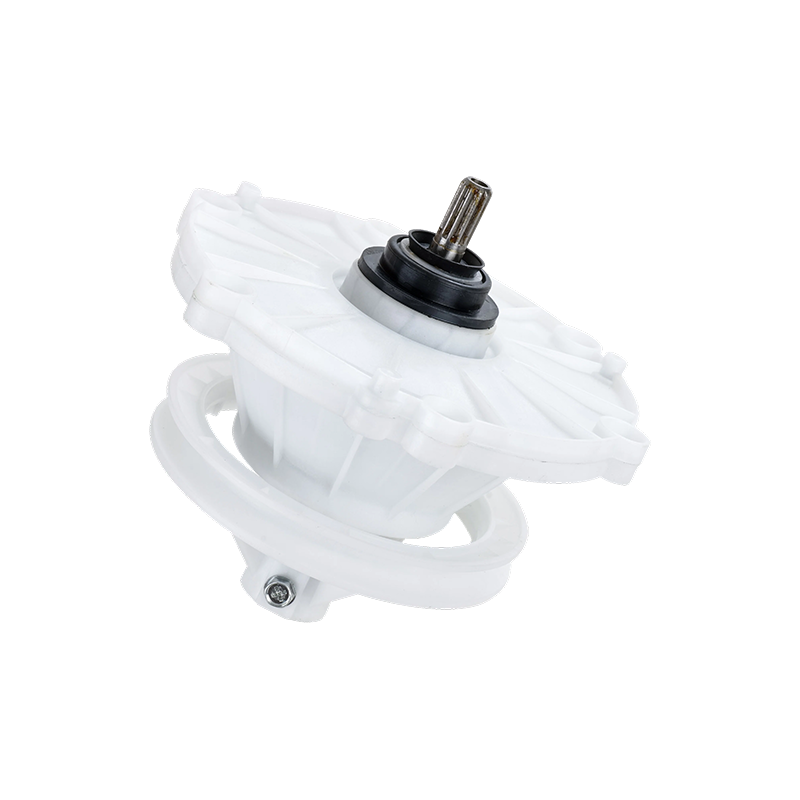
A washing machine transmission is one of the most important mechanical assemblies in a semi-automatic agitator washing machine. Although it is installed inside the appliance and is not visible during normal operation, it directly influences washing performance, agitation quality, operating noise, service life, and overall product reliability. The transmission receives high-speed rotational power from the motor and converts it into the lower-speed, higher-torque motion required by the agitator.
For manufacturers serving price-sensitive markets, selecting the right transmission is essential. The component must provide dependable power conversion while maintaining a competitive production cost. It must also withstand repeated starting, stopping, reversing, vibration, water exposure, humidity, detergent residue, and other operating conditions commonly found in household washing machines.
The washing machine transmission described in this article is designed for semi-automatic agitator washing machines. It combines a practical mechanical structure, stable torque transmission, durable materials, and manufacturing consistency. Its design supports reliable operation in humid environments while helping washing machine manufacturers control component costs and maintain an economical final product.
Produced by Cixi Gaite Electric Co., Ltd., the transmission forms part of a broader range of washing machine drive components, including washing machine gearboxes, gear reducers, synchronizers, P-shafts, and other mechanical assemblies. Through in-house production capabilities, established quality systems, and experience in washing machine components, the manufacturer provides OEM and ODM support for customers requiring stable and adaptable drive solutions.
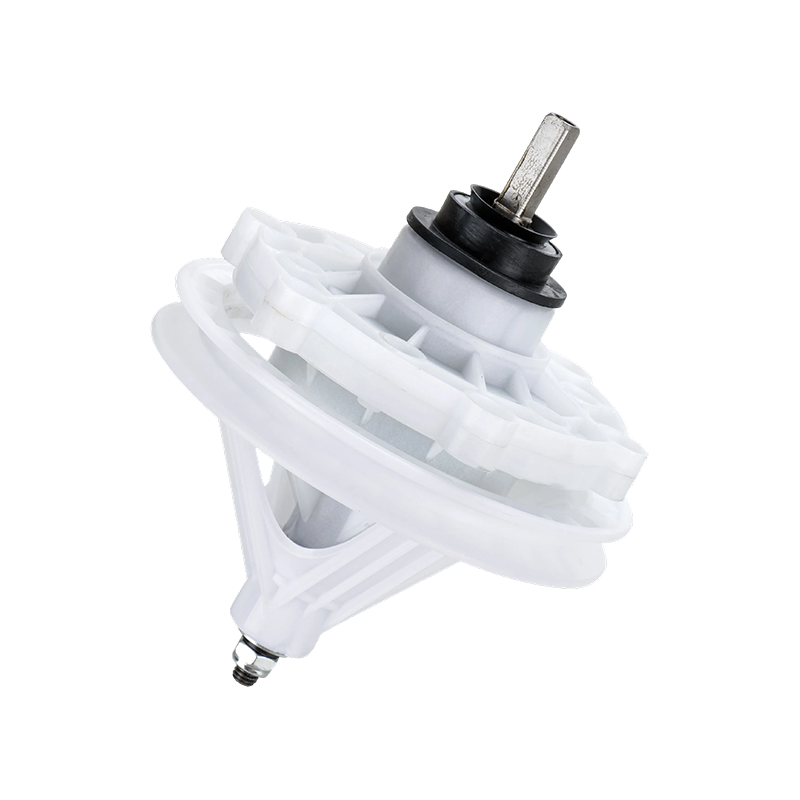
Washing Machine Transmission
Understanding the Role of a Washing Machine Transmission
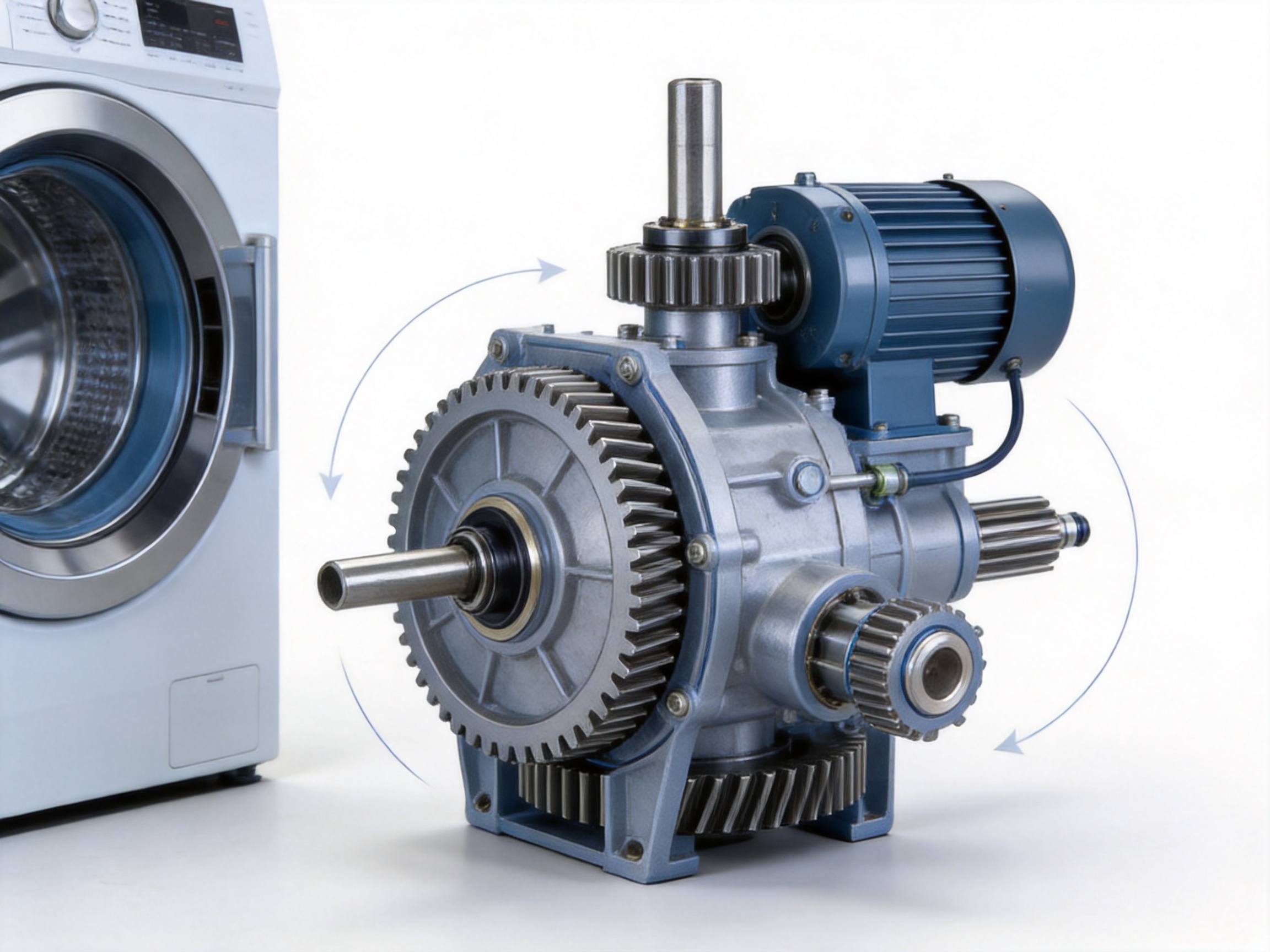
The motor used in a washing machine generally rotates at a speed that is too high for direct connection to an agitator. Direct motor output would not normally provide the ideal combination of movement, torque, and control required for washing clothes. The transmission solves this problem by changing the characteristics of the motor’s rotational output.
In simple terms, the transmission performs three primary functions. First, it reduces rotational speed. Second, it increases usable torque at the output shaft. Third, it delivers mechanical power to the agitator in a controlled and repeatable manner. These functions allow the agitator to move laundry through water and detergent without requiring the motor itself to operate under an unsuitable load.
The mechanical conversion process is important because washing action depends on controlled agitation rather than unrestricted rotation. The agitator must move with enough force to circulate garments, loosen dirt, and distribute detergent. At the same time, the output must remain within the operating range intended by the washing machine design. An appropriately engineered transmission helps balance these requirements.
A transmission also contributes to the overall efficiency of the appliance. By matching motor characteristics with agitator requirements, it reduces the need to use an oversized motor. This can help manufacturers optimize the motor, gearbox, electrical control system, and supporting structure as a complete system rather than treating each component separately.
The transmission is therefore more than a basic speed-reduction device. It is a core power unit that supports the washing machine’s mechanical performance. Its dimensional accuracy, gear engagement, bearing support, lubrication, sealing, and assembly quality all affect how the finished appliance performs throughout its service life.
Power Conversion from Motor to Agitator
The motor produces rotational energy, but the agitator requires a different output profile. The transmission receives the motor’s input through an input shaft or related drive connection. Internal gears then transfer and modify the rotation before delivering it through the output shaft to the agitator assembly.
During operation, the internal gear train must transmit torque without excessive friction, slippage, or impact. The gear teeth must remain properly engaged even when the load changes as clothing moves through the wash water. This requires appropriate gear geometry, adequate support, controlled clearances, and consistent assembly.
The output side of the transmission must also connect accurately with the agitator or associated drive structure. If the output shaft is not correctly aligned, the result may be vibration, uneven loading, premature wear, or abnormal noise. For this reason, transmission manufacturing requires more than simple machining. It requires control of the complete mechanical relationship between the housing, shafts, gears, bearings, and sealing elements.
Importance in Semi-Automatic Washing Machines
Semi-automatic washing machines are widely used in markets where affordability, ease of maintenance, and practical functionality are major purchasing considerations. These machines often have separate washing and spinning tubs, relatively simple controls, and mechanical drive systems designed for dependable daily use.
Because the transmission is used repeatedly in a demanding household environment, it must support frequent operating cycles. Users may load garments of different weights and materials, add varying quantities of water, and operate the machine under different voltage and temperature conditions. The mechanical drive system must tolerate these variations while continuing to deliver stable agitation.
A dependable transmission can also reduce the likelihood of service complaints caused by weak agitation, excessive noise, output shaft looseness, or premature mechanical failure. For appliance manufacturers, this improves product consistency and helps protect the reputation of the washing machine brand.
Core Product Advantages
The washing machine transmission offers a combination of performance, durability, cost control, and manufacturing flexibility. These characteristics are especially valuable for OEM customers that need a component capable of meeting functional requirements without creating unnecessary pressure on the final product price.
Stable Low-Speed, High-Torque Output
The primary advantage of the transmission is its ability to convert high-speed motor rotation into suitable low-speed, high-torque output. This allows the agitator to move laundry effectively while maintaining mechanical stability.
High torque is necessary because the agitator must overcome resistance created by water, wet garments, and the changing distribution of laundry inside the tub. When the load shifts, the transmission experiences variations in resistance. A properly designed gear reduction system helps the agitator maintain useful power under these changing conditions.
Stable output also supports consistent washing performance. If the output speed changes excessively or torque falls sharply under load, the washing action may become weak or irregular. A dependable transmission helps the washing machine achieve a more predictable operating rhythm.
Durability in Humid Operating Environments
Washing machines operate in conditions where moisture and humidity are unavoidable. Even when the transmission is enclosed, it may be exposed to humid air, condensation, splashing, detergent residue, and temperature changes. These conditions can accelerate corrosion, degrade lubricants, and affect seals or other supporting components.
The product is designed to operate stably in humid environments when installed and used within the intended washing machine structure. Its enclosed mechanical arrangement helps protect internal drive elements, while appropriate materials, manufacturing controls, and assembly practices support long-term reliability.
Environmental durability is an important point of comparison between a carefully manufactured transmission and a low-cost component with inconsistent material or sealing quality. A transmission that performs well in dry test conditions but deteriorates rapidly in a humid household environment can create high warranty and service costs. Reliable environmental resistance therefore contributes to the total value of the component.
Cost-Effective Mechanical Solution
Price-sensitive markets require manufacturers to balance performance and cost carefully. The washing machine transmission provides the essential functions required by a semi-automatic agitator washer without adding unnecessary complexity.
A practical mechanical design can lower the cost of the complete appliance in several ways. It may allow the use of a suitably sized motor, simplify the supporting structure, reduce control requirements, and make service or replacement more straightforward. The transmission can therefore contribute to an economical washing machine platform while retaining the mechanical performance expected by end users.
Cost effectiveness does not mean compromising basic quality. On the contrary, the most valuable low-cost component is one that maintains consistent performance, reduces failure risk, and can be manufactured repeatedly with controlled variation. The combination of efficient design and stable production is what creates a genuinely economical solution.
Reliable Torque Transmission
Reliable torque transfer depends on the interaction of multiple components. Gears must be properly formed and positioned. Shafts must maintain alignment. Bearings or support surfaces must control rotation. The housing must retain the necessary dimensional relationship between internal parts. Seals must help protect the mechanical system from the surrounding environment.
When these elements work together, the transmission can transfer motor energy to the agitator with reduced mechanical loss and lower risk of impact loading. This supports quieter operation and helps prevent premature wear of the drive system.
The transmission is also suitable for washing machine designs that require repeated operation over many cycles. Its mechanical function is focused on dependable power delivery rather than unnecessary structural complexity, making it appropriate for mass-produced household appliances.
Compatibility with OEM and ODM Development
Washing machine manufacturers may require different mounting arrangements, shaft dimensions, gear ratios, housing shapes, or connection structures. A component supplier that understands these needs can support more than a standard catalog transaction.
The manufacturer provides OEM and ODM solutions for washing machine drive components. This means customers can discuss application requirements, product dimensions, performance targets, and production quantities during the development process. Where appropriate, the transmission can be evaluated as part of a customized washing machine platform.
OEM and ODM cooperation can help appliance manufacturers shorten development time and reduce the burden of building every mechanical component internally. It also allows the supplier to apply experience from related products, such as gearboxes, reducers, synchronizers, and P-shafts, to new drive-system requirements.
Key Technical Characteristics
The transmission should be evaluated as a complete mechanical assembly rather than by considering only its gear set. Several technical characteristics determine whether the product will perform reliably in a finished washing machine.
| Technical area |
Function in the washing machine |
Value to the appliance manufacturer |
| Speed reduction |
Converts motor speed into a suitable agitator speed |
Supports effective washing action and system matching |
| Torque multiplication |
Provides stronger output under laundry and water resistance |
Helps maintain agitation performance under variable loads |
| Gear engagement |
Transfers power through the internal mechanical train |
Influences efficiency, noise, wear, and service life |
| Shaft alignment |
Keeps input and output components correctly positioned |
Reduces vibration, uneven loading, and premature damage |
| Housing structure |
Supports internal components and protects the drive system |
Improves assembly stability and environmental protection |
| Sealing and protection |
Helps limit moisture and contamination entering the assembly |
Supports durability in humid household environments |
| Manufacturing consistency |
Maintains repeatable dimensions and assembly quality |
Improves production efficiency and reduces field failures |
Gear Train Design
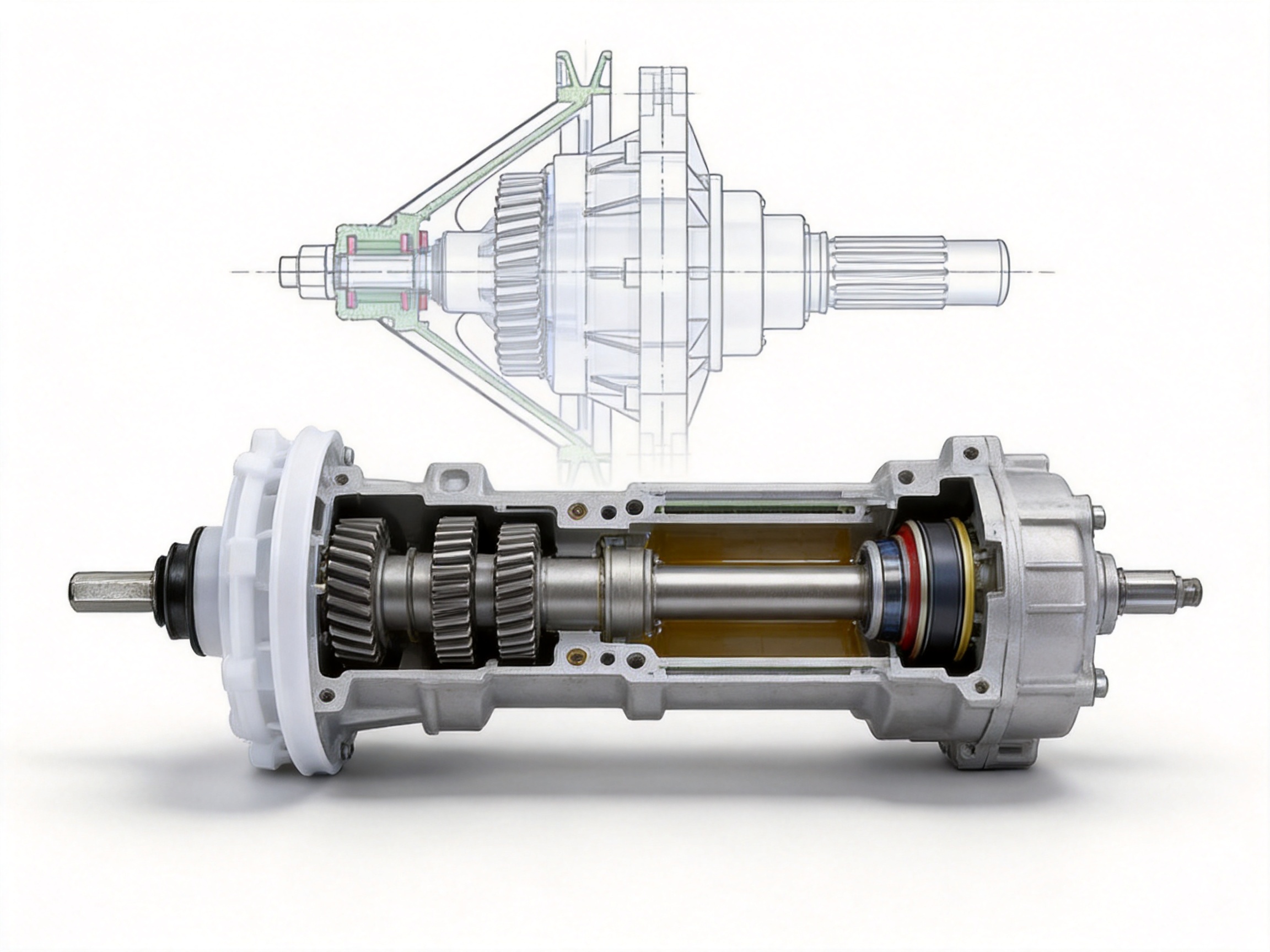
The gear train is the central mechanism responsible for modifying speed and torque. Gear design must consider tooth profile, contact area, load distribution, surface condition, and alignment. Even small dimensional differences can influence noise, friction, and service life when components operate repeatedly under load.
A well-controlled gear train supports smooth power transfer. Smooth engagement reduces shock loading and limits unnecessary stress on the motor, shafts, housing, and agitator connection. It can also contribute to lower operating noise, which is increasingly important as consumers expect household appliances to operate comfortably in residential spaces.
The gear system must also be suited to the intended washing machine application. An agitator washer does not require the same drive characteristics as a high-speed spin system. The transmission must be matched to the mechanical demands of washing, including frequent starts, stops, load changes, and the need for strong low-speed output.
Housing and Internal Support
The housing maintains the position of the gear train and provides a protective enclosure for internal moving parts. A stable housing helps preserve gear alignment and supports the shafts during operation. It must also integrate correctly with the washing machine frame and surrounding components.
Housing quality is influenced by material selection, dimensional accuracy, machining, forming, and assembly. If the housing is distorted or the mounting points are inconsistent, even accurately manufactured gears may not operate as intended. The transmission manufacturer must therefore control the housing as an important functional component rather than treating it as a simple cover.
The housing also contributes to environmental protection. By enclosing the drive components and working with seals and related structures, it helps reduce the effect of humidity and contamination on internal parts.
Shaft and Connection Accuracy
The input and output shafts provide the physical connection between the transmission and the rest of the appliance. Their dimensions, concentricity, surface condition, and connection features must be controlled carefully.
The input shaft must connect reliably with the motor-side drive arrangement. The output shaft must transfer torque to the agitator or associated washing mechanism without excessive play. Poor connection accuracy can cause vibration, noise, wear, and reduced washing efficiency.
For OEM applications, shaft and mounting requirements may vary between washing machine models. A capable supplier must be able to communicate clearly about interfaces and confirm that the transmission will integrate with the customer’s motor, tub, frame, agitator, and control system.
Lubrication and Friction Management
Internal gears and rotating support points require suitable lubrication to reduce friction and wear. Lubrication also helps manage operating temperature and supports smoother gear engagement.
For a transmission used in a humid appliance environment, lubrication must remain stable within the anticipated operating conditions. The design should also reduce the risk of lubricant leakage into areas where it could contaminate other washing machine components.
Proper assembly is essential to lubrication performance. The correct quantity and distribution of lubricant, together with effective sealing, contribute to consistent operation. Manufacturing discipline is therefore directly connected to the long-term behavior of the finished transmission.
Manufacturing Strengths Behind the Product
The performance of a washing machine transmission depends not only on the design concept but also on how consistently it is manufactured. Cixi Gaite Electric Co., Ltd. has focused on washing machine components since its establishment in 2002. Located in Ningbo, Zhejiang, China, the company operates a modern production base of approximately 10,000 square meters.
The company’s production capabilities cover core washing machine components such as gear reducers, synchronizers, gearboxes, transmissions, and P-shafts. This product focus gives the manufacturing team experience with the mechanical systems that connect motors, gear trains, shafts, and washing machine tubs.
In-House Production of Core Materials
Approximately 90 percent of core materials are produced in-house. This level of internal production can provide important advantages for quality control and supply stability.
When critical materials and processes are controlled internally, the manufacturer can more closely manage incoming material characteristics, process parameters, dimensional requirements, and production scheduling. It also reduces reliance on multiple external sources whose quality or delivery performance may vary.
In-house production supports better traceability. If a quality issue or process deviation is identified, the manufacturer can investigate the relevant production stage more directly. This can improve corrective action and reduce the likelihood of repeated problems.
Internal production can also help stabilize supply during changes in market demand. For appliance manufacturers, a reliable supply of transmissions is essential because a shortage of one mechanical component can interrupt the assembly of an entire washing machine.
Advanced Machinery and Mature Processes
The production base is equipped with advanced machinery and mature manufacturing processes. These resources support the repeated production of components with consistent dimensions and functional performance.
Transmission manufacturing generally involves multiple stages, including material preparation, forming or machining, gear processing, shaft production, housing production, surface treatment where applicable, cleaning, subassembly, final assembly, and inspection. Each stage must be coordinated because the final performance depends on the relationship between all parts.
Advanced equipment can improve production repeatability, while mature processes help ensure that operating methods are defined and followed. Together, they support efficient manufacturing for both standard products and customer-specific requirements.
Process maturity is especially important for parts with multiple interacting dimensions. A gear may meet its individual drawing requirements but still perform poorly if its position relative to a shaft or housing is incorrect. Integrated process control helps ensure that component-level accuracy translates into assembly-level performance.
Quality Management Systems
The company has obtained ISO 9001 Quality Management System certification. This certification reflects the use of an organized quality management framework covering areas such as process control, documentation, responsibilities, corrective action, and continuous improvement.
For OEM and ODM customers, a quality management system provides confidence that production is managed through defined procedures rather than relying solely on individual operator experience. It also supports more consistent communication between engineering, purchasing, production, inspection, and customer service teams.
The company has also obtained ISO 14001 Environmental Management System certification. This demonstrates attention to environmental management and the controlled use of resources and processes. Environmental responsibility is increasingly relevant to appliance manufacturers that must consider the environmental performance of their supply chains.
In addition, the products comply with RoHS requirements. Compliance with restrictions on hazardous substances supports the needs of customers serving international markets and helps align the component with broader product safety and environmental expectations.
Continuous Improvement and Process Discipline
A transmission is a mass-produced mechanical product, so quality must be repeatable rather than occasional. Continuous improvement may involve refining work instructions, improving inspection methods, optimizing equipment, reducing process variation, or responding to customer feedback.
Process discipline also affects delivery efficiency. When production procedures are stable, the manufacturer can plan material use, production capacity, inspection, and packaging more accurately. This helps customers manage their own assembly schedules.
The company’s stated commitment to customer-focused service, technological innovation, consistent quality, and continuous improvement supports a long-term approach to manufacturing. This is particularly important for appliance customers that require stable cooperation over multiple product generations.
How the Transmission Compares with Less Suitable Alternatives
Manufacturers often compare transmissions according to purchase price alone. However, the most economical component should be evaluated across the complete operating and supply chain. A low initial price may not represent good value if the component has inconsistent dimensions, poor environmental resistance, excessive noise, or a high rate of field failure.
Compared with Direct Motor Drive
A direct motor drive may appear mechanically simple because it removes the need for a separate transmission. However, direct drive requires the motor to provide the speed and torque characteristics demanded by the agitator. This can lead to a larger or more specialized motor, increased system cost, and less flexibility in matching the power unit to the washing mechanism.
A transmission allows the motor and agitator to operate in more suitable ranges. The motor can rotate efficiently at a higher speed while the transmission produces the lower-speed, high-torque output needed for washing. This arrangement can improve system design flexibility and support competitive appliance pricing.
Compared with Inconsistent Low-Cost Gearboxes
Some low-cost gearboxes may offer an attractive purchase price but lack sufficient control over materials, machining, assembly, or sealing. Variations in gear accuracy and shaft alignment can lead to noise, vibration, friction, or early wear.
A transmission manufactured through defined processes and an organized quality system offers a stronger basis for repeatability. The benefit is not only better individual product performance but also more predictable results across large production batches.
Compared with Overly Complex Drive Systems
More complex drive systems may include features that are unnecessary for a basic semi-automatic agitator washing machine. Additional mechanisms can increase the number of parts, raise manufacturing cost, complicate assembly, and make maintenance more difficult.
The washing machine transmission focuses on the essential requirements of speed reduction, torque multiplication, and dependable agitator drive. This practical approach is suitable for manufacturers seeking a cost-effective product platform without sacrificing core mechanical performance.
Compared with Suppliers without Specialized Component Experience
A general mechanical supplier may be able to manufacture individual gears or shafts, but washing machine transmissions require application-specific knowledge. The supplier must understand humid household environments, washing loads, agitator behavior, motor matching, mounting interfaces, and production requirements.
A company specializing in washing machine components can provide more relevant technical communication. Experience with related products such as gearboxes, reducers, synchronizers, and P-shafts can also help identify compatibility issues earlier in the development process.
Application and Integration Considerations
Before selecting a transmission for a washing machine project, manufacturers should evaluate the complete application. The component must be matched to the motor, agitator, tub structure, frame, electrical system, and expected load profile.
Motor Matching
The motor and transmission should be considered as a combined power system. Important factors include motor speed, rated power, starting torque, direction of rotation, duty cycle, mounting method, and operating voltage.
If the motor produces insufficient starting torque, the transmission may not deliver the required agitator performance under a heavy wet load. If the motor is oversized or poorly matched, the system may incur unnecessary energy use, mechanical stress, or cost. Proper matching helps the complete appliance operate more efficiently.
Agitator and Tub Interface
The output shaft and mounting structure must align with the washing machine’s agitator and tub design. The interface should provide secure torque transfer and allow the agitator to operate without excessive movement.
Manufacturers should confirm shaft dimensions, mounting-hole patterns, overall transmission height, output position, and any required connection components during the design stage. Early confirmation helps prevent costly modifications after tooling or assembly-line preparation has begun.
Load and Duty Cycle
The transmission should be selected according to the expected washing load and operating frequency. Household machines may experience different loads depending on garment type, water level, and user habits. The drive system should be capable of handling normal variations without excessive stress.
Duty cycle is also important. A machine intended for frequent daily use may require a different validation approach from one designed for occasional operation. The customer and supplier should define expected operating conditions so that product evaluation reflects actual use.
Noise and Vibration
Noise and vibration are affected by the entire washing machine, but the transmission is an important contributor. Gear accuracy, shaft alignment, housing rigidity, lubrication, and mounting condition all influence acoustic and vibration performance.
Reducing unnecessary mechanical impact improves user comfort and may also extend the life of surrounding parts. A stable transmission helps prevent vibration from being transferred excessively to the tub, cabinet, or floor.
Maintenance and Replacement
Semi-automatic washing machines are often selected because they are practical and relatively easy to maintain. A transmission that is manufactured consistently and supplied with clear identification can support efficient replacement when service is required.
For aftermarket customers, stable product availability is particularly valuable. Standardized product information, controlled dimensions, and dependable supply help distributors and repair organizations reduce inventory uncertainty.
Quality Evaluation and Validation
Before mass production, the transmission should undergo evaluation appropriate to the customer’s washing machine application. The validation plan may include dimensional inspection, functional testing, load testing, noise evaluation, environmental exposure, endurance testing, and assembly verification.
Dimensional Inspection
Dimensional inspection confirms that critical features meet the agreed technical requirements. These may include shaft dimensions, housing interfaces, mounting positions, gear relationships, sealing surfaces, and overall assembly dimensions.
Dimensional consistency is vital for OEM production because even a small deviation can create assembly difficulties when thousands of units are installed on an automated or semi-automated production line.
Functional Testing
Functional testing evaluates whether the transmission converts motor input into the required agitator output. The test may examine rotation, torque behavior, abnormal noise, leakage, vibration, and operation under representative loads.
Functional tests should reflect the real relationship between the transmission and the washing machine. Testing the transmission in isolation is useful, but complete-system testing provides additional information about motor matching, mounting, agitator response, and operating sound.
Endurance Testing
Endurance testing helps evaluate performance over repeated operating cycles. It may include repeated starts and stops, load changes, directional changes where applicable, and extended operating periods.
The purpose is to identify potential wear, looseness, gear damage, seal deterioration, lubricant problems, or abnormal noise before the product enters large-scale production. Endurance validation is especially important for components that will be used in appliances with long service expectations.
Environmental Testing
Environmental testing can examine the effect of humidity, temperature variation, and other conditions relevant to household washing machine operation. These tests help confirm that the enclosure, materials, seals, and lubrication system provide appropriate protection.
Testing should be based on the intended market and appliance design. A washing machine installed in a humid region may require particular attention to corrosion resistance and moisture protection, while a machine shipped through large temperature changes may require additional packaging and environmental evaluation.
Benefits for Appliance Manufacturers
Selecting a dependable washing machine transmission can create benefits beyond the performance of the individual component. It can support product development, production efficiency, supply continuity, and customer satisfaction.
More Efficient Product Development
Working with a specialized component manufacturer can reduce the time needed to define the mechanical drive system. The supplier can provide technical information, discuss application requirements, and support the transition from concept to production.
OEM and ODM cooperation is especially useful when a customer is developing a new washing machine model or adapting an existing platform for another market. The transmission can be considered alongside related gearboxes, reducers, shafts, and synchronizers.
Improved Production Stability
Consistent components reduce disruptions on the appliance assembly line. If transmission dimensions vary significantly, workers may need to make adjustments, reject parts, or stop production to investigate the problem. Stable manufacturing helps lower these risks.
In-house production of core materials and mature manufacturing processes contribute to a more controlled supply chain. This is valuable for customers that require regular deliveries over long-term production programs.
Lower Total Cost of Ownership
The total cost of a transmission includes purchase price, assembly labor, inspection, inventory, warranty exposure, service replacement, and the effect of failures on brand reputation. A component that performs consistently can reduce these indirect costs.
The product’s practical design also supports cost control at the appliance level. It provides the required speed and torque conversion without requiring an unnecessarily complicated mechanical system.
Support for International Markets
ISO 9001 and ISO 14001 certifications, together with RoHS compliance, help the manufacturer support customers serving international markets. These certifications and compliance characteristics can simplify supplier evaluation and contribute to a more organized export supply chain.
The company’s location in Ningbo, Zhejiang, provides access to an established manufacturing and logistics environment. Customers can communicate with the supplier regarding product development, production planning, quality requirements, and shipment coordination.
Company Capabilities and Industry Experience
Cixi Gaite Electric Co., Ltd. was founded in 2002 and specializes in the research, development, and manufacturing of core washing machine components. Its products are used by OEM manufacturers and in the aftermarket.
The company has developed long-term partnerships with Sharp Corporation, Panasonic Corporation, and Midea Group. These relationships reflect experience in serving established appliance businesses that require consistent product quality, reliable supply, and professional technical cooperation.
Its main product range includes washing machine parts, washing machine gearboxes, and P-shafts. The broader portfolio also includes gear reducers and synchronizers. This concentration in washing machine drive components allows the company to build knowledge across related mechanical assemblies.
For customers, a specialized product portfolio can be more valuable than a supplier that produces unrelated components across many industries. The supplier’s engineering and production attention remains focused on the requirements of washing machine drive systems.
The company also emphasizes customer-focused service, technological innovation, consistent quality, and continuous improvement. These principles are important for long-term OEM and ODM cooperation because appliance projects often require repeated communication, design changes, sample approval, production coordination, and after-sales support.
Recommended Procurement Process
Manufacturers considering a washing machine transmission should establish a clear procurement and technical evaluation process. This helps ensure that the selected component is suitable for both the washing machine design and the intended production scale.
Define the Application
Provide information about the washing machine type, agitator design, motor characteristics, intended load, operating cycle, market conditions, installation environment, and expected annual quantity. Clear application information enables the supplier to recommend an appropriate product more effectively.
Confirm Mechanical Interfaces
Share drawings or specifications for the motor connection, transmission mounting points, output shaft, agitator connection, tub structure, and surrounding clearance. Interface confirmation should occur before tooling or mass-production preparation.
Review Quality Requirements
Agree on inspection items, testing methods, acceptable tolerances, documentation, packaging, labeling, and traceability. Customers serving regulated or international markets should also confirm environmental and material compliance requirements.
Evaluate Samples
Sample evaluation should include installation on the intended washing machine or a representative test platform. The customer should assess fit, output behavior, sound, vibration, washing action, and ease of assembly.
Plan Mass Production
Once the sample is approved, the supplier and customer should confirm production capacity, lead time, order quantity, packaging, shipment schedule, and change-control procedures. A clear production plan reduces uncertainty when the component enters regular supply.
Q&A
What is a washing machine transmission?
A washing machine transmission is a mechanical power-conversion assembly that changes the high-speed rotation of a motor into lower-speed, higher-torque output suitable for an agitator. It helps the washing machine deliver effective and stable washing movement.
Which washing machines use this type of transmission?
This transmission is designed for semi-automatic agitator washing machines. It is intended for applications where the motor requires mechanical speed reduction and torque multiplication before driving the agitator.
Why is torque important in an agitator washing machine?
The agitator must move water and wet garments, which creates resistance that changes according to the load. High torque helps the agitator maintain useful movement under these conditions and supports consistent washing performance.
Can the transmission operate in a humid environment?
Yes. The transmission is designed to operate stably in the humid conditions associated with household washing machines when it is correctly installed and used within the intended appliance structure. Housing, sealing, material selection, lubrication, and assembly quality all contribute to environmental durability.
How does the transmission help control washing machine cost?
It provides the required speed reduction and torque multiplication through a practical mechanical structure. This allows manufacturers to match the motor and agitator more efficiently and avoid unnecessary complexity in the drive system.
What makes a transmission different from a simple gear set?
A transmission is a complete assembly that may include gears, shafts, housing, support components, lubrication, seals, and mounting interfaces. Its performance depends on how all of these elements work together, not only on the individual gears.
Can the product be customized for OEM applications?
The manufacturer provides OEM and ODM solutions for washing machine drive components. Customers can discuss dimensions, interfaces, performance requirements, production quantities, and other application conditions during the development process.
What manufacturing capabilities support the product?
The manufacturer operates an approximately 10,000-square-meter production base, uses advanced machinery and mature manufacturing processes, and produces approximately 90 percent of its core materials in-house. These capabilities support quality consistency and supply stability.
Which certifications and compliance features are available?
The company has obtained ISO 9001 Quality Management System and ISO 14001 Environmental Management System certifications. Its products comply with RoHS requirements and are intended to meet international expectations for safety, environmental responsibility, and reliability.
Does the company supply other washing machine components?
Yes. Its product range includes washing machine parts, gearboxes, transmissions, gear reducers, synchronizers, and P-shafts. This broader range supports customers seeking coordinated solutions for washing machine drive systems.
What information should a buyer provide when requesting a quotation?
A buyer should provide the washing machine application, motor information, agitator details, drawings or dimensions, operating requirements, annual quantity, target market, quality standards, packaging needs, and expected delivery schedule. More complete information helps the supplier prepare a more accurate technical and commercial proposal.
How should the transmission be evaluated before mass production?
It should be installed on the intended washing machine or a representative test platform and evaluated for fit, output performance, torque behavior, noise, vibration, sealing, and endurance. Dimensional inspection and environmental testing may also be included according to the application.
Why is supplier experience important for this component?
A transmission must work as part of a complete washing machine drive system. A supplier with experience in gearboxes, reducers, shafts, synchronizers, and related components can better understand application interfaces, load conditions, production requirements, and potential integration issues.
Conclusion
The washing machine transmission is a core mechanical component for semi-automatic agitator washing machines. By converting high-speed motor rotation into low-speed, high-torque output, it enables the agitator to deliver effective washing movement under changing household loads.
Its principal advantages include stable torque transmission, practical speed reduction, dependable operation in humid environments, cost-effective design, and suitability for OEM and ODM development. These characteristics make it an appropriate solution for manufacturers seeking reliable washing machine drive performance while maintaining competitive product costs.
The value of the transmission is supported by the manufacturing capabilities behind it. Cixi Gaite Electric Co., Ltd. has specialized in washing machine components since 2002 and operates an approximately 10,000-square-meter production base. In-house production of approximately 90 percent of core materials, advanced machinery, mature manufacturing processes, ISO 9001 certification, ISO 14001 certification, and RoHS compliance all contribute to a controlled and dependable supply structure.
For appliance manufacturers, the right transmission can improve more than agitator performance. It can support motor matching, reduce mechanical complexity, stabilize assembly, lower total ownership cost, and help create a dependable final washing machine. With specialized product experience and OEM and ODM capabilities, the manufacturer provides a practical foundation for customers developing or sourcing washing machine drive components.
References
1. Cixi Gaite Electric Co., Ltd. Product information for washing machine transmissions, gearboxes, gear reducers, synchronizers, and P-shafts.
2. ISO 9001. Quality Management Systems—Requirements.
3. ISO 14001. Environmental Management Systems—Requirements with Guidance for Use.
4. Restriction of Hazardous Substances requirements for electrical and electronic equipment.
5. General mechanical engineering principles for gear reduction, torque transmission, shaft alignment, lubrication, and enclosed drive assemblies.
6. General appliance engineering practices for semi-automatic washing machine agitator systems and household washing machine drive components.

 English
 عربى



 +86-574-63256717 /63267914
info@gaite.cn
 gaite@gaite.cn
 No. 208 Miaoshan Road, Shiyan Village, Henghe Town, Cixi City, Ningbo City, Zhejiang Province, China
