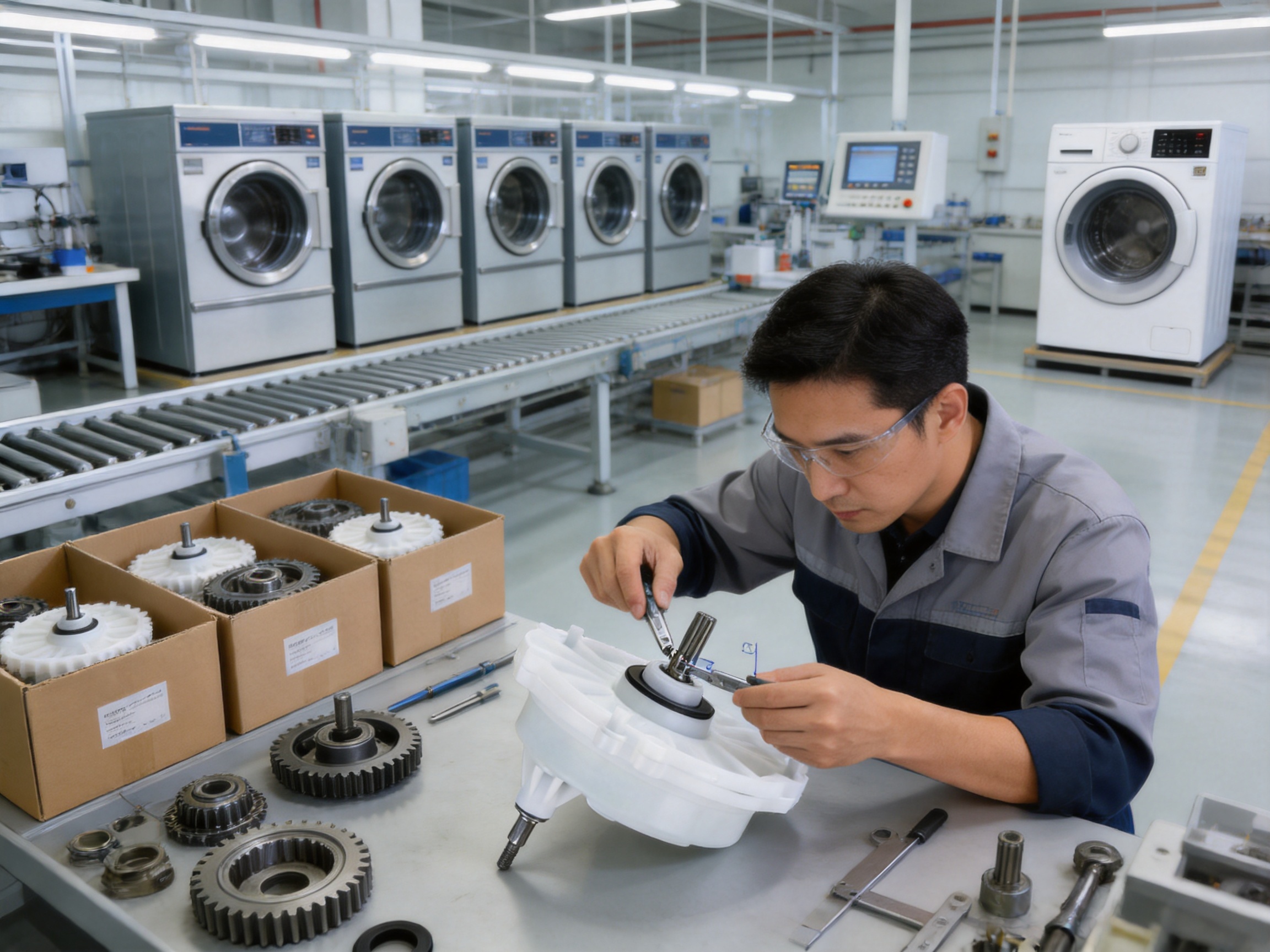
A washing machine gear case is one of the most important mechanical assemblies in a semi-automatic agitator washing machine. Although it is installed beneath the wash tub and is not visible during normal operation, it directly affects agitation strength, washing performance, operating stability, noise, service life, and overall product value. The gear case receives the high-speed rotation generated by the motor and transforms it into the lower-speed, higher-torque movement required to drive the agitator effectively.
For manufacturers of semi-automatic washing machines, selecting the correct gear case is not simply a matter of choosing a transmission that fits into the appliance. The component must match the motor, agitator, shaft arrangement, tub structure, water-sealing system, mounting configuration, and expected duty cycle. It must also withstand repeated starting, stopping, reversing, vibration, moisture, detergent exposure, and changing load conditions. A well-designed washing machine gear case helps the appliance deliver dependable washing action while controlling manufacturing and maintenance costs.
This product is designed as a practical transmission solution for semi-automatic agitator washing machines. It combines a durable mechanical structure with cost-conscious production, stable power transmission, and suitability for long-term operation in humid environments. Its design supports manufacturers and distributors that need a reliable washing machine gearbox for original equipment manufacturing, replacement-part supply, or customized appliance projects.
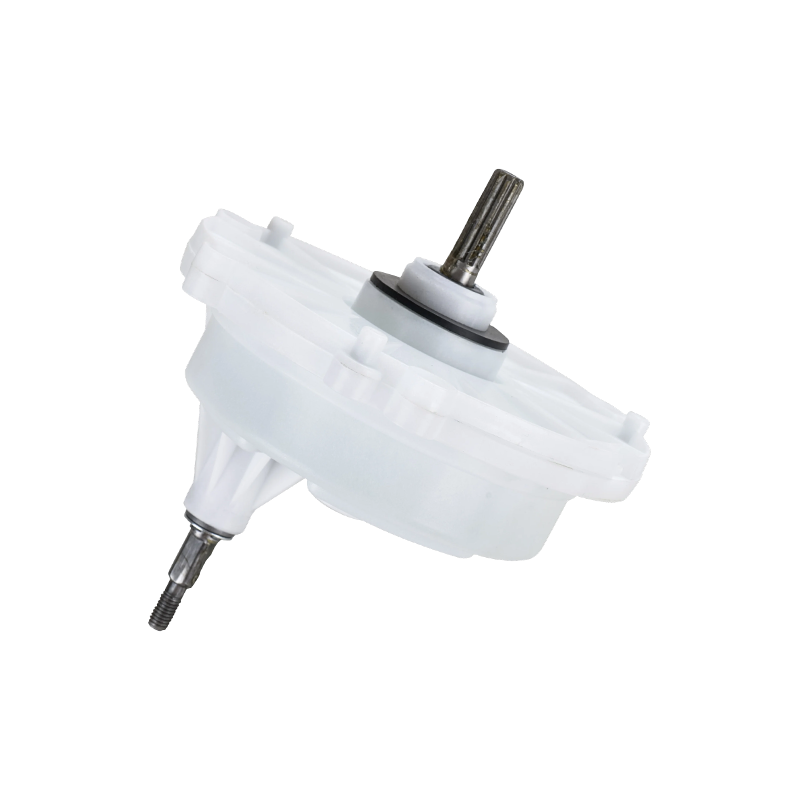
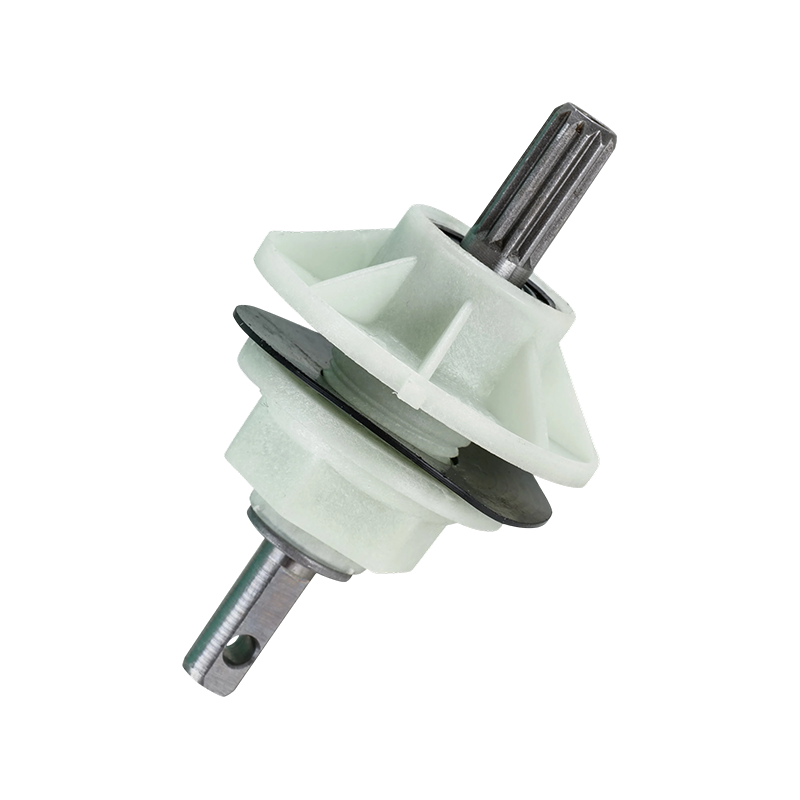
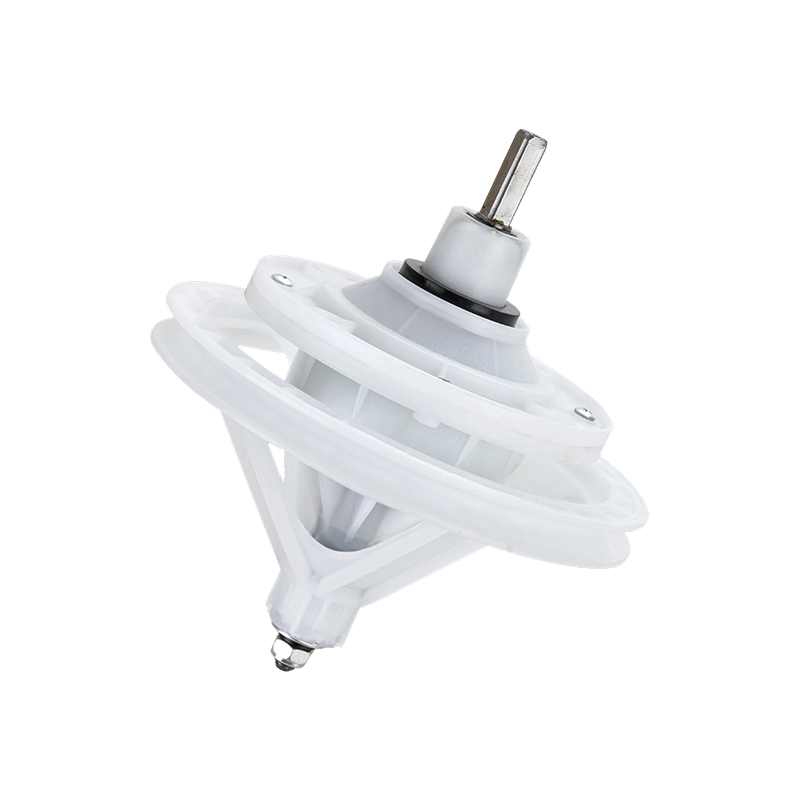
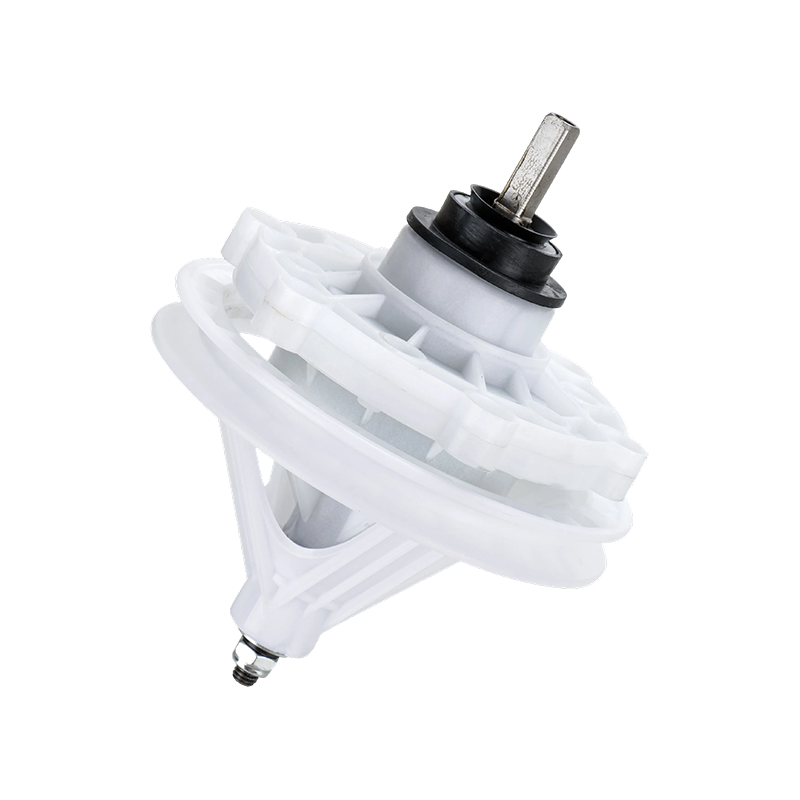
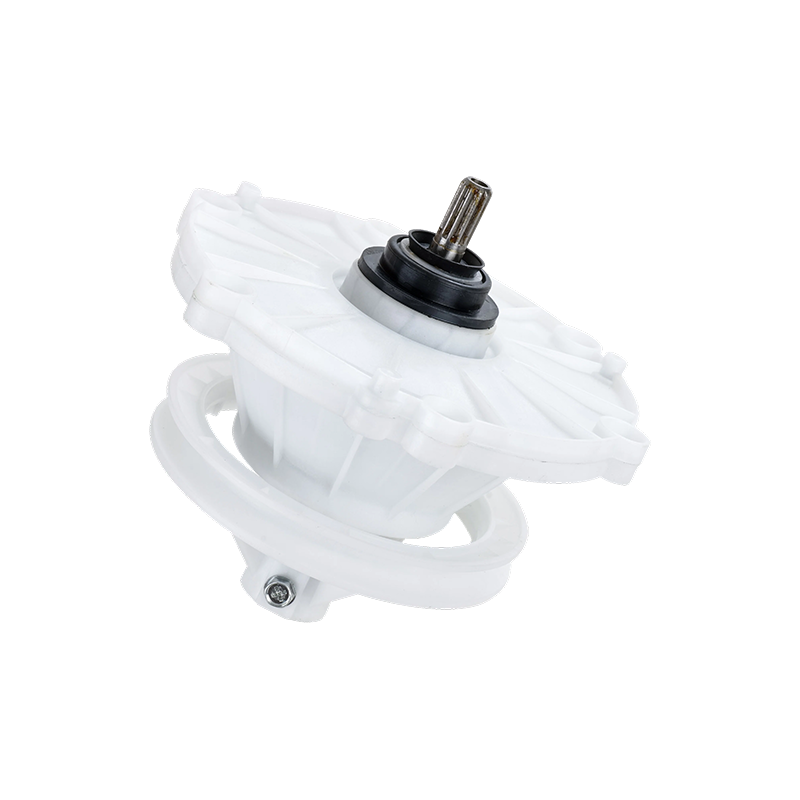
Washing Machine Gear Case
What a Washing Machine Gear Case Does
The motor in a washing machine normally rotates at a speed that is too high for direct connection to the agitator. Direct motor output would not provide the controlled, high-torque movement needed to move water and clothing through the wash zone. The gear case solves this problem by using a transmission mechanism to reduce rotational speed and increase torque at the output shaft.
During operation, the motor transfers power to the input side of the gear case. Internal gears then alter the speed and torque relationship according to the transmission ratio. The output shaft turns the agitator or related washing mechanism at a more suitable speed. This controlled motion helps create water circulation, clothing movement, and friction between garments, water, and detergent.
The gear case also provides structural support for the transmission shaft. It keeps the internal gears aligned, helps maintain the correct relationship between rotating parts, and contributes to the overall mechanical stability of the appliance. If the housing, bearings, gears, shaft, or seals are poorly designed, the washing machine may develop excessive noise, leakage, vibration, weak agitation, or premature mechanical failure.
In a semi-automatic washing machine, the gear case is commonly exposed to a demanding combination of conditions. The appliance may be used repeatedly in homes, laundries, dormitories, rental properties, and other environments where straightforward operation and long service life are important. The transmission must therefore perform consistently even when the washing load varies and the machine is frequently started and stopped.
Core Product Advantages
High-Torque Output for Effective Agitation
The primary advantage of a properly engineered washing machine gear case is its ability to produce useful torque at a controlled output speed. Agitator washing requires more than simple rotation. The agitator must move clothing through water and overcome resistance caused by fabric weight, water viscosity, detergent, and uneven load distribution.
By reducing motor speed and increasing output torque, the gear case gives the agitator the mechanical power needed for effective washing. This allows the appliance to create a stable water flow without forcing the motor to operate outside its intended performance range. The result is a more practical power transmission system and a better balance between washing action, motor loading, and energy use.
Stable Transmission Performance
Stable transmission is essential for consistent washing results. The internal components must maintain their intended relationship while the appliance operates under changing loads. A gear case with appropriate gear engagement, shaft support, housing strength, and assembly accuracy can help prevent irregular agitation and unstable operation.
Stable performance is also valuable from a manufacturing perspective. When a gearbox operates predictably, appliance manufacturers can develop the motor, agitator, timer, and control system around a more consistent mechanical platform. This simplifies product design and reduces the risk that small variations in transmission behavior will affect the finished machine.
Durability in Humid Operating Environments
Washing machines operate around water, detergent, humidity, and occasional splashing. These conditions create a challenging environment for mechanical parts. A gear case must protect its internal components while maintaining smooth transmission over a long period of use.
The product is intended for long-term operation in humid washing-machine environments. Its structural design supports the use of suitable sealing and protection methods around the transmission area. A dependable housing and properly managed interfaces help reduce the risk of moisture-related deterioration, lubricant loss, contamination, and corrosion of internal components.
Environmental durability is especially important for replacement parts. A replacement gearbox that performs well only under ideal conditions may create repeated service problems. A robust gear case helps manufacturers, distributors, and repair providers offer a more dependable solution to end users.
Cost-Conscious Mechanical Design
Washing machine manufacturers often need to balance performance, reliability, and product cost. A gear case is a core component, but it must fit within the overall cost structure of the washing machine. The product therefore emphasizes practical durability and stable function without relying on unnecessarily complex construction.
A cost-conscious design can benefit several parts of the supply chain. Appliance manufacturers can control production costs, wholesalers can maintain competitive pricing, and consumers can obtain a dependable machine without paying for features that are not necessary for semi-automatic operation. The goal is not to reduce quality, but to use suitable materials, efficient processes, and appropriate engineering to deliver useful value.
Suitability for OEM and Replacement Applications
The washing machine gear case can serve both original equipment and aftermarket requirements. OEM customers may need a transmission that can be integrated into a specific semi-automatic agitator platform. Replacement-parts suppliers may need a dependable component for machines already in service.
These applications have different priorities. An OEM project may focus on dimensional compatibility, mounting design, shaft configuration, and long-term supply. An aftermarket project may place greater emphasis on interchangeability, installation convenience, durability, and availability. A capable gear case supplier should be able to discuss these requirements and provide a suitable product or customized solution.
| Requirement | Value Provided by the Gear Case | Importance to the Washing Machine |
|---|
| Motor speed reduction | Converts high-speed motor rotation into controlled agitator movement | Supports effective washing action |
| Torque multiplication | Provides stronger output force at a lower speed | Helps move wet clothing and water |
| Mechanical stability | Maintains gear and shaft alignment during operation | Reduces irregular motion and vibration |
| Moisture resistance | Supports operation near water and humidity | Improves service reliability |
| Production efficiency | Uses established manufacturing and assembly processes | Supports stable quality and competitive cost |
| Application flexibility | Can be considered for OEM, ODM, and replacement programs | Serves different customer and appliance requirements |
Mechanical Construction and Operating Principles
Transmission Housing
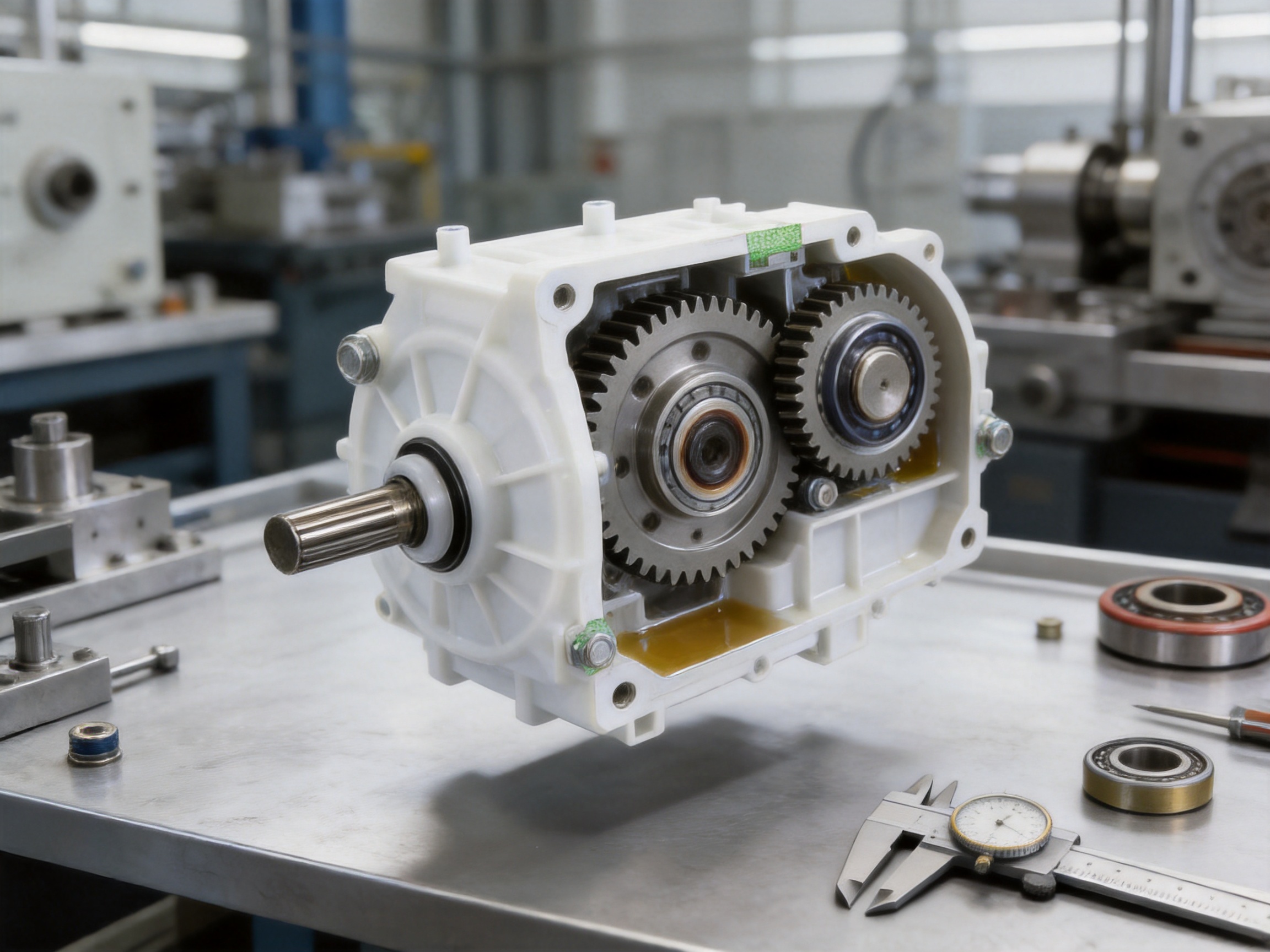
The housing is the foundation of the gear case. It contains the gear train, supports the shaft system, retains lubricant, and provides the mounting interfaces used to install the component in the washing machine. Housing accuracy is important because even a small distortion can affect bearing alignment and gear engagement.
A practical transmission housing must also withstand vibration and repeated torque changes. During washing, the load is not always constant. Clothing may collect on one side of the agitator, water resistance may change, and the motor may repeatedly start or stop. The housing must maintain its shape and support internal components under these dynamic conditions.
Gear Train
The gear train is responsible for changing speed and torque. Its design determines how efficiently motor power is transferred to the agitator. Correct tooth geometry, suitable material selection, accurate machining, and appropriate lubrication all contribute to smooth and reliable operation.
Gear engagement must be controlled carefully. Excessive clearance can create impact noise, vibration, and accelerated wear. Insufficient clearance can increase friction and heat. Consistent production tolerances help the gear train operate within the intended range and reduce variation between individual units.
Input and Output Shafts
The input shaft receives power from the motor or related drive arrangement, while the output shaft delivers torque to the agitator. Shaft diameter, length, keyway or connection structure, concentricity, and surface condition may all affect compatibility and service performance.
The output shaft must be strong enough to handle torque changes without excessive deflection. It must also maintain a dependable connection with the agitator. If the shaft interface is not properly matched, the washing machine may experience looseness, slipping, noise, or reduced agitation strength.
Bearings and Support Components
Bearings help guide rotating shafts and reduce friction between moving parts. Their correct installation is essential. Misalignment, contamination, excessive clearance, or insufficient lubrication may result in noise and premature wear.
The surrounding support structure is equally important. Bearings must be held securely within the housing, and the shaft system must remain aligned while the washing machine is operating. A carefully controlled assembly process helps ensure that each bearing and shaft is installed in the correct position.
Sealing and Lubrication
Seals help retain lubricant inside the gear case and limit the entry of water, detergent residue, and contaminants. A suitable sealing arrangement is especially important because the component operates near the washing tub and may be exposed to a humid atmosphere.
Lubrication reduces friction and wear at the gear and bearing interfaces. It also helps control heat generated during operation. The lubricant must remain suitable for the expected temperature, speed, load, and operating duration. Proper filling, sealing, and inspection are important parts of production quality control.
Manufacturing Strengths Behind Consistent Quality
A washing machine gear case is only as reliable as the production system used to make it. Product design, materials, machining, heat treatment, assembly, inspection, and packaging all influence the final result. Consistency is particularly important for transmission components because small dimensional differences can affect gear engagement, shaft alignment, and sealing performance.
The manufacturer behind this product has operated in the washing machine component field since 2002. Located in Ningbo, Zhejiang, China, the company maintains a production base of approximately 10,000 square meters and specializes in core washing machine components, including gear reducers, synchronizers, gearboxes, and P-shafts.
A significant proportion of core materials is produced in-house. Approximately 90 percent of core materials are manufactured internally, helping the company maintain greater control over material consistency, production scheduling, and supply stability. In-house production can also improve communication between engineering, machining, assembly, and quality teams.
In-House Material Control
Material control begins before machining or assembly. The selected materials must meet the mechanical requirements of the application, including strength, wear resistance, dimensional stability, and compatibility with the expected operating environment. Stable material sourcing reduces variation in finished components.
Producing most core materials in-house gives the manufacturer improved visibility into the production process. It can help identify the source of deviations more quickly and support more consistent control of key characteristics. This is an important advantage over supply models that depend heavily on multiple external sources for critical components.
Precision Machining
Gears, shafts, housings, and related parts require accurate manufacturing. Machining operations must control dimensions, surface finish, concentricity, and connection features. These characteristics directly affect how the transmission performs after assembly.
Modern machinery and established manufacturing processes support repeatable production. Repeatability is important not only for product quality but also for customer integration. When gear cases are produced with stable dimensions, appliance manufacturers can design their mounting systems and drive assemblies with greater confidence.
Controlled Assembly
Assembly is the stage where individual parts become a functional transmission. The process must ensure that gears, shafts, bearings, seals, fasteners, and housing sections are installed in the correct sequence and position. Incorrect assembly may cause problems even when every individual component meets its specification.
Controlled assembly can include checking component orientation, verifying shaft rotation, applying the correct lubricant, confirming seal placement, and inspecting the finished unit for abnormal resistance or noise. These procedures help reduce the possibility of hidden assembly defects entering the supply chain.
Testing and Inspection
Inspection provides evidence that the gear case meets its intended requirements. Depending on the customer program and product configuration, quality activities may include dimensional inspection, visual checks, shaft rotation checks, leakage inspection, torque evaluation, noise observation, and sample endurance testing.
Inspection is most effective when it is integrated throughout production rather than performed only at the end. Incoming materials, machined parts, subassemblies, and completed gear cases can each be checked at suitable control points. This approach helps identify problems earlier, reducing rework and improving process stability.
Quality and Environmental Management
The manufacturer has obtained ISO 9001 Quality Management System certification and ISO 14001 Environmental Management System certification. ISO 9001 reflects the use of a structured quality-management framework, while ISO 14001 relates to environmental-management practices.
The products comply with RoHS requirements and are designed to meet international expectations for safety, environmental responsibility, and reliability. For global OEM and distribution customers, documented management systems can provide useful confidence when evaluating a long-term component supplier.
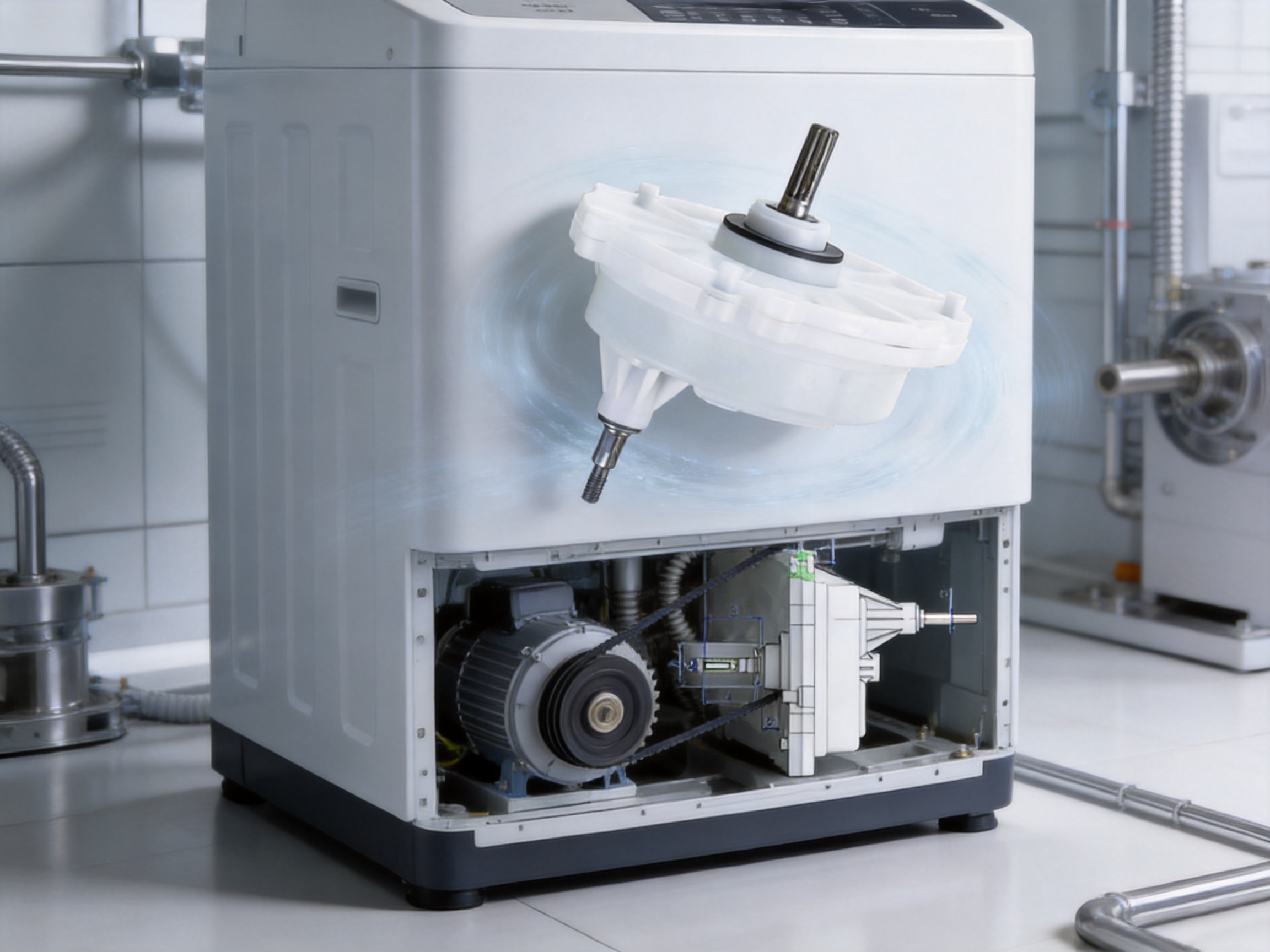
Why Manufacturing Process Matters More Than a Basic Gearbox Specification
Two gear cases may appear similar when compared only by external dimensions or nominal transmission ratio. However, their real performance may differ because of variations in material quality, machining accuracy, heat treatment, bearing fit, seal installation, lubricant control, and final inspection.
A low-cost component with uncontrolled tolerances may create problems after installation. Possible symptoms include unusual mechanical noise, oil leakage, excessive vibration, weak agitator movement, increased motor load, or early failure. Such problems can increase warranty claims and service costs, even if the original purchase price was lower.
A gear case produced through a stable manufacturing system offers advantages beyond the component itself. It can help reduce assembly problems, support consistent washing-machine performance, simplify quality documentation, and improve customer satisfaction. For an appliance manufacturer, this total value can be more important than the initial unit price.
Comparison with Less-Integrated Competitor Solutions
Competitor products may differ widely in production capability and supply-chain structure. Some suppliers focus mainly on trading or final assembly and rely on outside partners for most critical parts. Others may have limited experience with washing-machine transmissions or may not provide strong customization support.
The product discussed here has several advantages associated with specialized manufacturing and vertical control. The supplier has focused on washing machine components for more than two decades, operates a dedicated production base, and produces most core materials in-house. This creates a stronger foundation for consistent quality than a supply model based only on external procurement.
Another advantage is product specialization. A company that regularly manufactures washing machine gearboxes, gear reducers, synchronizers, and P-shafts is more familiar with the mechanical relationships among motor output, agitator movement, shaft systems, moisture exposure, and appliance integration. This experience can support more practical technical communication with OEM and aftermarket customers.
Cost competitiveness is also important. A specialized manufacturer can use established processes, existing production knowledge, and efficient material control to offer cost-effective solutions. This is different from reducing cost through weaker materials or insufficient inspection. The better approach is to remove unnecessary process waste while preserving the characteristics that matter to transmission reliability.
| Evaluation Area | Specialized Integrated Manufacturing Approach | Potential Limitation of a Less-Controlled Supply Model |
|---|
| Industry experience | Focused knowledge of washing machine transmission components | Limited understanding of appliance-specific operating conditions |
| Core material supply | High level of in-house production and process visibility | Greater dependence on multiple external suppliers |
| Dimensional consistency | Established machining and inspection procedures | More variation between batches or production sources |
| Customization support | Ability to discuss OEM and ODM component requirements | May offer only standard products with limited engineering input |
| Quality management | ISO 9001 and ISO 14001 management systems | Quality procedures may be less transparent or less systematic |
| Supply stability | Dedicated production base and controlled manufacturing resources | Potentially higher risk of supply interruption |
Application in Semi-Automatic Agitator Washing Machines
Semi-automatic agitator washing machines remain important in many markets because they are practical, economical, and relatively simple to operate. They are often valued for their straightforward controls, lower purchase cost, manageable maintenance requirements, and suitability for households with limited space or specific water-use habits.
In this type of appliance, the gear case plays a central role in wash-tub performance. The agitator depends on the transmission to create the correct movement through the water. If the output is too fast, clothing may not move in the intended pattern and mechanical stress may increase. If the output is too weak, the machine may deliver poor washing results. The gearbox must therefore provide a balanced combination of speed, torque, and stability.
The gear case also needs to work harmoniously with the motor. A properly matched transmission allows the motor to provide useful power without excessive overload. This can support reliable appliance operation and help preserve the working life of the motor and related drive parts.
For manufacturers developing different washing-machine models, the transmission may need to accommodate variations in tub size, agitator design, rated load, motor capacity, mounting geometry, and control strategy. A supplier with OEM and ODM experience can assist with evaluating these factors and identifying an appropriate gear-case configuration.
OEM and ODM Support Considerations
Dimensional Compatibility
Before selecting a gear case, an OEM customer should confirm the required mounting dimensions, shaft height, shaft diameter, output connection, input arrangement, housing profile, and available installation space. These details determine whether the transmission can be installed directly or whether modifications are necessary.
Dimensional compatibility is especially important in replacement applications. A replacement part may need to fit an existing tub, motor bracket, belt arrangement, or agitator connection. Accurate technical drawings and sample evaluation can help confirm compatibility before mass production or bulk purchasing.
Performance Matching
The gear case should be matched with the motor's rated speed, torque, power, and starting characteristics. The agitator's size and shape, the washing load, and the intended operating cycle should also be considered. A transmission that is suitable for one appliance may not be appropriate for another with a larger tub or heavier rated load.
Performance matching helps avoid two common problems. An undersized gear case may experience excessive stress and wear, while an oversized or poorly matched unit may increase cost without improving the appliance. Engineering review supports a more balanced selection.
Customization and Product Development
OEM and ODM customers may require changes to housing dimensions, mounting holes, shaft configuration, gear ratio, sealing structure, materials, labeling, packaging, or inspection standards. Customization should be approached systematically so that changes do not compromise reliability or manufacturability.
A specialized component manufacturer can review the customer's requirements, assess production feasibility, prepare samples, support testing, and refine the design before volume production. This development process is valuable for new appliance models and for customers seeking a replacement for an existing transmission.
Supply and Packaging Planning
For mass production, a gear case supplier must provide more than a technically suitable sample. The supplier must also support stable delivery, batch consistency, protective packaging, and communication regarding production schedules. Gear cases should be protected against impact, contamination, and moisture during storage and transportation.
Clear labeling and traceability can help customers manage inventory and identify production batches. This is especially useful when a distributor supplies several washing-machine models or when a manufacturer maintains multiple gearbox specifications.
Installation and Maintenance Factors
Correct installation is essential for achieving the expected performance of any washing machine gear case. The mounting surface should be clean and properly aligned. Fasteners should be tightened according to the appliance manufacturer's requirements, and the motor, belt, pulley, shaft, and agitator should be checked for proper alignment.
Improper alignment can place additional load on bearings and shafts. It may also increase vibration, noise, and seal wear. If the gear case is installed in a replacement application, technicians should inspect related parts rather than assuming that the gearbox alone caused the original failure.
The transmission area should be protected from unnecessary contamination during service. Dirt, metal particles, excess water, and incompatible lubricants can affect the internal mechanism. Any seal, gasket, washer, or connection component removed during installation should be replaced or restored according to the service procedure.
Users should avoid operating the washing machine with a load that significantly exceeds the rated capacity. Severe overloading places additional stress on the agitator, motor, shafts, gears, and bearings. Uneven loading can also increase vibration and shock during operation. Proper use supports the service life of the entire transmission system.
Unusual noise, oil leakage, reduced agitation, a burning smell, repeated motor tripping, or excessive vibration may indicate a problem in the drive system. Early inspection can prevent secondary damage to the motor, tub, belt, or control components.
Quality, Reliability, and Total Cost of Ownership
The purchase price of a gear case is only one part of its economic value. Total cost of ownership also includes installation labor, warranty exposure, replacement frequency, downtime, inventory requirements, customer complaints, and the cost of damage to related appliance components.
A more reliable gear case can reduce these indirect costs. Stable gears and bearings may reduce service calls. Dependable sealing may lower the risk of lubricant leakage. Consistent dimensions may shorten assembly time. A stable supply may reduce the need to maintain excessive safety stock.
For an appliance brand, reliable transmission components can also support market reputation. Consumers may not know the name of the gear case manufacturer, but they experience the results through washing performance, noise, durability, and service requirements. A dependable internal component contributes to the perceived quality of the finished washing machine.
For distributors, product consistency supports repeat sales. A replacement part that performs well across multiple batches is easier to recommend and easier to support. For repair technicians, a well-made gear case can reduce installation complications and improve confidence in the repair outcome.
Environmental and Compliance Considerations
Modern component sourcing increasingly involves environmental responsibility as well as mechanical performance. Customers may evaluate how materials are managed, how production affects the environment, and whether products comply with restrictions on hazardous substances.
The manufacturer maintains ISO 14001 Environmental Management System certification, demonstrating the use of a structured approach to environmental management. The products comply with RoHS requirements, supporting customer needs in markets where restricted-substance compliance is expected.
In-house production of core materials may also support more efficient process management. Better control of material use, machining, rework, and production planning can help reduce waste. Environmental performance should be considered together with quality and cost because inefficient production can affect all three areas.
For OEM customers, compliance information can be incorporated into supplier qualification and product documentation. Clear records help manufacturers meet their own regulatory, environmental, and customer-service obligations.
Why Choose a Specialized Washing Machine Component Supplier
A supplier specializing in washing machine components understands that a gearbox is part of a larger appliance system. Its performance is connected to the motor, agitator, tub, control program, shaft arrangement, and installation environment. This broader understanding can make technical cooperation more efficient.
The manufacturer described in this article has developed long-term partnerships with major appliance companies, including Sharp Corporation, Panasonic Corporation, and Midea Group. These relationships reflect experience in serving established appliance customers and supporting demanding production requirements.
The company also focuses on customer service, technological innovation, consistent quality, and continuous improvement. These priorities are important for customers seeking a long-term supply relationship rather than a one-time purchase. A reliable supplier should be able to communicate clearly, respond to technical questions, manage samples, and maintain quality after the product enters regular production.
Its product range includes washing machine parts, washing machine gearboxes, gear reducers, synchronizers, and P-shafts. This broader portfolio may allow customers to coordinate related components with one experienced source, simplifying communication and supplier management.
Product Selection Checklist
Before placing an order, customers should define the application and confirm the technical requirements. The following checklist can help organize the evaluation:
- Confirm that the gear case is intended for a semi-automatic agitator washing machine.
- Provide the washing-machine model, rated capacity, motor information, and agitator specifications.
- Check the input and output shaft dimensions and connection methods.
- Confirm mounting-hole locations, housing dimensions, and available installation space.
- Review the required transmission ratio, output speed, and torque range.
- Discuss sealing, lubrication, and expected operation in humid conditions.
- Request information about materials, inspection procedures, and quality certifications.
- Evaluate whether OEM, ODM, labeling, packaging, or design modifications are required.
- Clarify sample approval, production lead time, minimum order quantity, and delivery arrangements.
- Establish the inspection standard and documentation required for every production batch.
This preparation allows the supplier to assess the project accurately. It also reduces the risk of selecting a component based only on appearance or a single dimension.
Frequently Asked Questions
What is the main purpose of a washing machine gear case?
The main purpose is to convert the motor's high-speed rotation into lower-speed, higher-torque output suitable for driving the washing-machine agitator. This allows the agitator to move clothing and water effectively while reducing the mechanical stress that would result from direct high-speed drive.
Which type of washing machine uses this product?
The product is intended for semi-automatic agitator washing machines. Compatibility should always be confirmed by checking the appliance's mounting dimensions, motor arrangement, shaft configuration, agitator connection, and performance requirements.
Why is torque important in an agitator washing machine?
Torque is the turning force available at the output shaft. Wet clothing and water create resistance against agitator movement. Sufficient torque helps the agitator maintain useful motion under load and supports consistent water circulation and washing action.
Can this gear case be used as a replacement part?
It may be suitable for replacement applications when its dimensions, shaft arrangement, mounting structure, transmission characteristics, and sealing configuration match the original appliance. Customers should provide technical details or samples for compatibility evaluation before ordering.
Is customization available for OEM and ODM projects?
OEM and ODM solutions are available for customers that require customized washing machine drive components. Possible areas for discussion include housing dimensions, mounting features, shaft design, gear configuration, sealing, packaging, labeling, and inspection requirements. Final feasibility depends on the project specifications.
How does the gear case operate in a humid environment?
The gear case is designed for use in the humid operating environment associated with washing machines. Its housing, sealing, lubrication, and production controls support reliable operation near water. Correct installation and proper appliance maintenance remain important for long-term performance.
What manufacturing capabilities support product quality?
The manufacturer operates a production base of approximately 10,000 square meters and produces around 90 percent of core materials in-house. It uses advanced machinery, established manufacturing processes, controlled assembly, and inspection procedures. The company also maintains ISO 9001 and ISO 14001 certifications.
Does the manufacturer supply other washing machine components?
Yes. Its main product range includes washing machine parts, washing machine gearboxes, gear reducers, synchronizers, and P-shafts. This experience in related transmission components can support customers that need more than one drive-system product.
How can a customer confirm compatibility?
A customer should provide the appliance model, photographs, drawings, original part number, mounting dimensions, shaft measurements, motor data, and rated washing capacity. A sample or technical drawing can help the supplier evaluate the application more accurately.
What should be checked after installation?
After installation, technicians should check mounting security, shaft alignment, agitator connection, belt or drive alignment, abnormal noise, vibration, leakage, and smooth rotation. The washing machine should be tested under appropriate load conditions before being returned to regular service.
How does a specialized supplier help control long-term costs?
A specialized supplier can support consistent dimensions, stable production, technical communication, quality documentation, and reliable supply. These factors may reduce assembly problems, warranty claims, service work, downtime, and repeated replacement costs.
Conclusion
The washing machine gear case is a compact but essential part of the semi-automatic agitator washing machine. Its job is to transform motor speed into useful agitator torque, but its responsibilities extend further. It must support stable operation, protect internal transmission components, withstand vibration and humidity, maintain shaft alignment, and deliver consistent performance throughout the appliance's service life.
This gear case offers a practical balance of durability, transmission stability, application suitability, and cost efficiency. Its value is strengthened by the manufacturing capabilities behind it: long-term specialization in washing machine components, a production base of approximately 10,000 square meters, high in-house production of core materials, advanced machinery, established assembly processes, and structured quality and environmental management.
For OEM manufacturers, ODM developers, aftermarket distributors, and repair-part suppliers, selecting a transmission component should involve more than comparing price or external appearance. The supplier's experience, production control, customization ability, compliance framework, and supply stability are all important. A dependable washing machine gear case can contribute to better appliance performance, lower service risk, and stronger long-term product value.
By combining practical mechanical design with controlled manufacturing and customer-focused technical support, this product provides a reliable foundation for semi-automatic agitator washing machines and related washing-machine drive applications.
References
1. ISO 9001, Quality Management Systems — Requirements.
2. ISO 14001, Environmental Management Systems — Requirements with Guidance for Use.
3. Restriction of Hazardous Substances requirements for electrical and electronic equipment.
4. General mechanical transmission principles for speed reduction and torque multiplication.
5. Industrial practices for gear, shaft, bearing, sealing, lubrication, and gearbox assembly inspection.
6. Manufacturer-provided product information for washing machine gear cases, gear reducers, synchronizers, and P-shafts.
7. Manufacturer-provided company information concerning production capacity, quality management, environmental management, and washing-machine component manufacturing experience.

 English
 عربى



 +86-574-63256717 /63267914
info@gaite.cn
 gaite@gaite.cn
 No. 208 Miaoshan Road, Shiyan Village, Henghe Town, Cixi City, Ningbo City, Zhejiang Province, China
